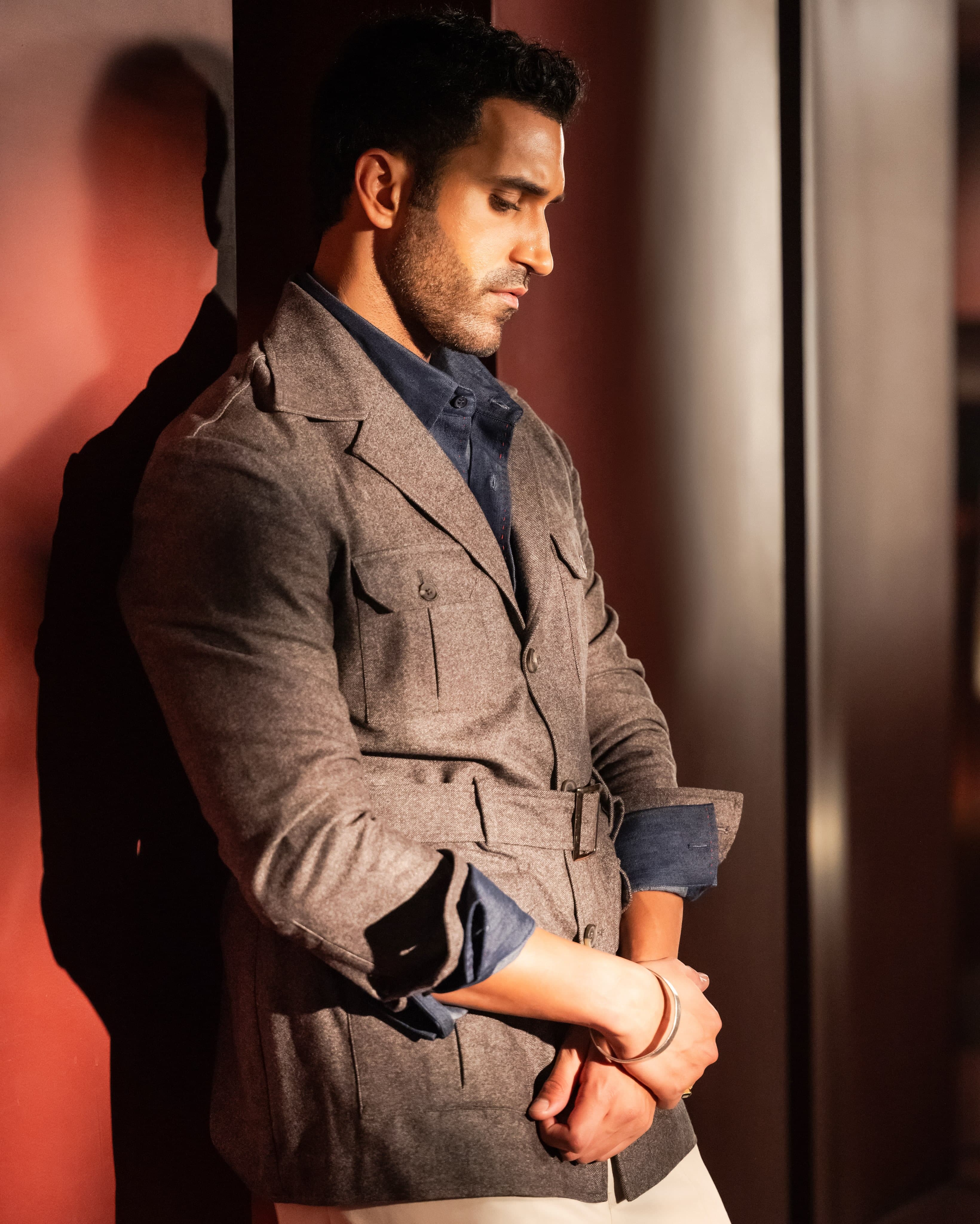
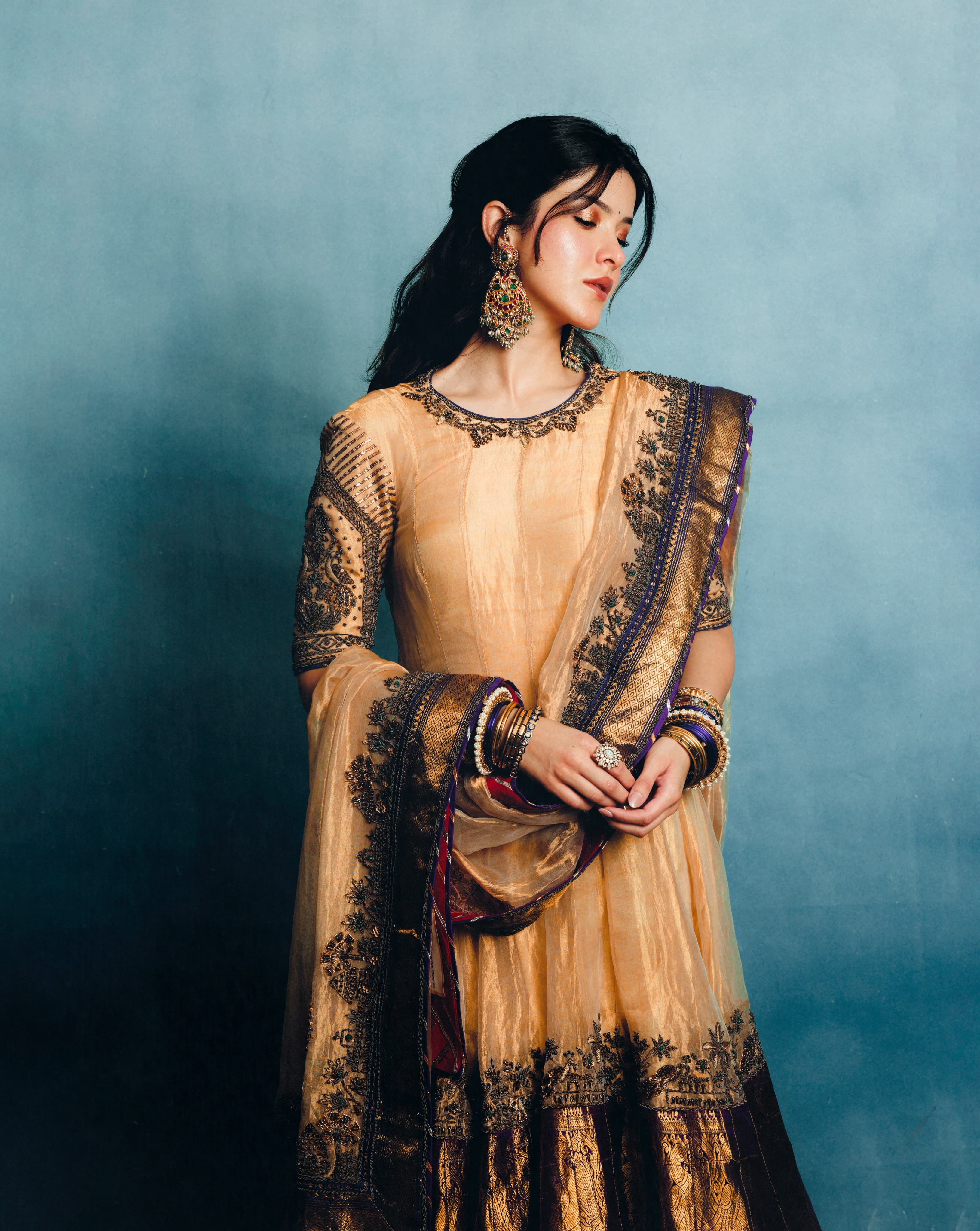
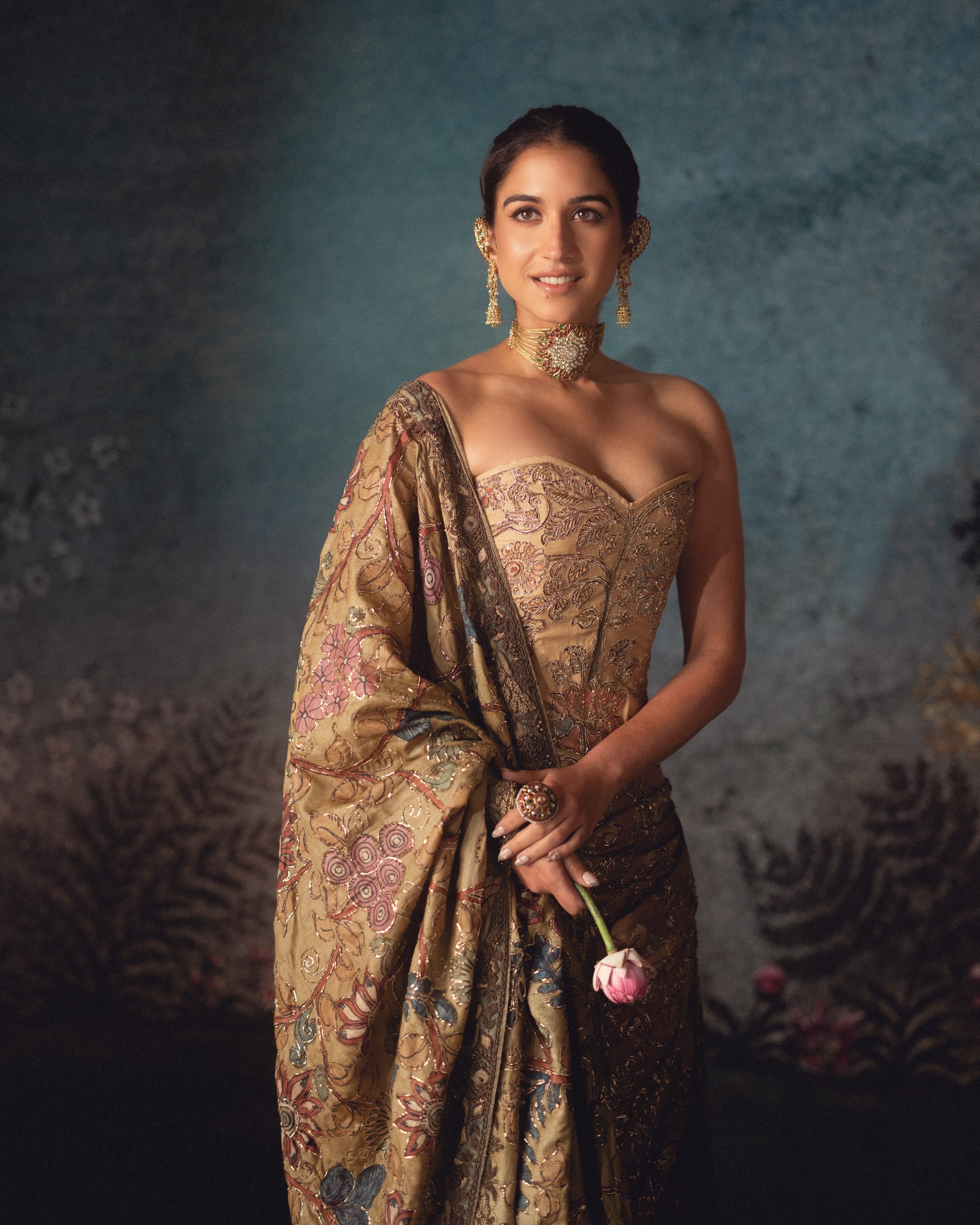
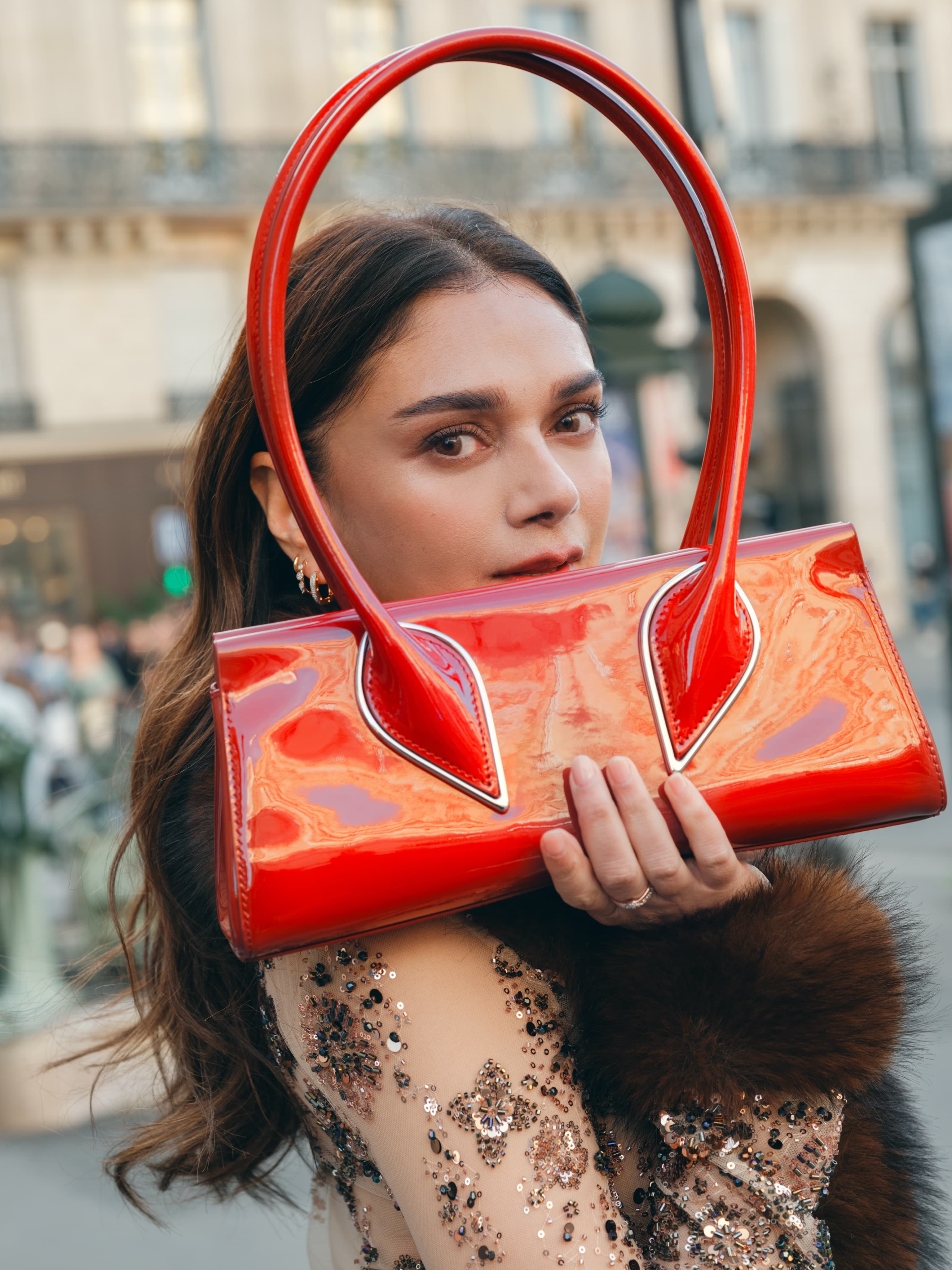
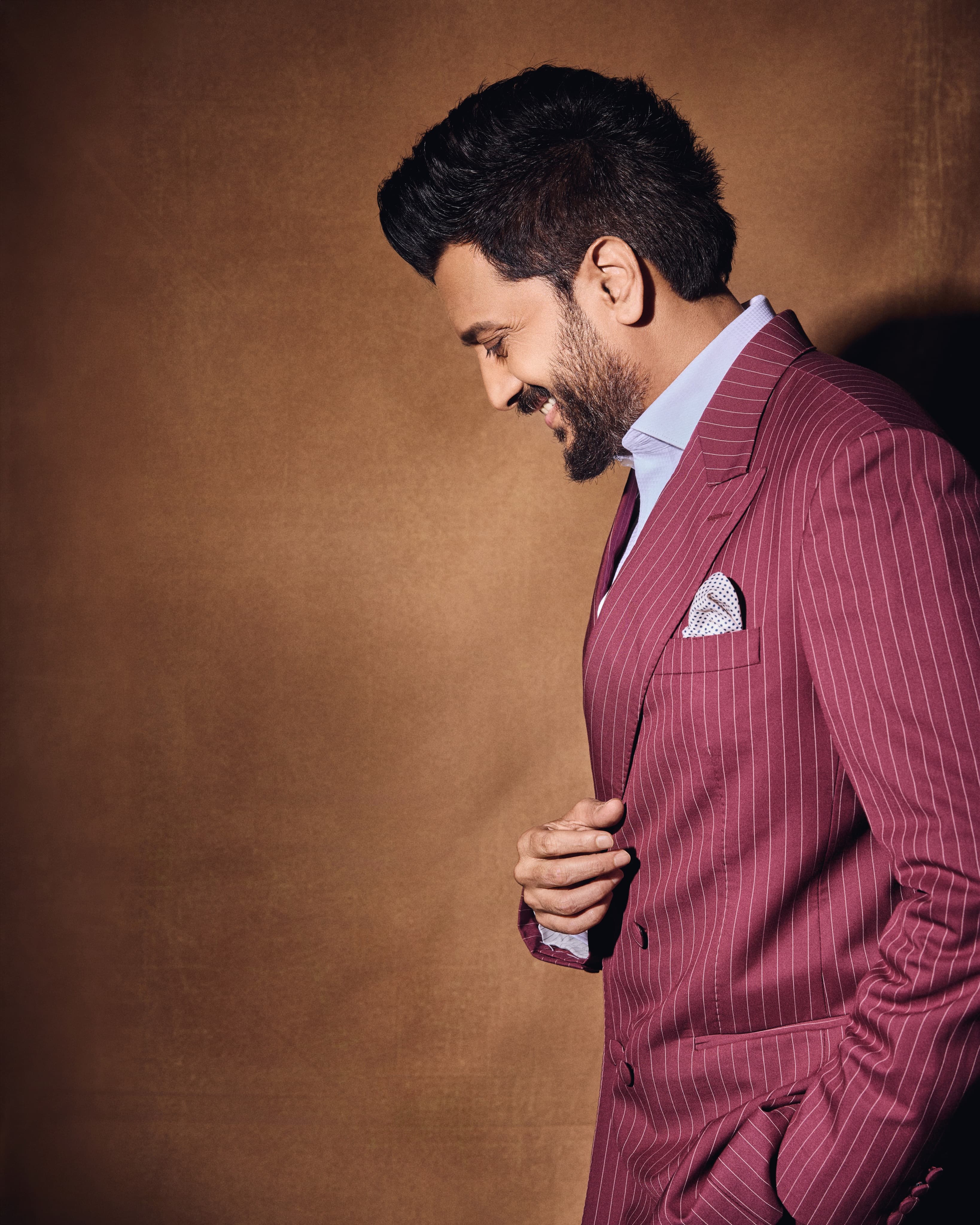
There are captions that tell you everything, and captions that act like a sealed envelope. This one is the latter, a cluster of symbols and credits that points the eye toward the work itself. At the centre of it: a The Royaleum outfit on Krystle Dsouza, shaped by stylist Stylestopperr and photographed by Vishwas Gonsalves.
The Royaleum outfit, seen through a stylist’s edit

The most revealing line in the post is not an emoji, it is the tag. The Royaleum sits in that new Indian design ecosystem where brand identity is often communicated through finish, fit, and the way a look photographs, rather than through a loud runway narrative. When a label is credited as “Outfit” rather than “dress” or “jumpsuit,” it usually signals a composed head to toe idea, a styled proposition intended to be read as an image.
Stylestopperr’s placement in the credit stack matters. Styling is where a brand’s garment becomes a character, through proportion, jewellery choices, and the decision of what not to add. In editorial work, that is the difference between simply wearing a piece and giving it a plot.
Why this kind of image crediting changes the way we read celebrity style
In Indian celebrity fashion, the public has grown fluent in the language of tags. The names tell you the chain of authorship, brand, stylist, photographer, then talent. Here, the trilogy is clean: outfit, styled by, shot by. Vishwas Gonsalves is credited for the images, so the lighting decisions, lens choice, and final mood are not incidental, they are part of the look’s meaning in circulation.
Krystle Dsouza has long understood that a fashion image is a performance, even when it is posed and still. The point is less “what is she wearing” than “how is the outfit being made to land.” That is why compact credits like these are useful, they let the reader track the creative direction rather than treating the result as a spontaneous moment.
What to look for when you’re decoding a The Royaleum outfit post
With only a handful of concrete details supplied in the caption, the most honest way in is to read the photographic intent. Notice whether the frame prioritises silhouette over face, whether the fabric is being asked to catch hard light or soft light, whether the styling emphasises neckline, waist, or hemline. Those decisions are the editorial “voice” of the The Royaleum outfit, and they are why an Instagram post can function like a miniature campaign.
Where to follow the credits behind the look
If you want more than a fleeting scroll, start with the sources that are actually named. The brand’s feed will usually show how the piece sits among other looks, while the photographer’s page often reveals the visual language that repeats across shoots. A second stop is Krystle Dsouza’s own profile, which tends to provide continuity, what she returns to, what changes, and how her style moves across seasons.
For readers tracking Indian fashion’s image makers rather than only the clothes, this post is a neat example of how a The Royaleum outfit becomes a collaborative object, designed by one party, authored by another, and made legible by a camera.
External links: The Royaleum (official Instagram). Vishwas Gonsalves (official Instagram).
Photo Credits
Cover image and additional images credited in-caption to Vishwas Gonsalves and featuring Krystle Dsouza in The Royaleum, styled by Stylestopperr. Images courtesy of their respective owners.