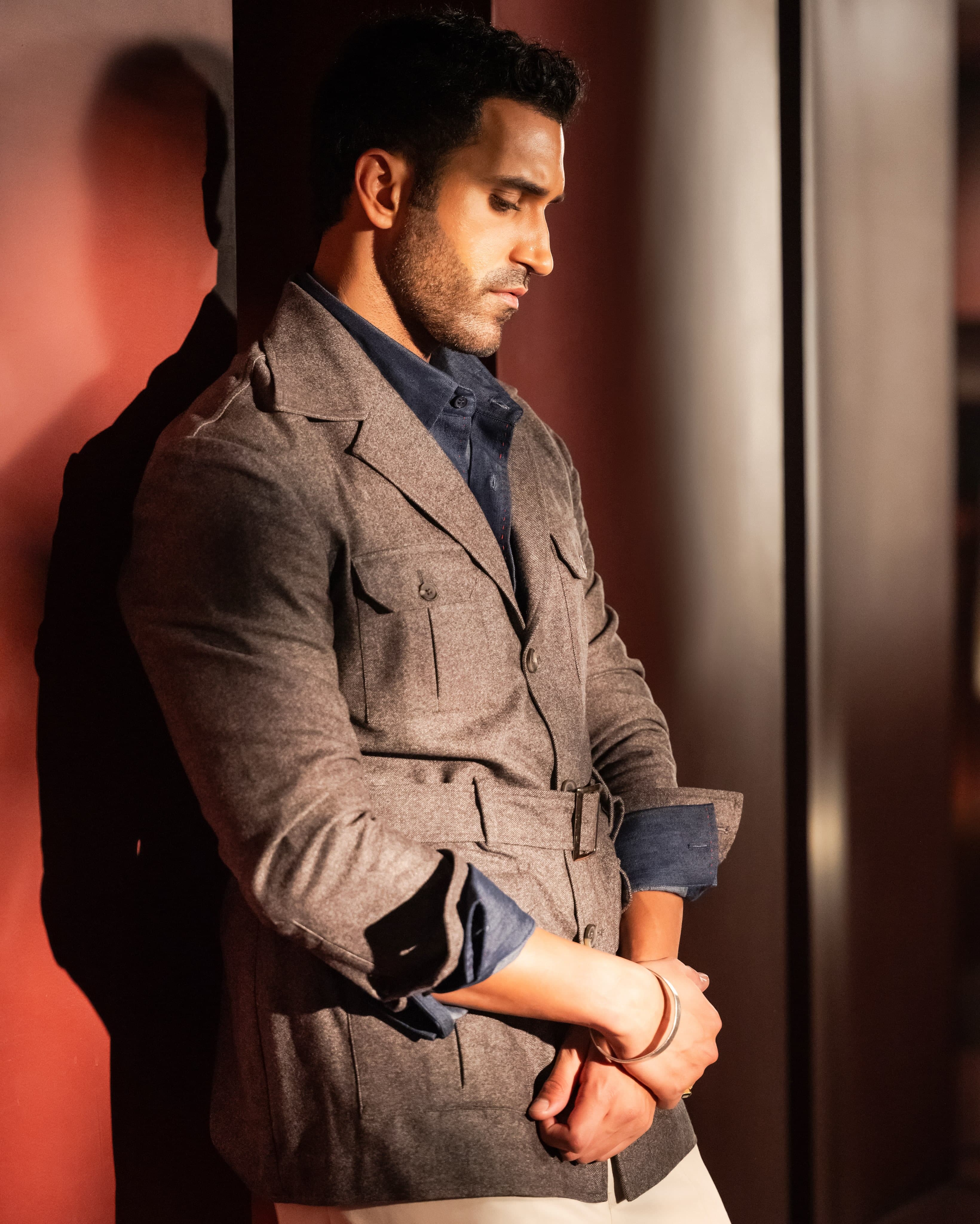
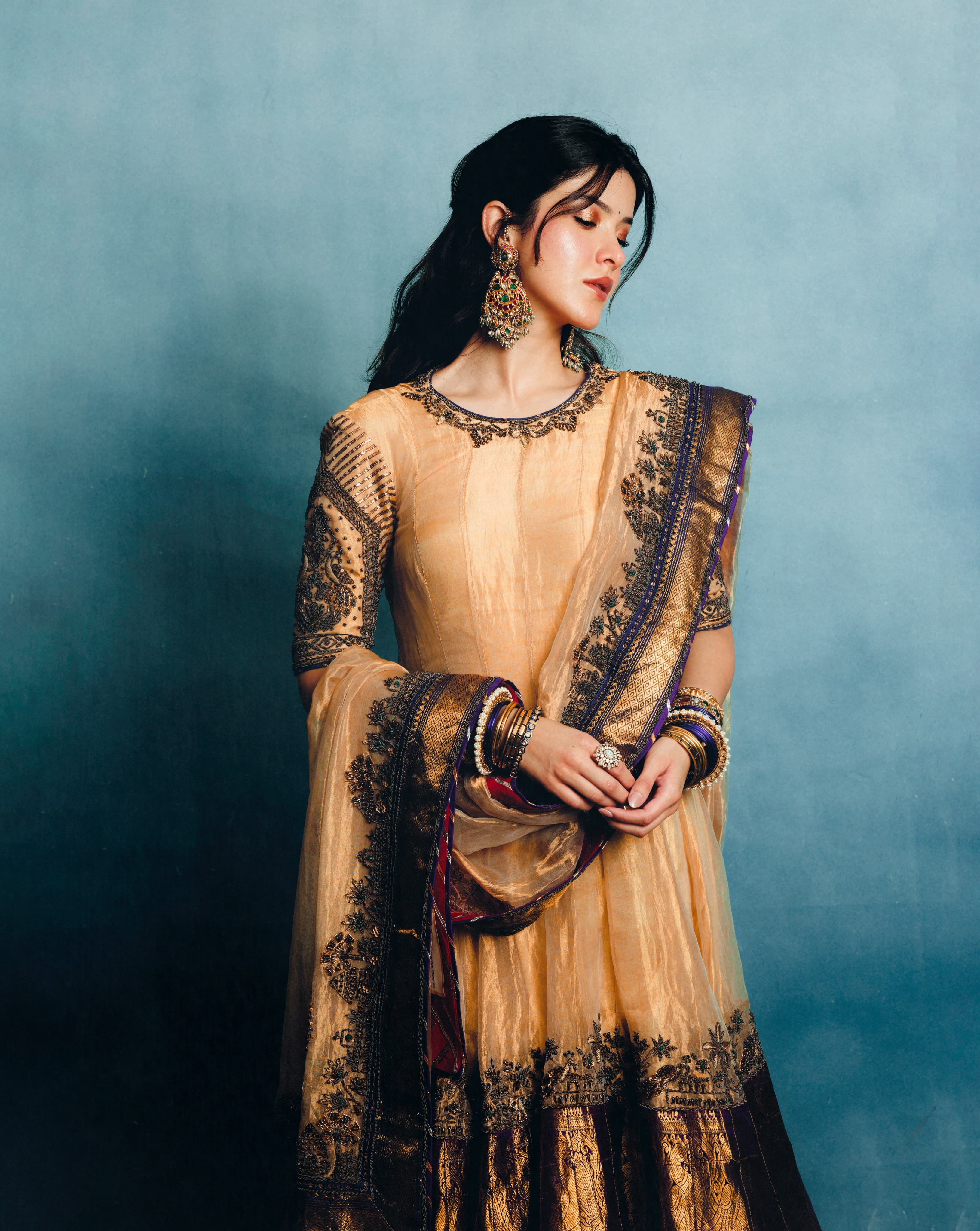
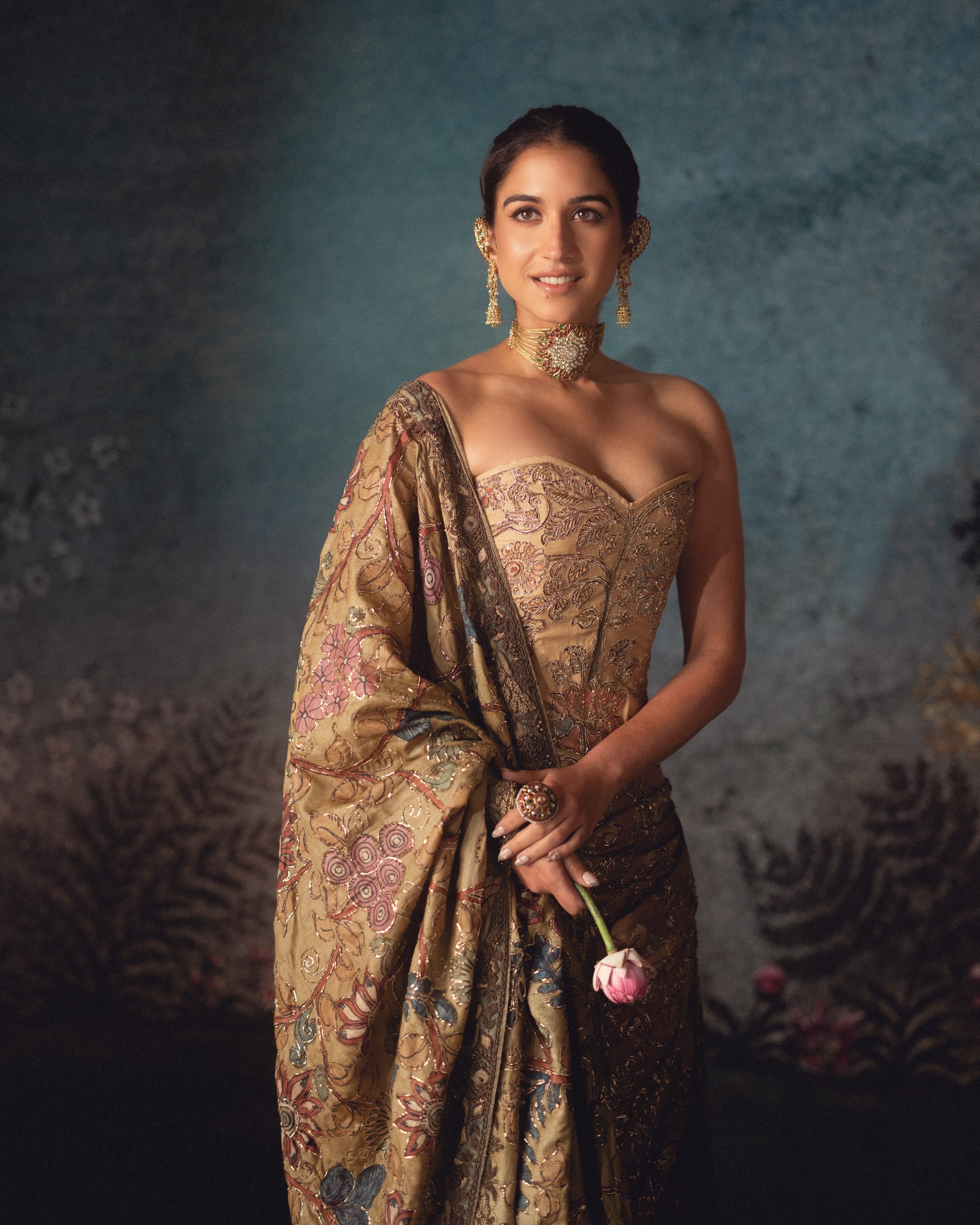
There is a particular kind of electricity that lands in a room when the Maharani look is done properly, heavy with craft, precise with finish, and calibrated for photographs that will outlive the day. At Princess Kashish’s wedding, the mother of the bride leaned fully into that regal register, with styling credits pointing to a familiar axis of Indian occasionwear: Manish Malhotra for the clothes, The Wedding Story behind the lens, and meticulous hair work by Ritika.
The Maharani look, tailored for a wedding lens


Calling something a Maharani look is usually shorthand, but the caption gives us the key ingredients and, importantly, the team. The designer tag links to Manish Malhotra, whose brand has spent decades refining modern Indian ceremonial dressing, from couture-level embroidery to camera-ready silhouettes. His dedicated wedding label, Manish Malhotra Vows, frames the house’s work explicitly around the rituals and optics of the big day, which is exactly where a mother of the bride outfit has to perform: close-up during ceremonies, then commanding from a distance in group portraits.
What makes the Maharani look for mother of the bride compelling here is the intention. This is not a supporting costume. It is an outfit designed to hold its own in a wedding narrative that already has a princess at the center, and to do so without competing with the bride’s spotlight.
Manish Malhotra and the modern idea of regality
Malhotra’s name carries specific cultural weight. He is one of the rare Indian designers whose aesthetic is instantly legible across film, weddings, and red carpets, and whose work is frequently discussed as a bridge between heritage codes and contemporary glamour. The brand’s visual language tends to favor richness through surface and finish, with embellishment that reads decisively on camera rather than dissolving into texture.
That matters because a Maharani bridal-family look is not simply about dressing “traditional.” It is about building an image, an heirloom photograph-in-the-making, where fabric, jewelry, and hair all land as a single statement. If the bride’s styling often aims for breath-catching surprise, the mother of the bride needs authority, warmth, and an almost architectural steadiness. Malhotra’s wedding-facing output is built for that exact brief.
Hair and photography: the difference between dressed and finished
Ritika’s hair as structure
The caption’s hair credit, @ritikahairstylist, signals that the look’s polish was treated as a craft in its own right. In high-ceremony dressing, hair is not an accessory, it is engineering. It sets the proportion of the face against jewelry, it decides how much neckline and work is visible, it dictates whether the entire outfit feels ceremonial or merely festive.
The Wedding Story and the “wedding-day truth”
Photography is where the Maharani look either becomes myth or collapses into costume. The Wedding Story is credited here, and that matters because wedding photography is its own genre of proof. A good frame catches the labor: the hand position as bangles stack, the weight of a dupatta as it shifts, the precise moment a mother looks at her daughter and the entire outfit suddenly feels like part of the ritual, not decoration.
The lasting impression is that this was designed for memory. Not the abstract idea of luxury, but the very real, very unforgiving permanence of a wedding album.
Photo Credits
Cover image and additional images courtesy of their respective owners. Photographer credited in caption: The Wedding Story (@theweddingstory_official). Designer credited in caption: Manish Malhotra (@manishmalhotra05) and Manish Malhotra Vows (@manishmalhotravows). Hair credited in caption: Ritika (@ritikahairstylist). Mentioned in caption: Amrit kaur.