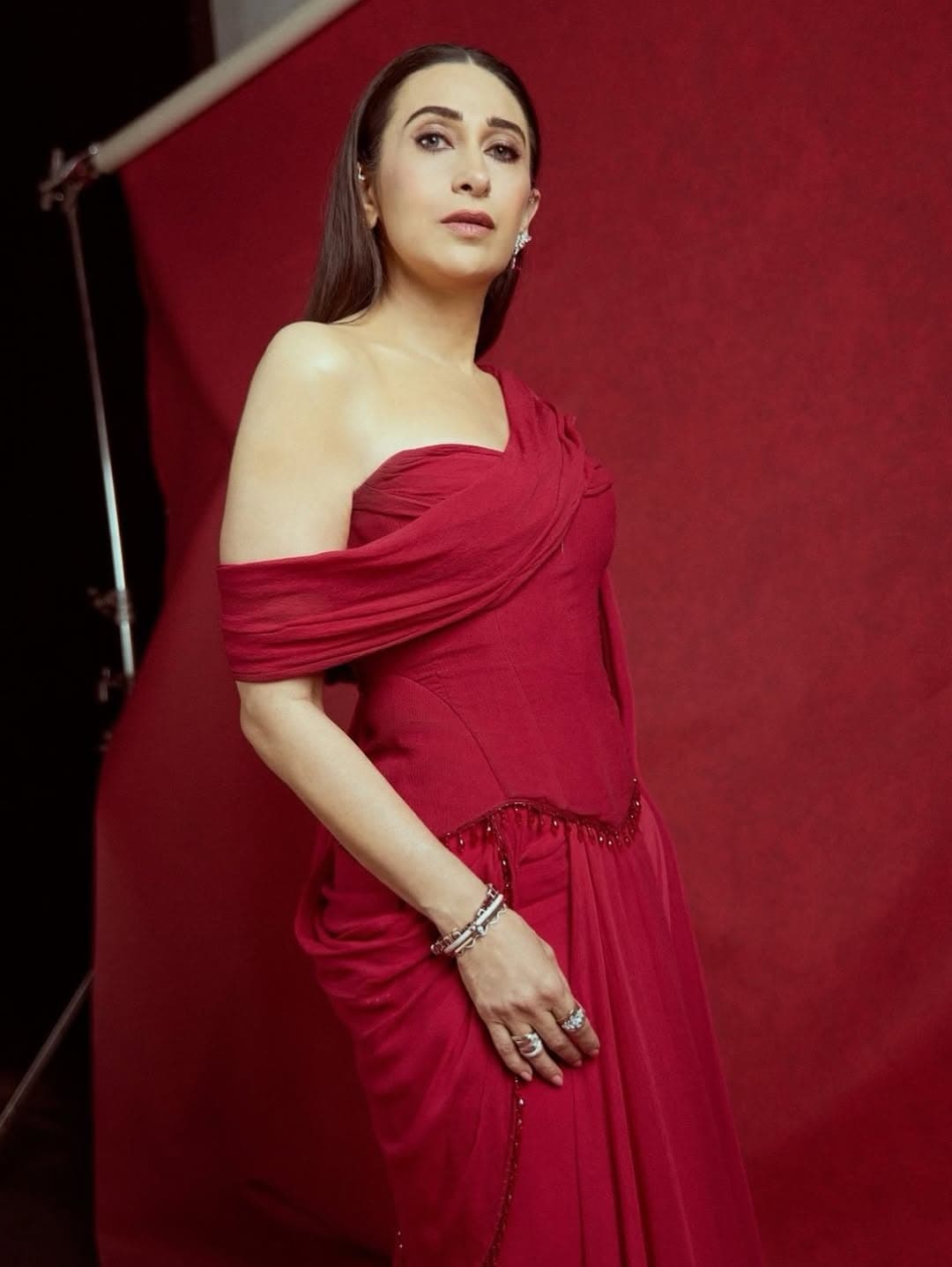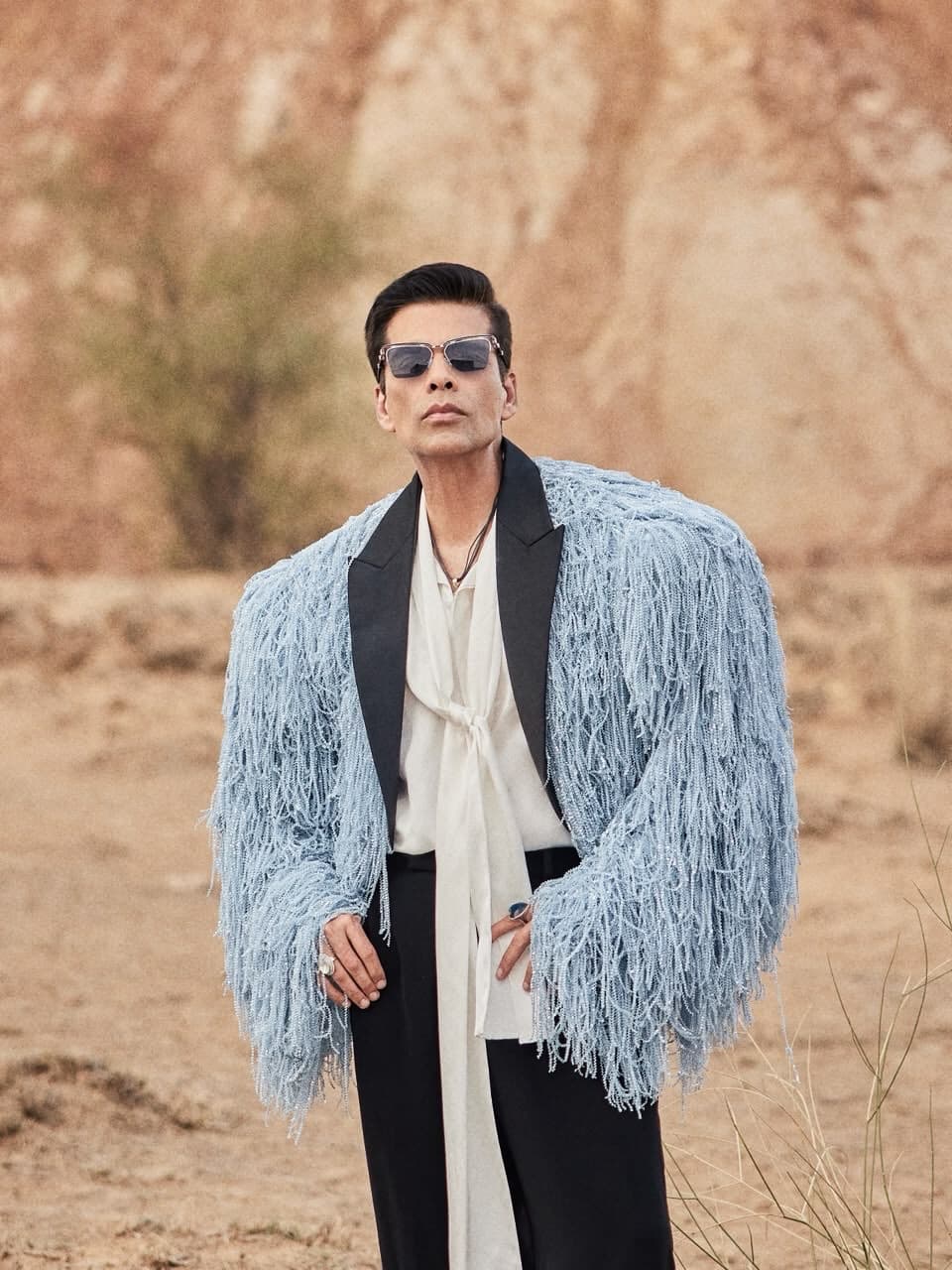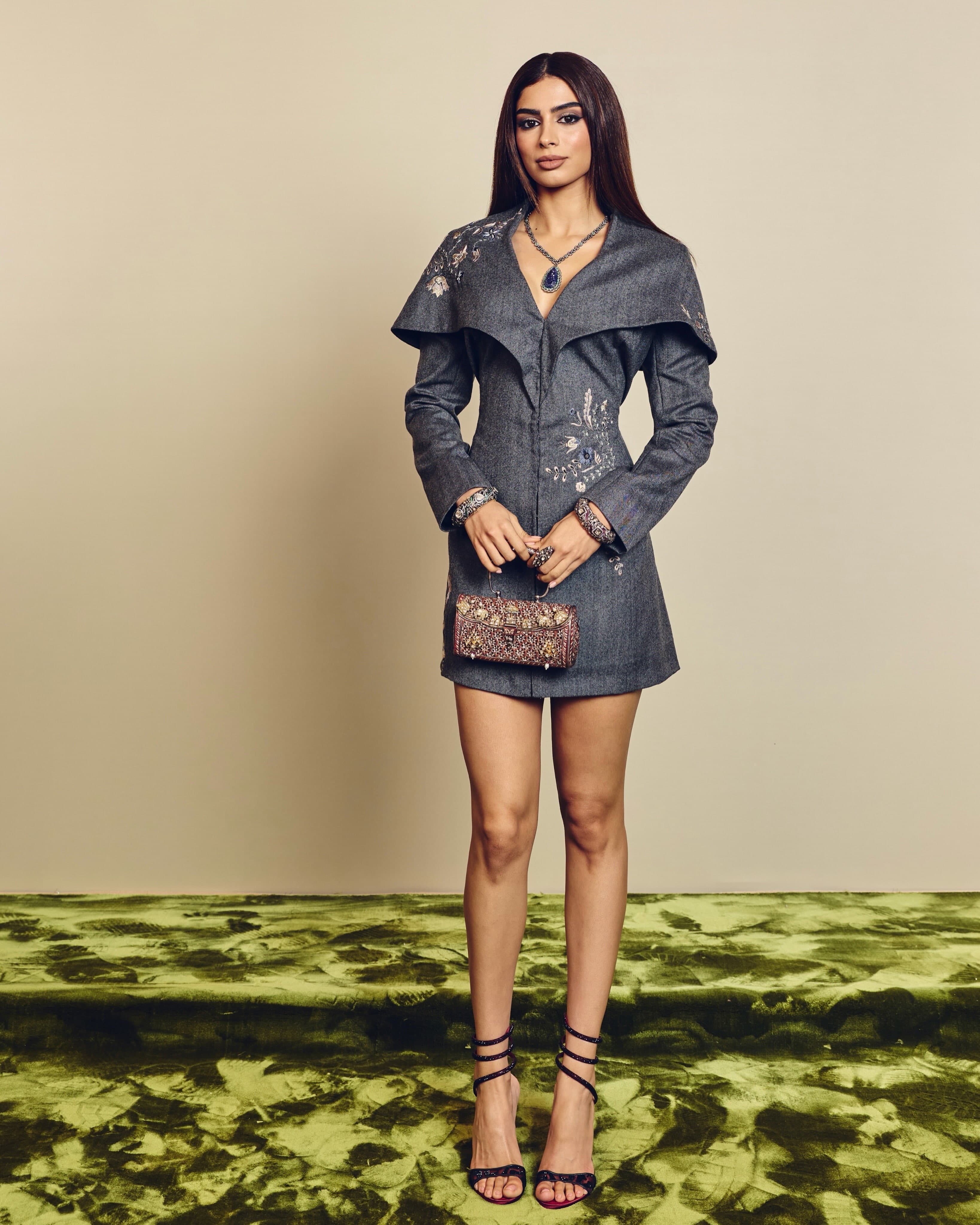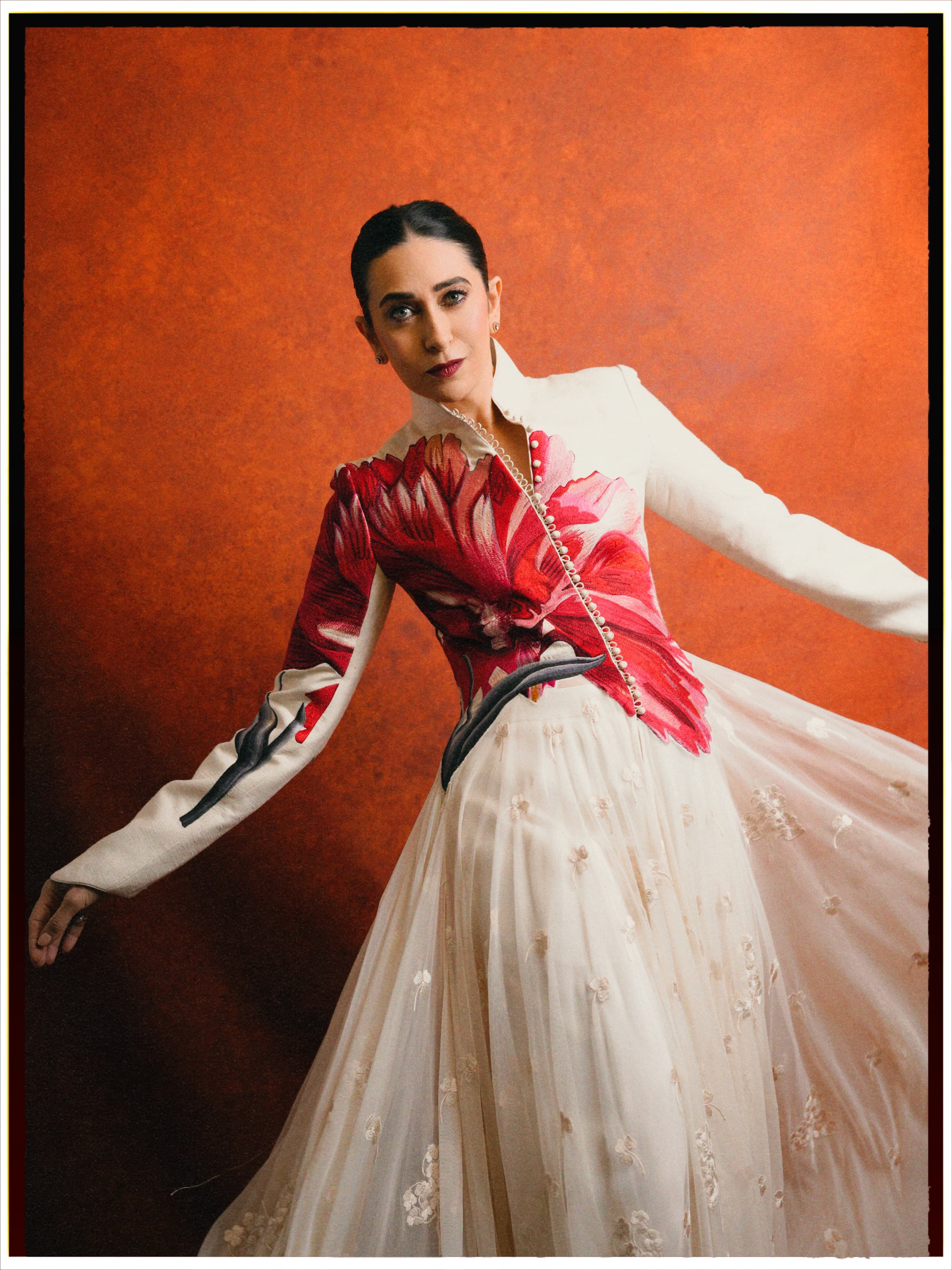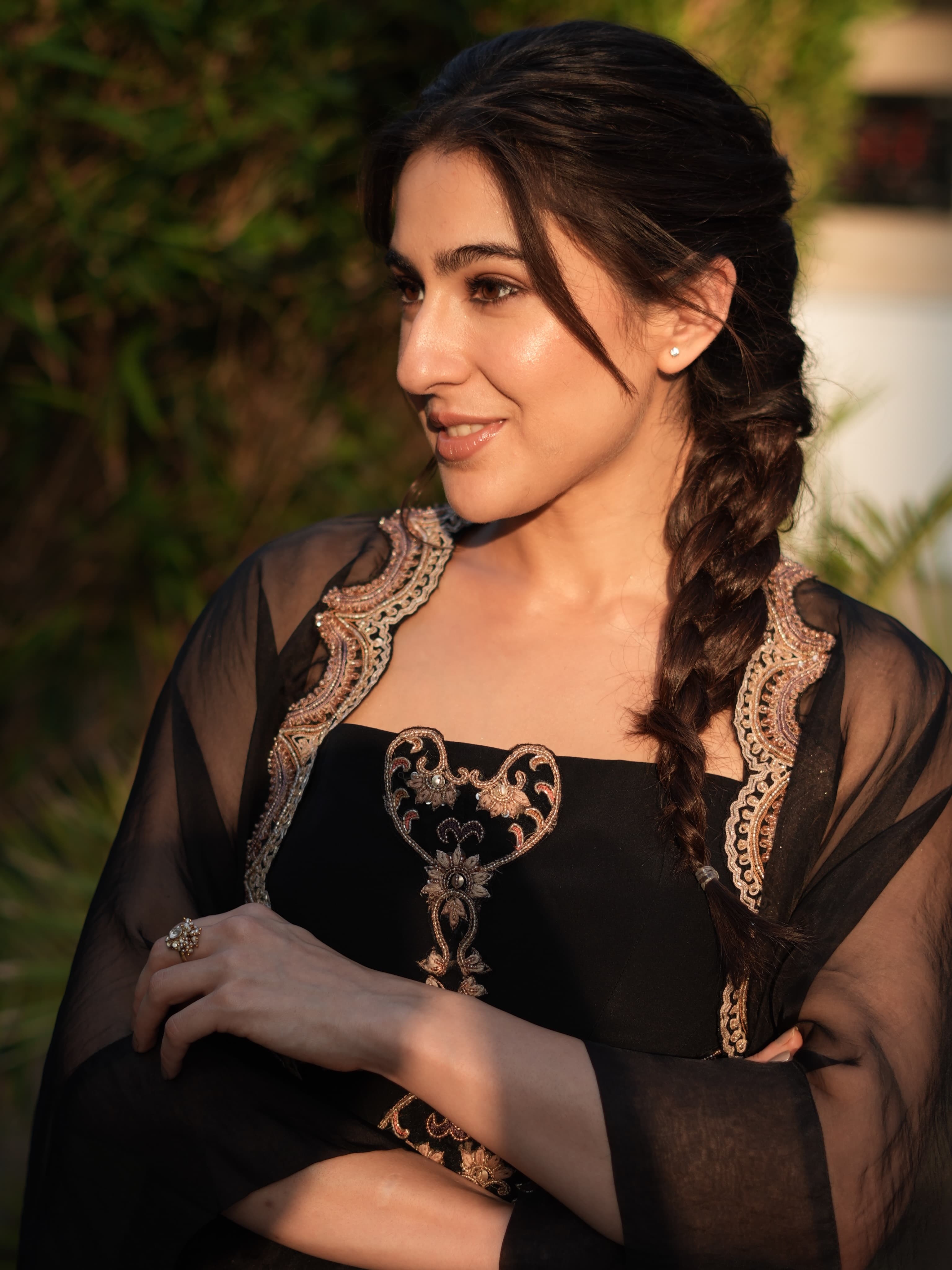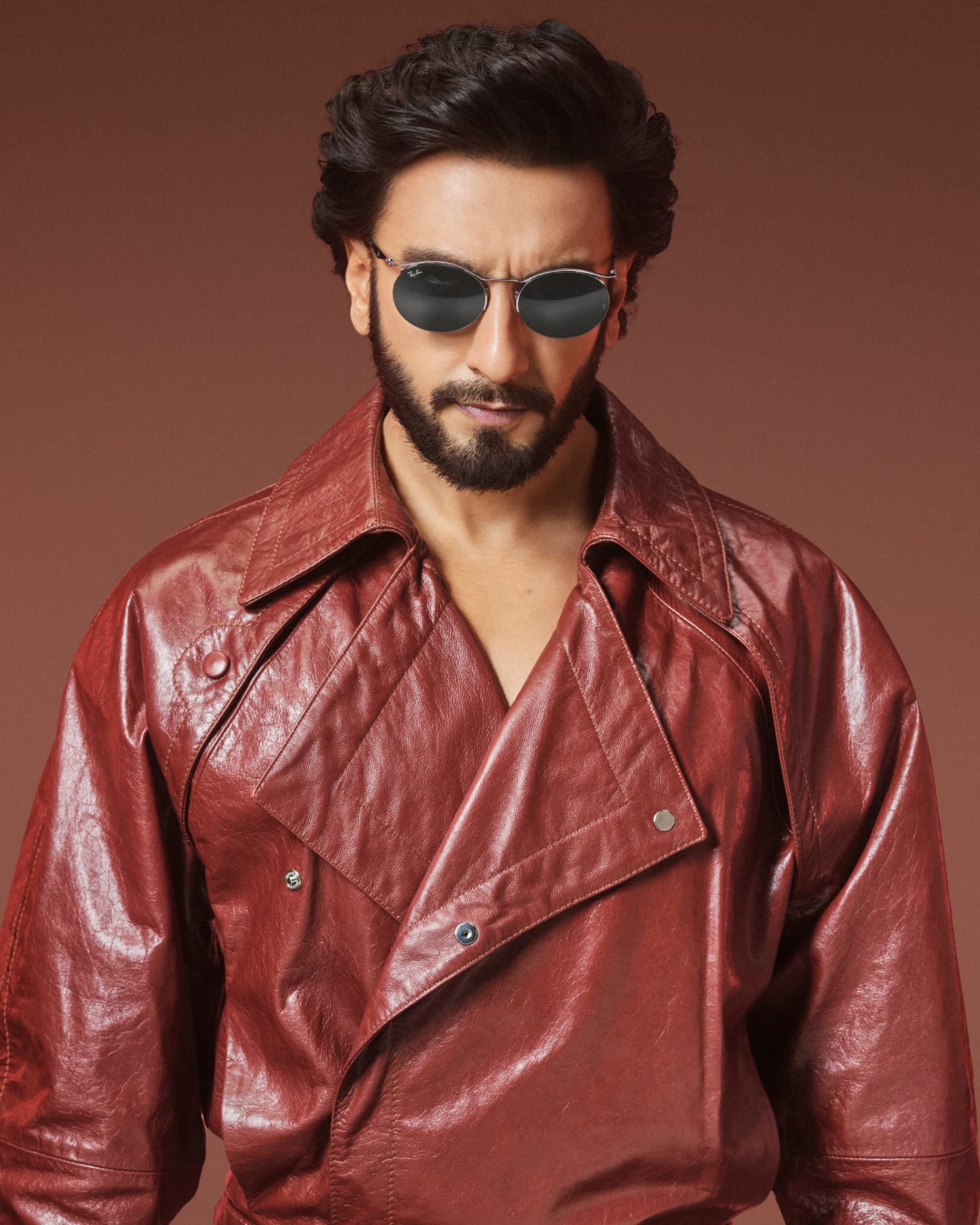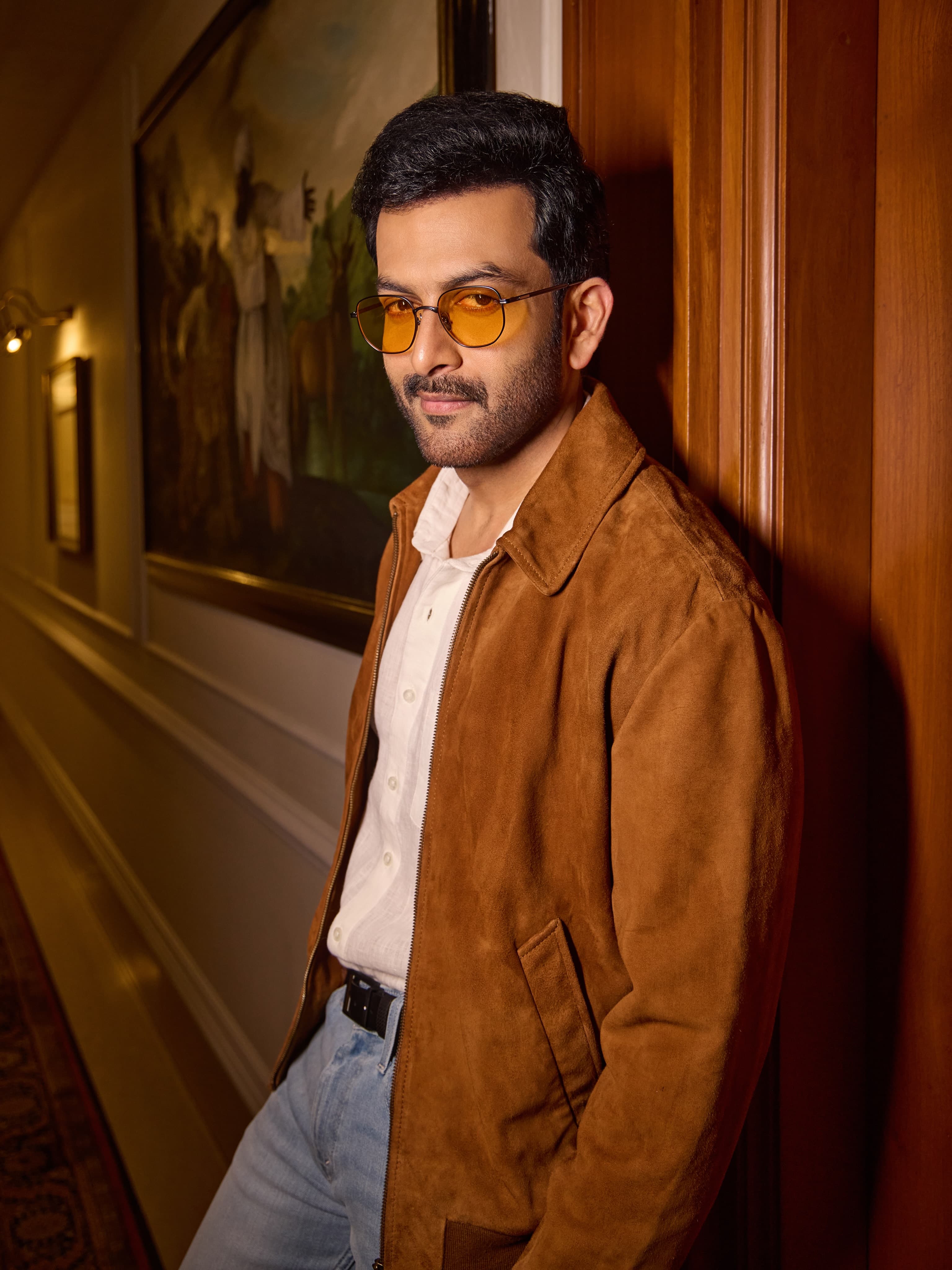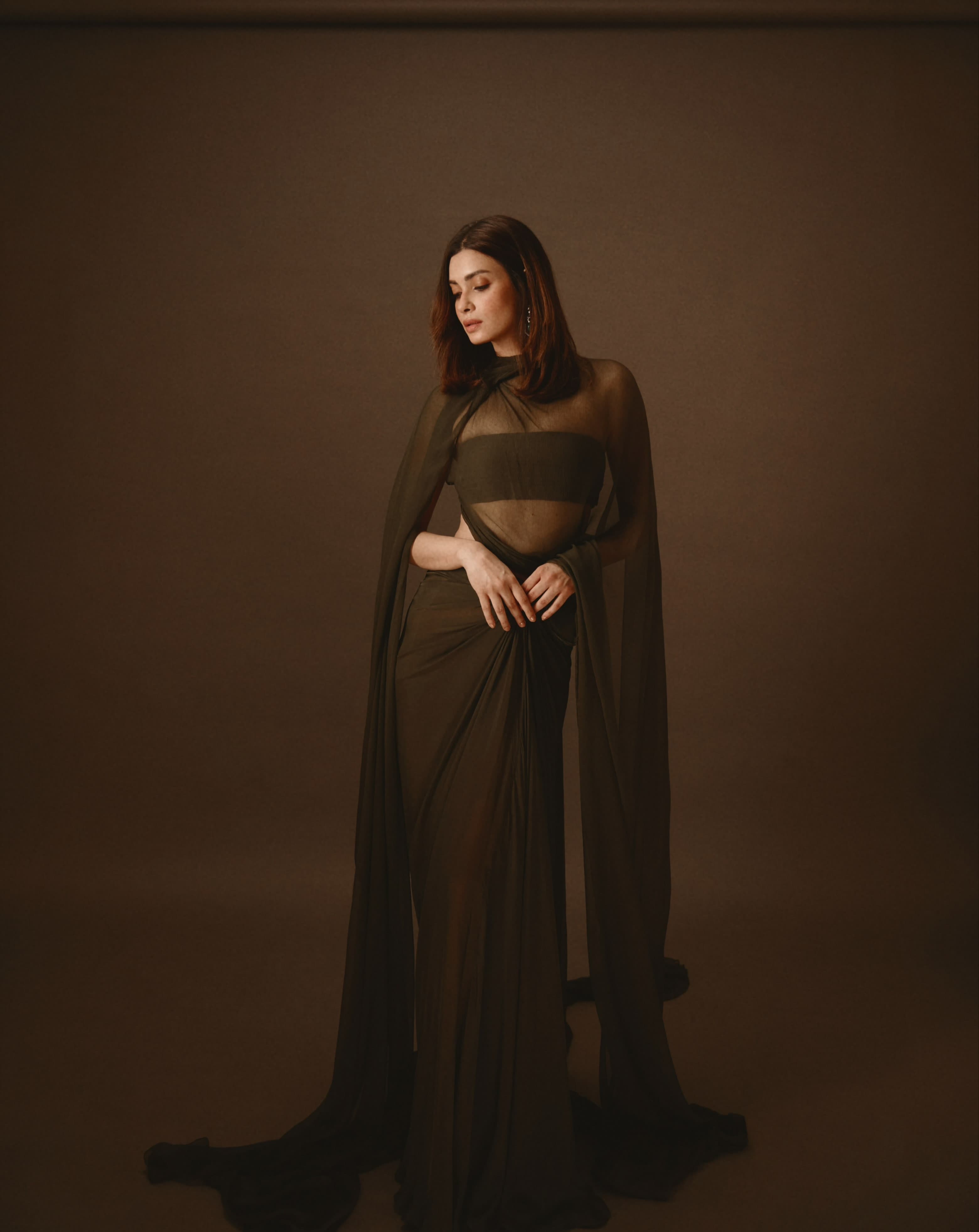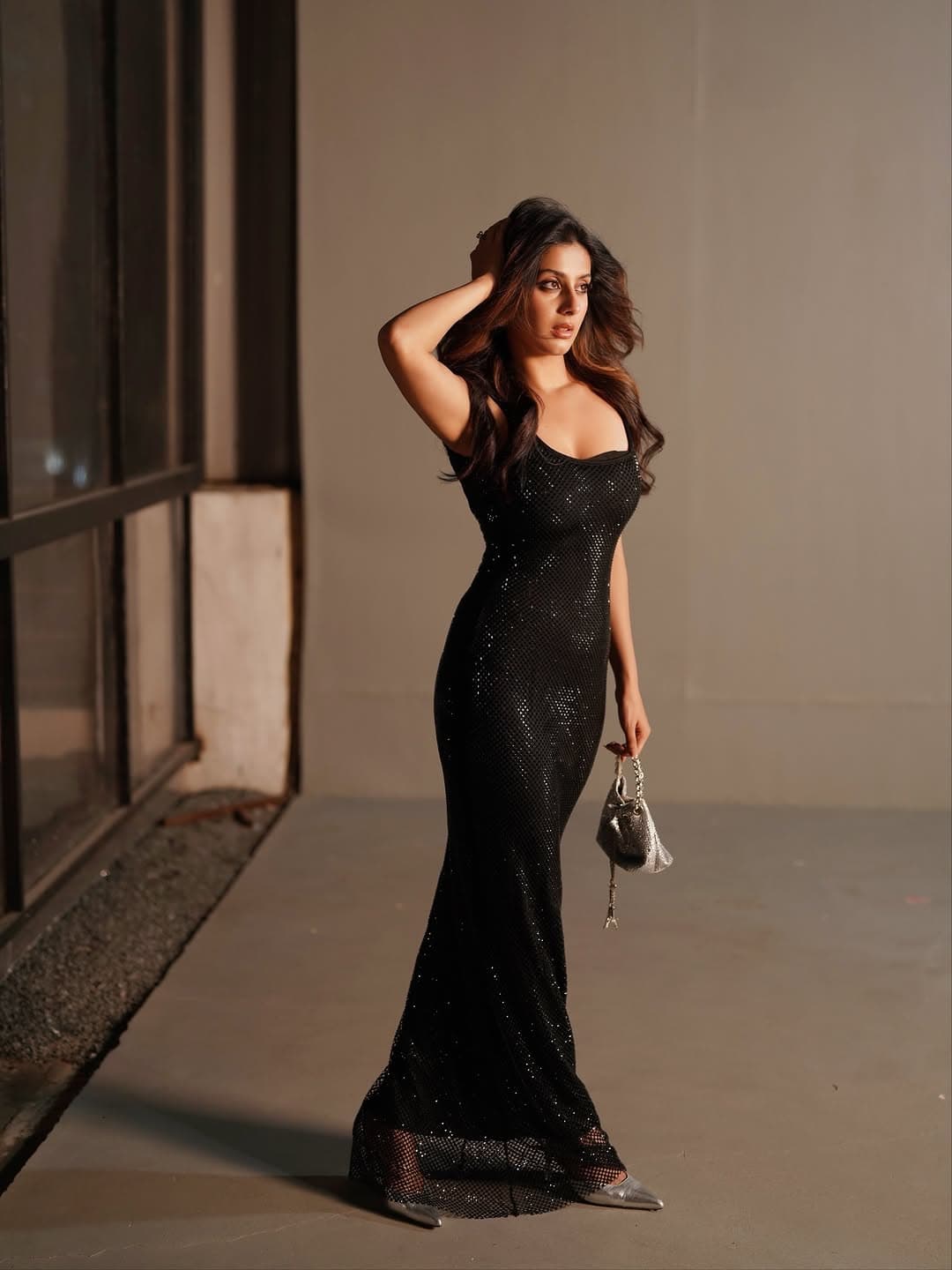
There is a particular kind of honesty to a monochrome shoot when the team credits are this explicit. “Back to black” is the caption, but what you are really seeing is a black fashion photoshoot built on decisions, lens, makeup, hair, and a room chosen for how it handles light. Isha Malviya is the face, yet the image is also a document of process, down to who held the camera and where the shutter clicked.
The black fashion photoshoot as a team sport
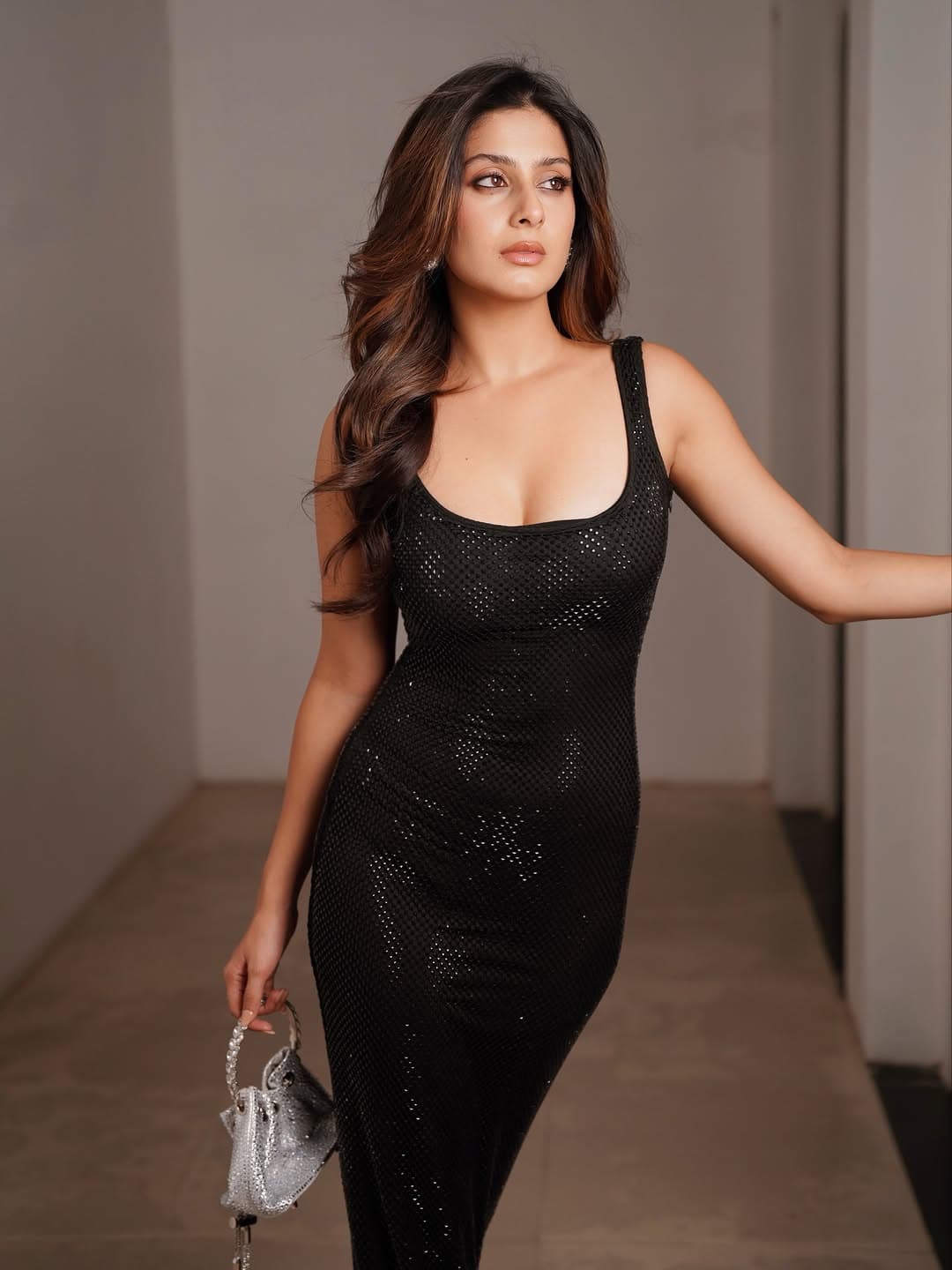
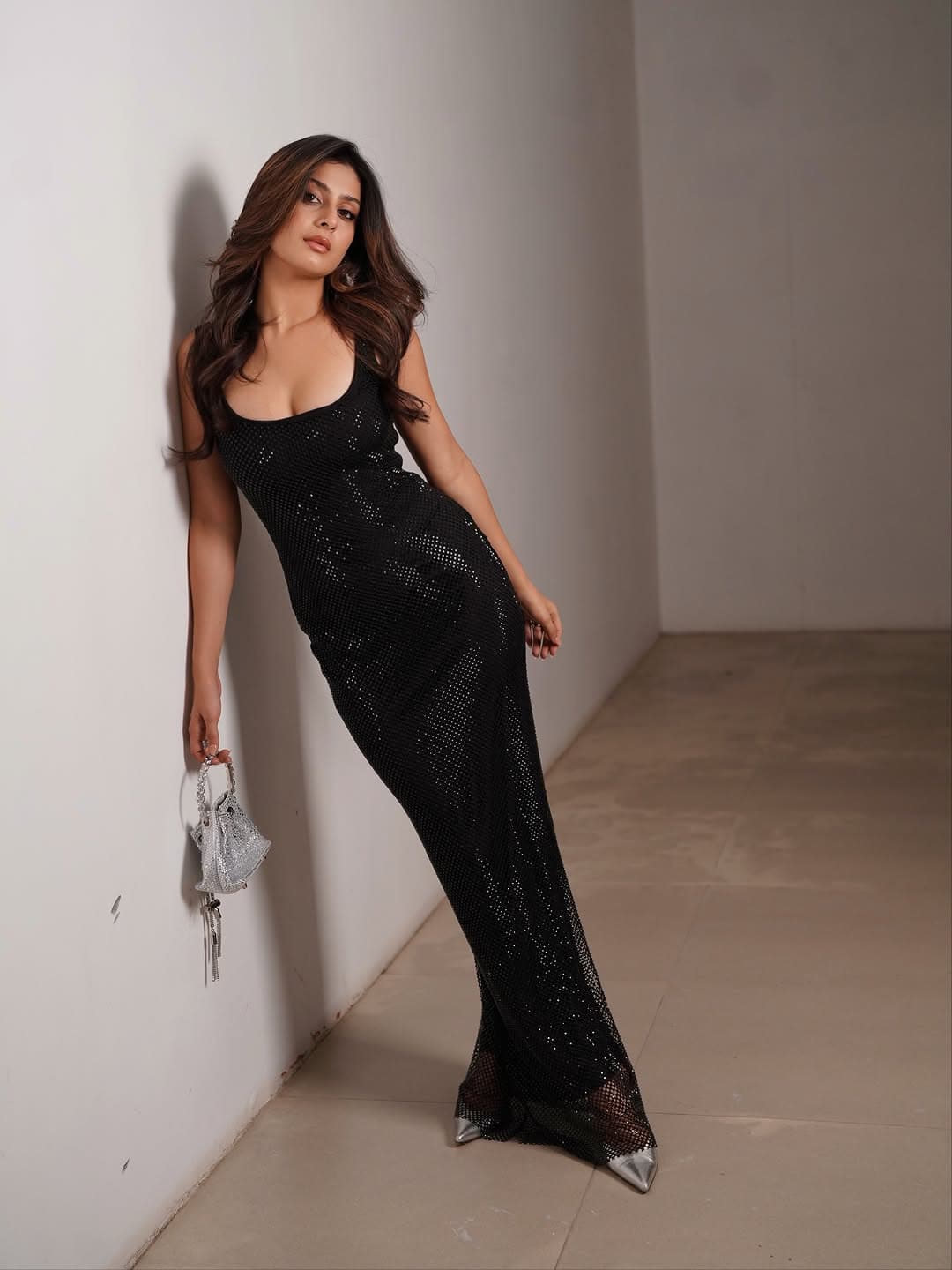
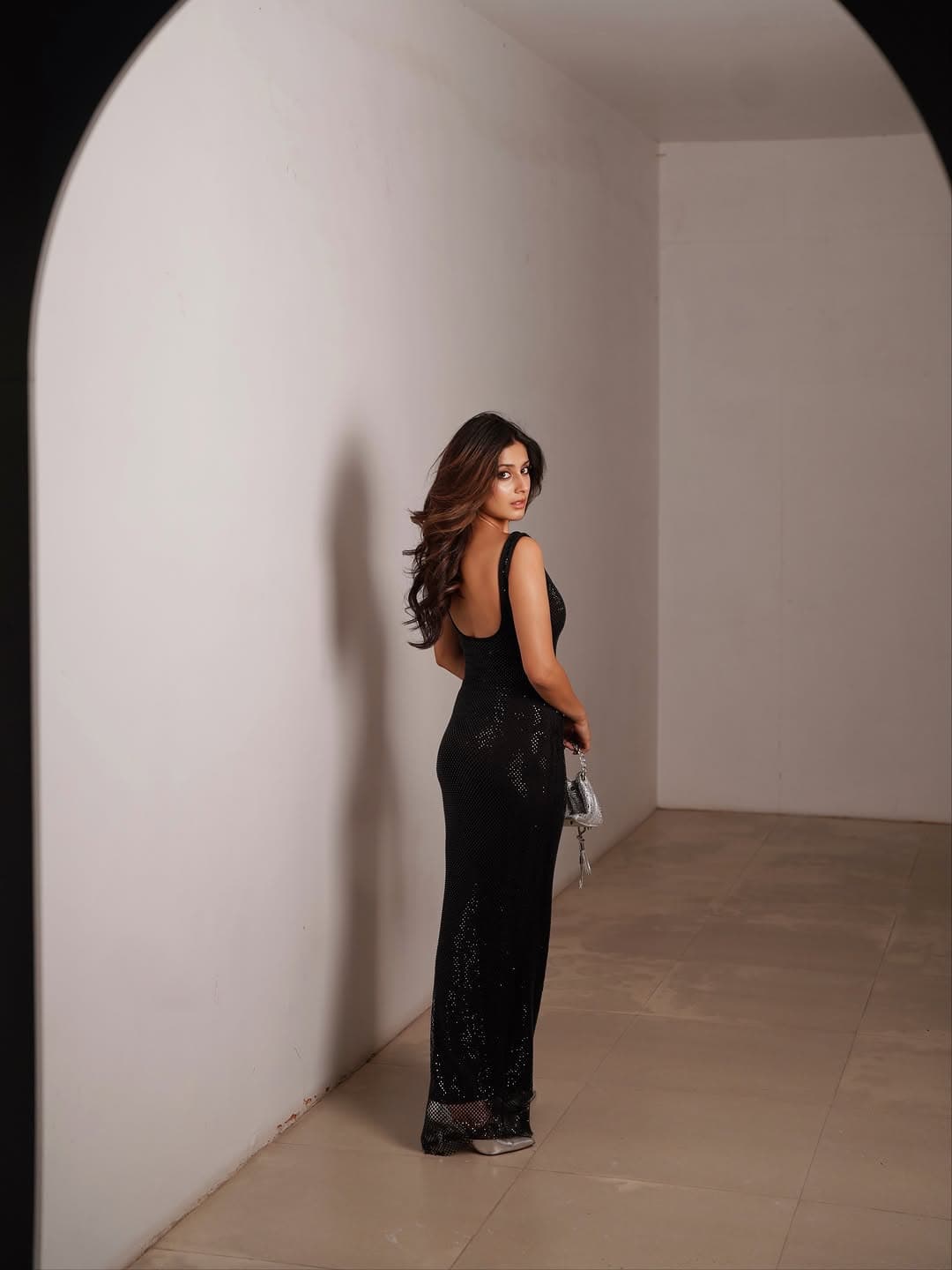
On paper, black is the simplest palette in fashion. In practice, a black fashion photoshoot is where every shortcut gets exposed. The caption tags the full crew, photographer @deepikadeepclicks, makeup by @vsg_makeup_mantra, hair by @hairstylist_laddi312, shot at @goldenhourstudios.qala alongside @muditsharma.07, with management by @insyncdigitals. That list matters because black does not forgive fuzzy edges. It asks for clean placement, deliberate contrast, and a face that can take an unflattering truth from the lens and still hold the frame.
What lands, across the set, is the balancing act between black as a “safe” choice and black as a technical challenge. Texture becomes the story when colour exits. Shine reads as intention. Matte reads as control. Even the absence of colour can feel busy if hair, liner, and lighting are all competing for attention.
Lighting, makeup, hair: where black becomes dimensional
Any stylist can put a subject in black. The hard part is keeping the look from collapsing into a single dark block, especially under studio lighting. In these images, the separation comes from the way the face is prioritised, and from the decisions that sit between camera and skin: makeup that defines structure rather than adding spectacle, hair that frames rather than crowds, and lighting that gives black somewhere to go besides “darker.”
Makeup that holds up in high-contrast frames
For a black fashion photoshoot, makeup has two jobs. First, it has to read cleanly when the wardrobe absorbs light. Second, it has to survive the close crop, where every blend line becomes visible. When a team credits the makeup artist in a caption, it is often because the face is doing heavy lifting, and here it is, the anchor point the eye keeps returning to.
Hair that adds line, not noise
Hair in black-on-black styling is geometry. The silhouette matters as much as the finish, because the boundary between garment and hair can disappear if both are dark. The credited hairstyling suggests intentional framing, less about volume for volume’s sake and more about how the hair’s edge interacts with cheekbone, jawline, and collar.
Why “back to black” keeps returning in celebrity style
There is a reason “back to black” captions keep resurfacing in celebrity style feeds. Black photographs well, travels across trends, and gives the subject space to project persona. For someone like Isha Malviya, whose public image is built as much on camera presence as on clothes, the black fashion photoshoot becomes a reset button, a way to strip away the distraction and let expression, pose, and light do the speaking.
It also signals something else: a growing emphasis on credited craft. Naming the photographer, makeup artist, hair stylist, studio, and management is not filler. It is a public acknowledgement that the image is made, not merely taken, and that the “look” is a composite of specialists who understand how black behaves in a frame.
For the teams who do this well, black is never empty. It is a surface that reveals every decision the moment a light hits it.
@deepikadeepclicks is credited as the photographer in the original post.
@goldenhourstudios.qala is tagged as the shoot location in the caption.
Photo Credits
Cover image and additional images courtesy of their respective owners. Credits as tagged: Shot by @deepikadeepclicks. Makeup @vsg_makeup_mantra. Hair @hairstylist_laddi312. Location @goldenhourstudios.qala with @muditsharma.07. Managed by @insyncdigitals.