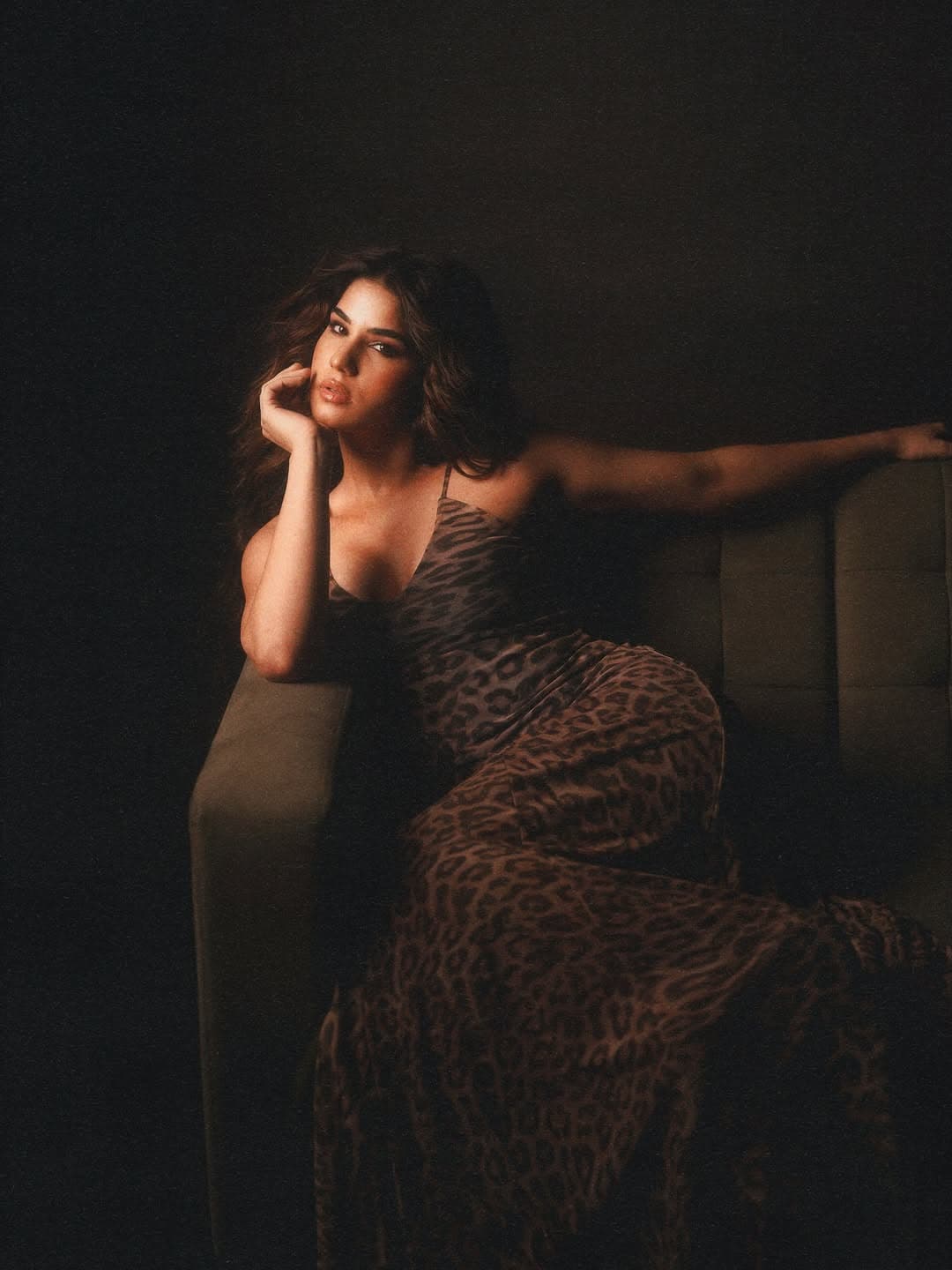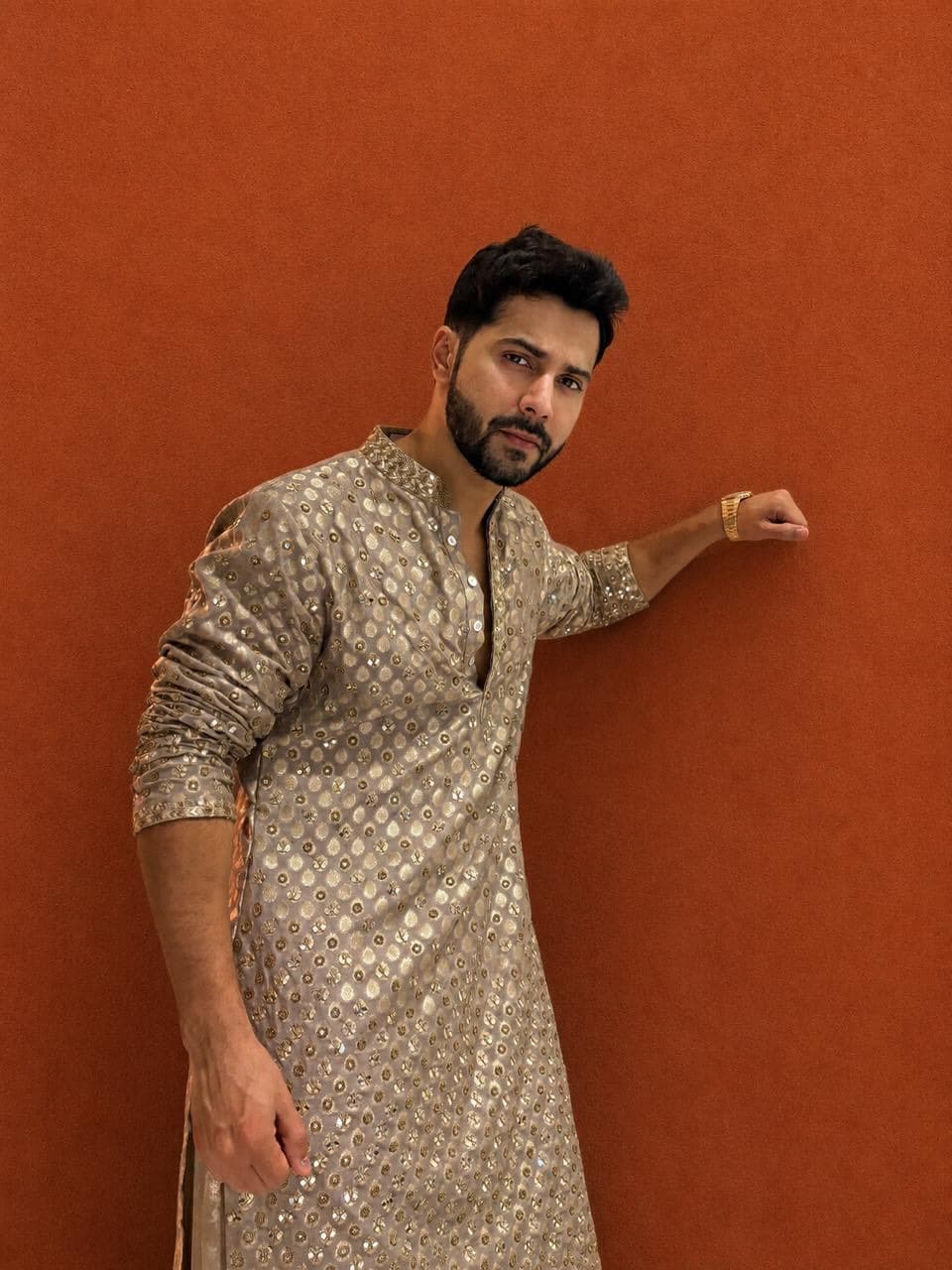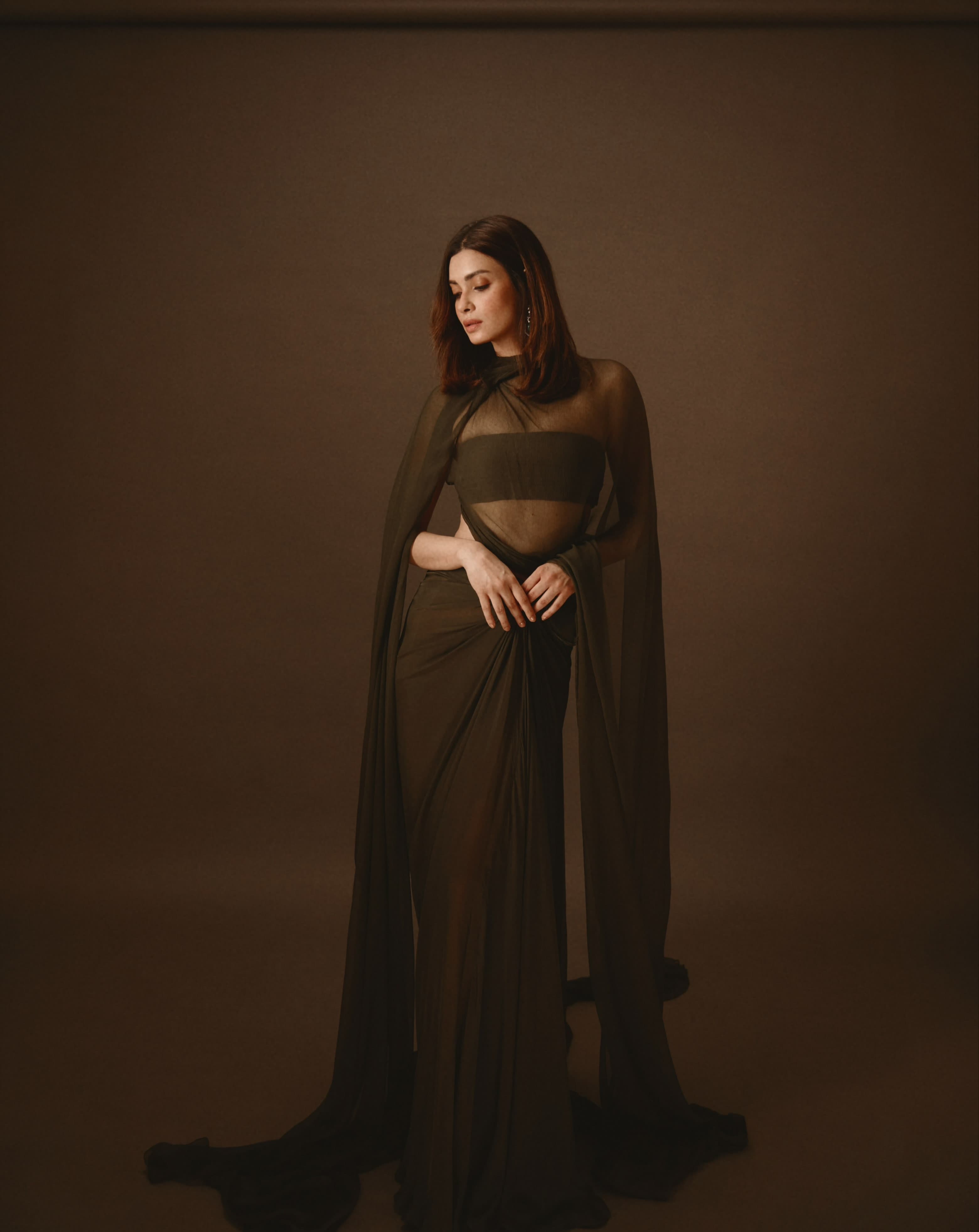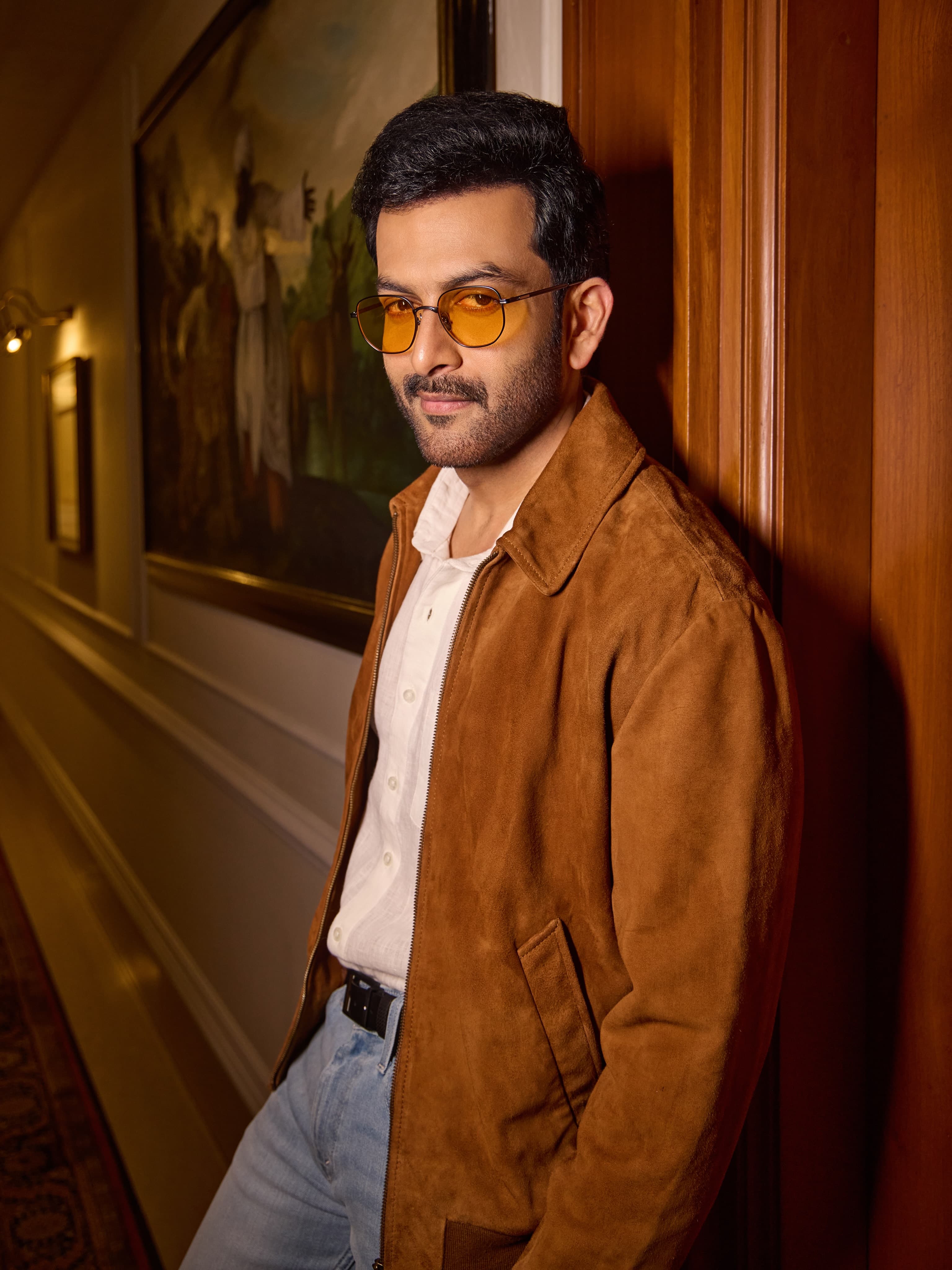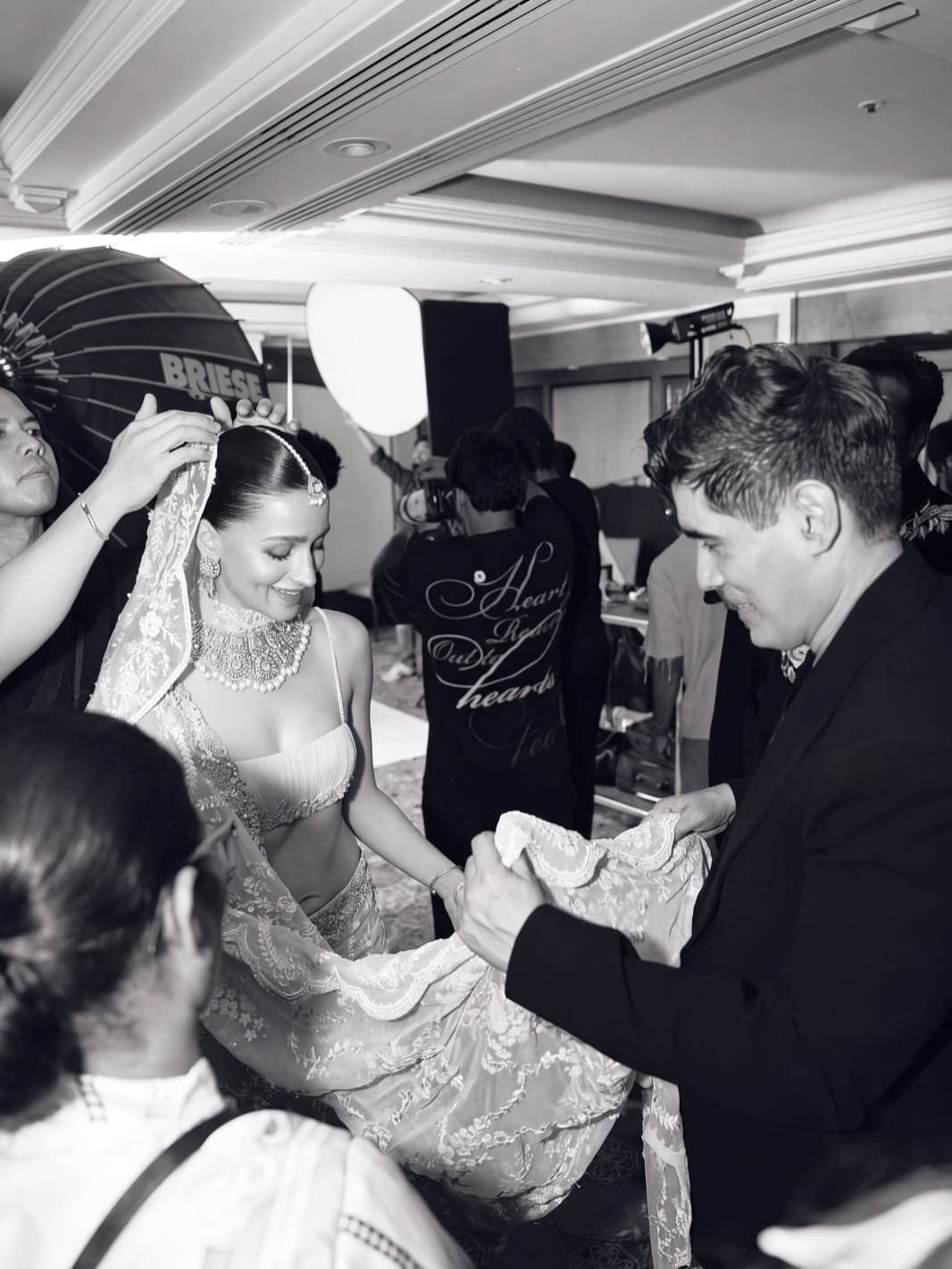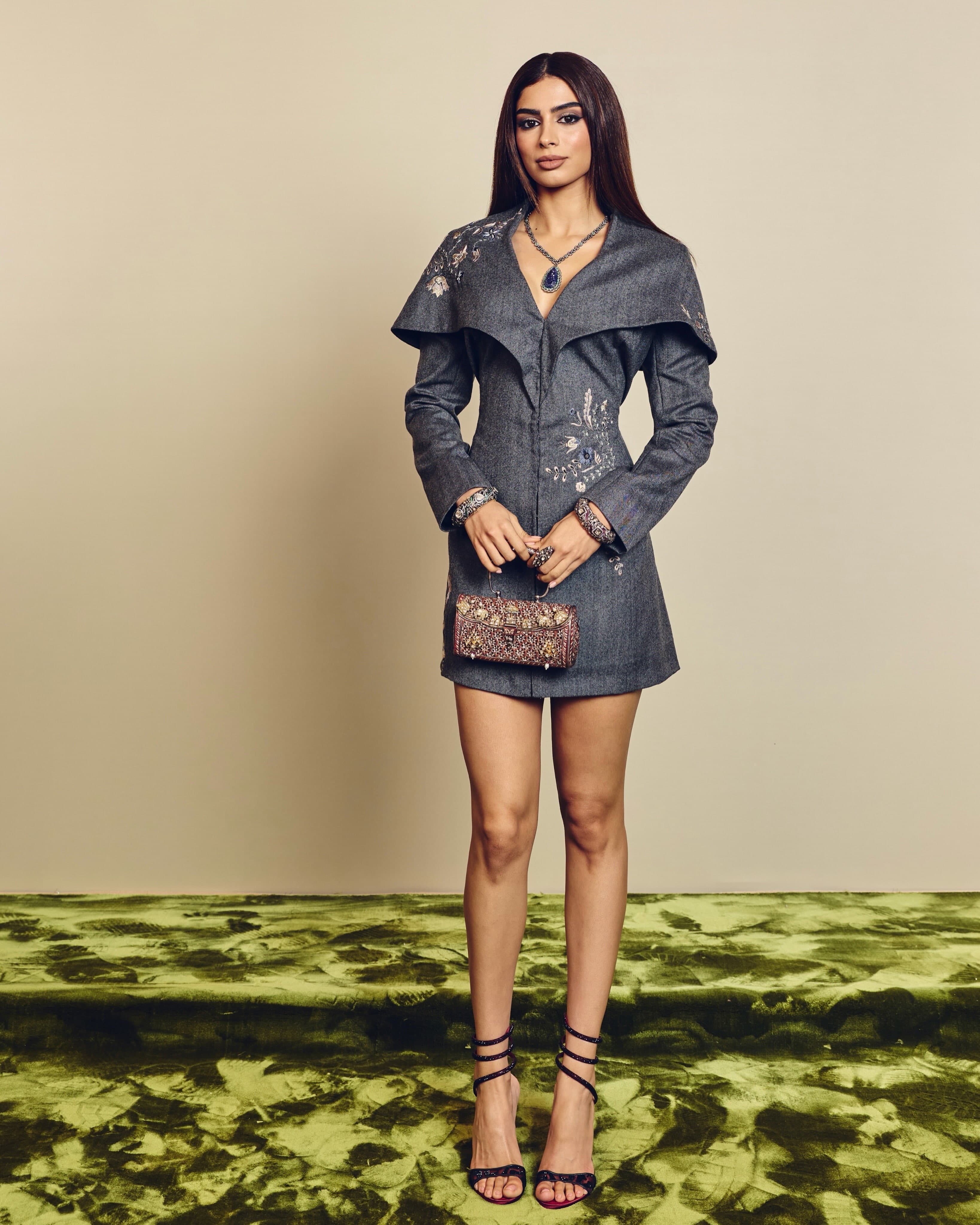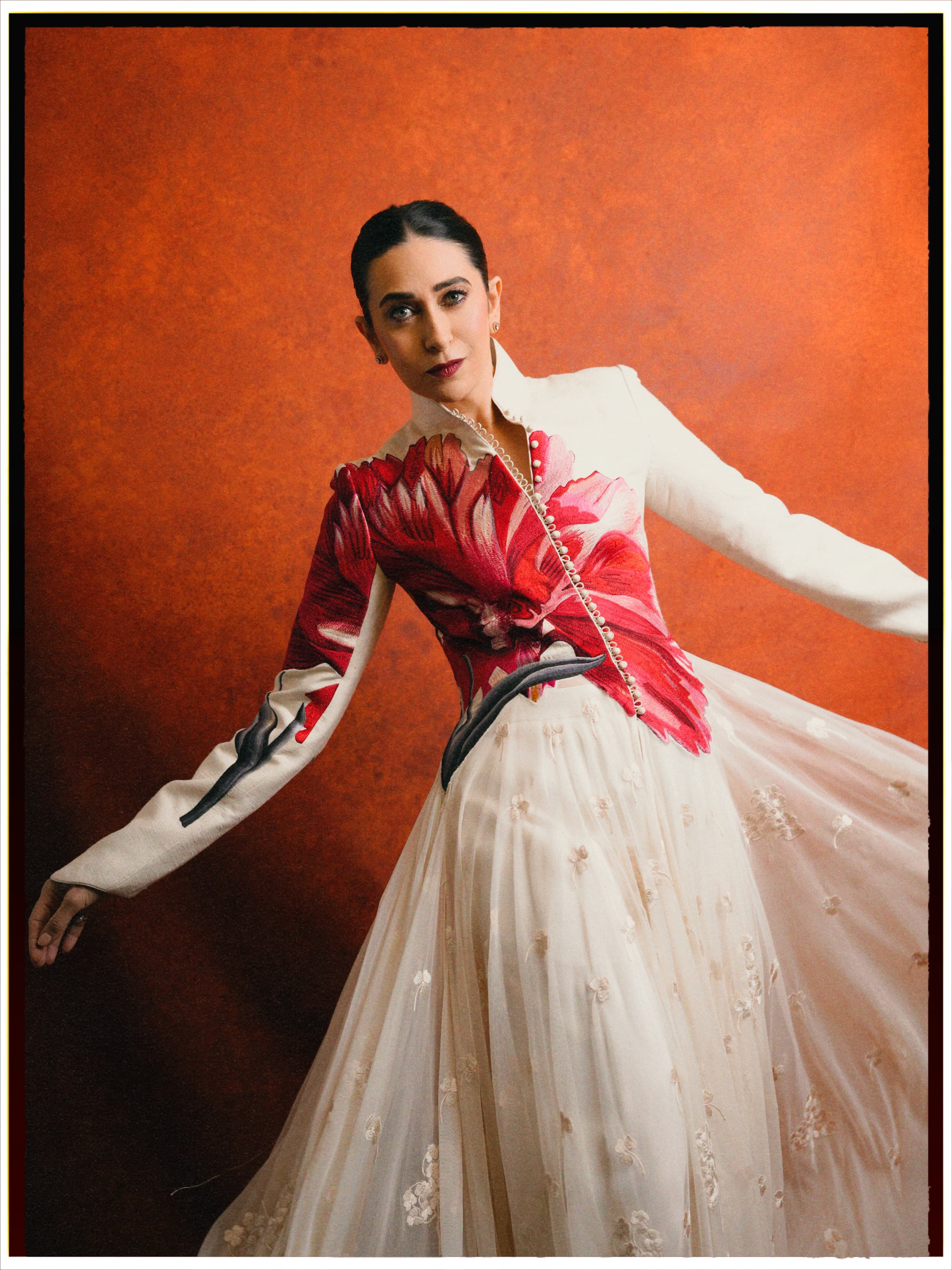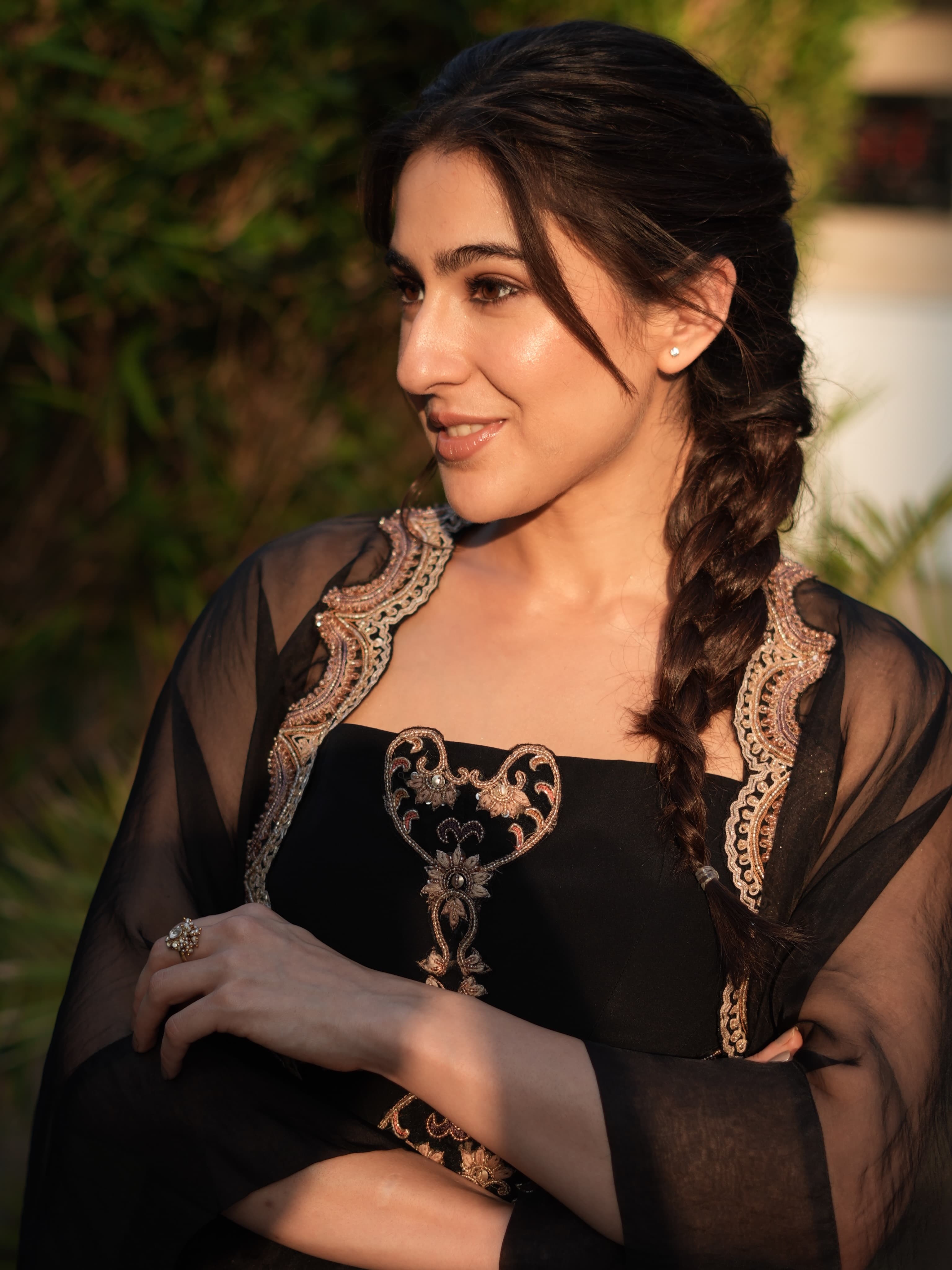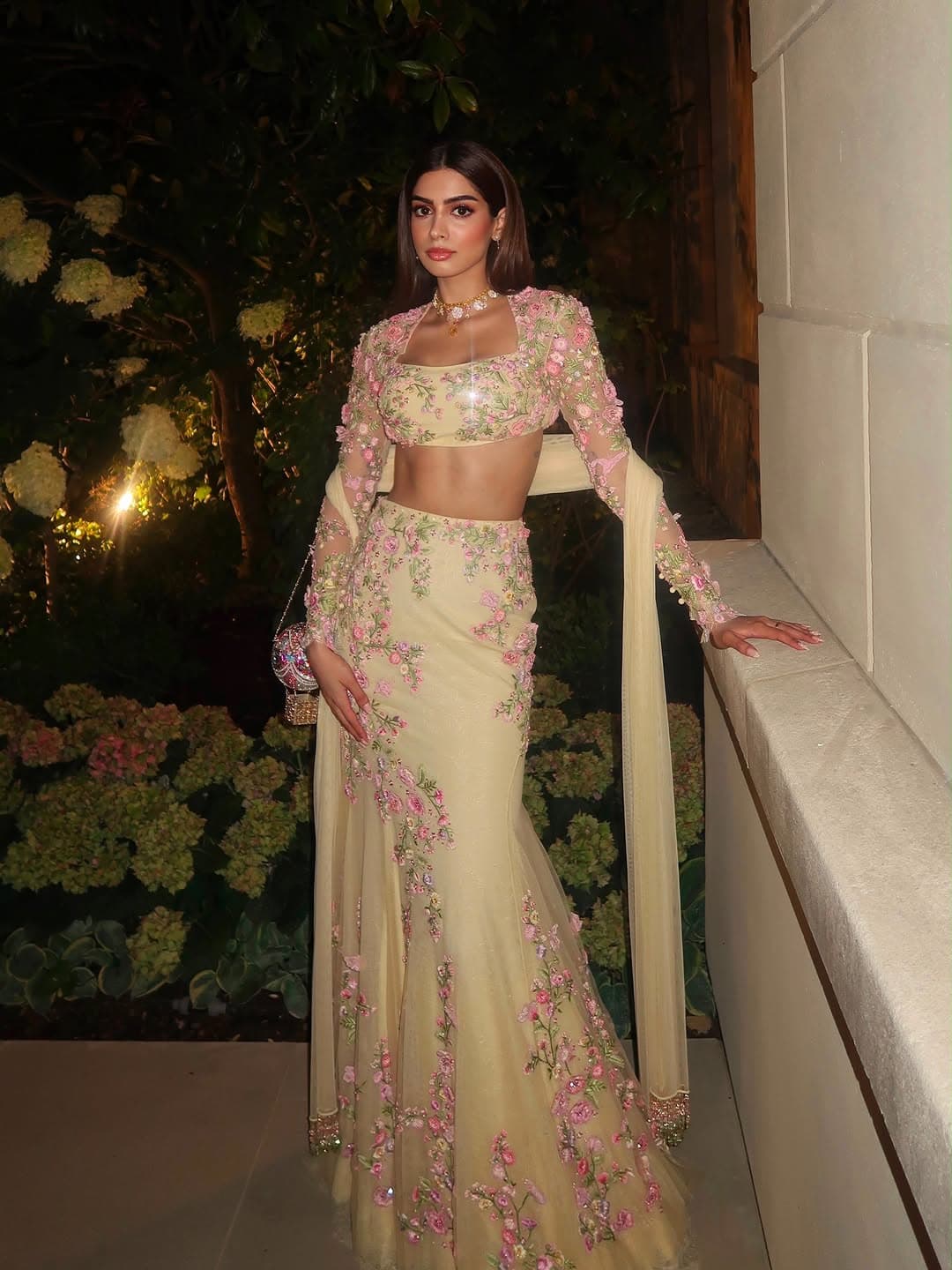
The first thing you notice is not the silhouette, but the labour, hand embroidered florals that sit on the surface like a topography map, each stitch catching light at a slightly different angle. On Khushi Kapoor, styled by Mohit Rai, the effect is immediate: Indian couture that announces its making up close, then holds its line from across a room. This is Manish Malhotra at his most exacting, building romance with needlework and a sculpted cut rather than relying on spectacle alone.
Manish Malhotra floral embroidery, when couture is the message
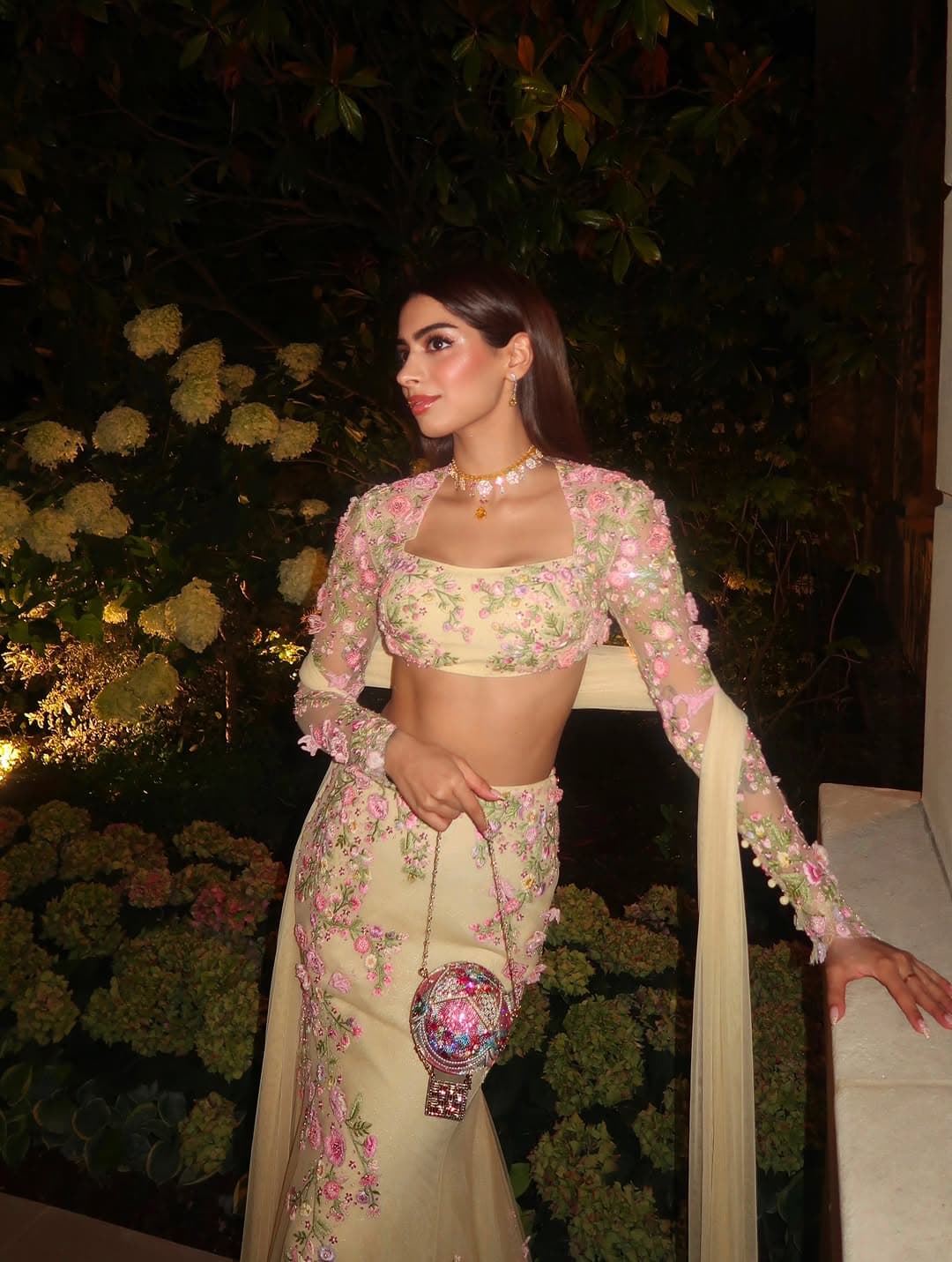
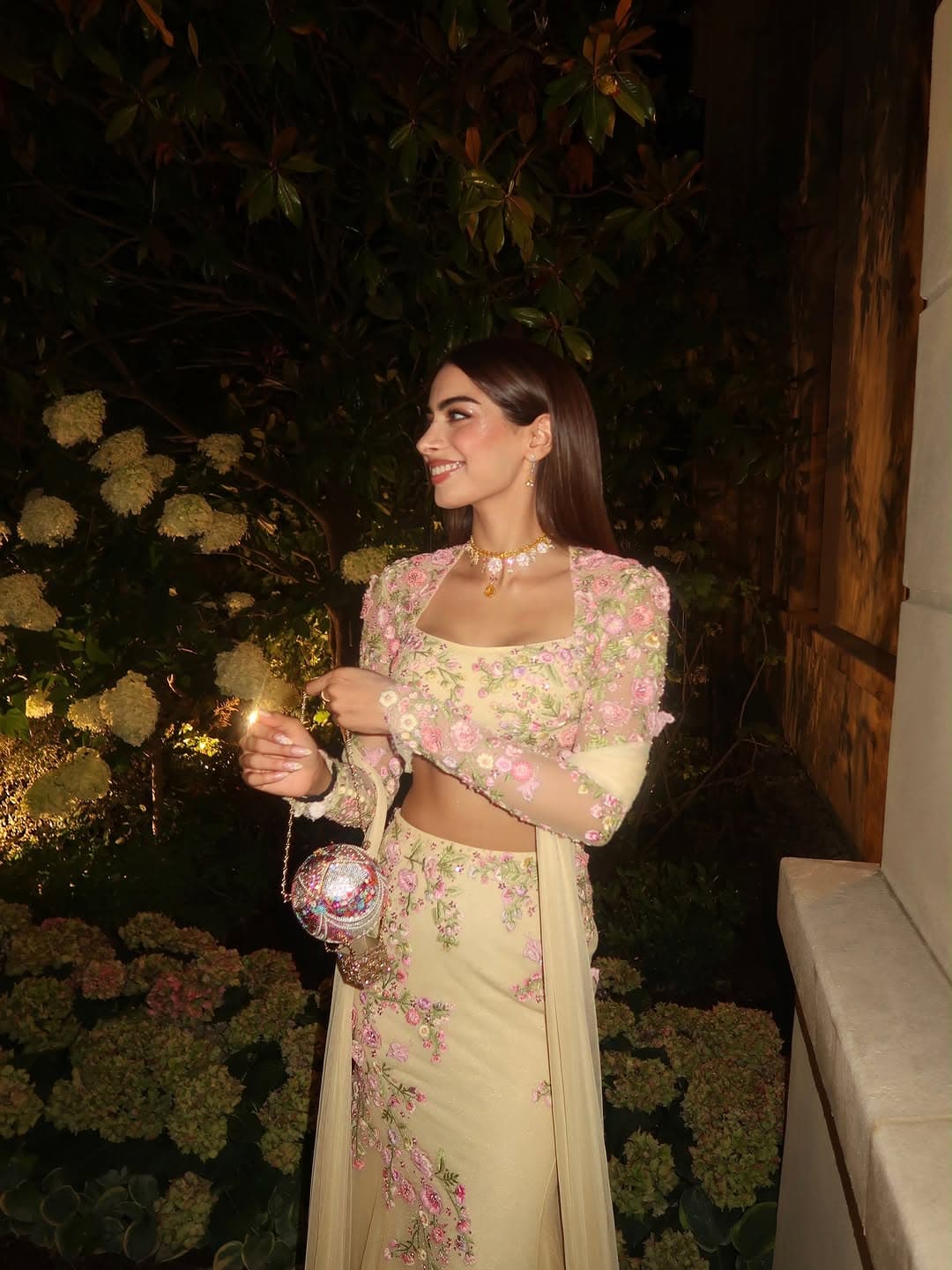
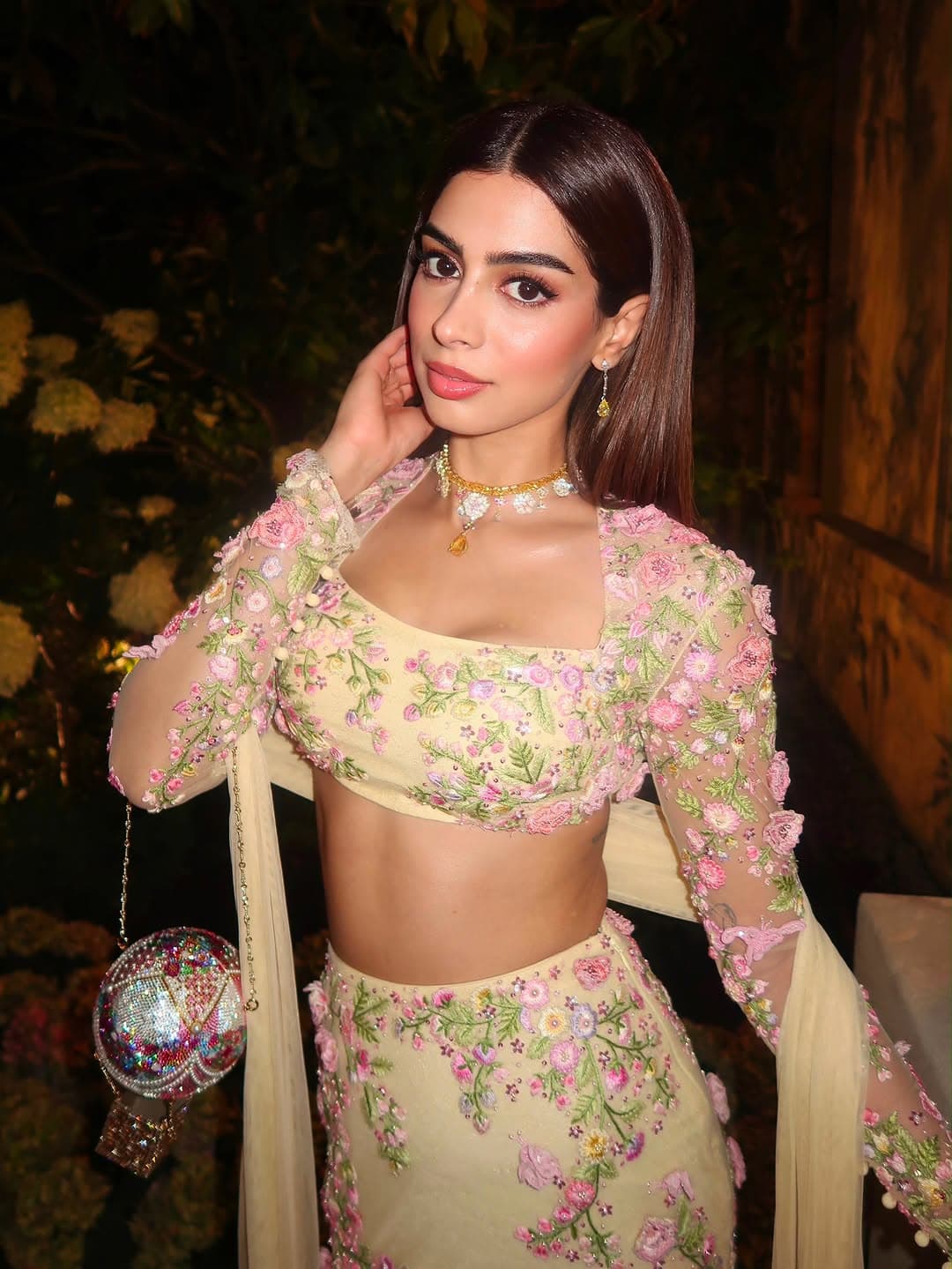
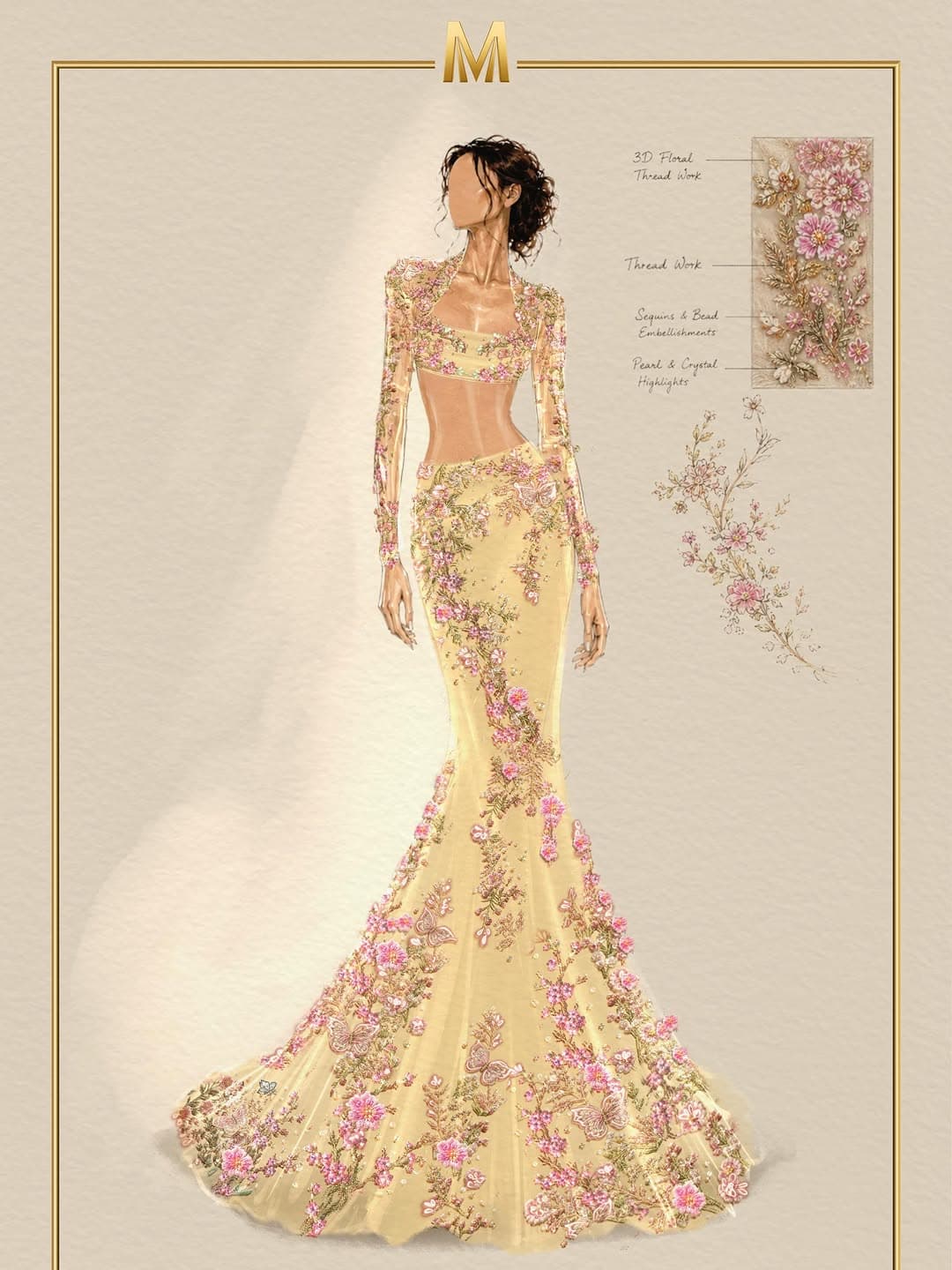
Fashion captions love to say “hand embroidered” as shorthand for value. Here, the phrase matters because it points to a specific Indian couture tradition: embroidery as structure, not decoration. Malhotra’s house has long treated surface work, sequins, thread, crystals, zardozi, as an engine for shape and drama, and these floral panels are placed to emphasise the garment’s architecture. The blooms do not float randomly. They gather, climb, and pause with intention, turning the body into the underlying frame.
Malhotra’s label, founded in 2005, has spent two decades refining this high wattage language of Indian occasionwear for film stars and brides alike, and the consistency is part of the point. When you see Manish Malhotra floral embroidery on a red carpet, you are looking at a signature that has been honed through thousands of fittings and a wardrobe’s worth of media flash.
Khushi Kapoor’s look, styled by Mohit Rai
Khushi Kapoor wears the embroidery with a clean, camera aware confidence, letting the garment do the talking. Styling by Mohit Rai keeps the frame focused on the craftsmanship, the eye tracks the florals first, then the contour of the silhouette. It is a smart reminder that couture photographs best when it has one strong idea, executed precisely.
Kapoor’s growing fashion visibility has been defined by moments like this, when celebrity styling resists clutter and instead foregrounds the work that took human hours to complete. For a generation consuming fashion through close crops and high resolution scrolling, that decision is more than taste. It is strategy.
What these sculpted silhouettes say about Indian couture now
There is a wider shift worth noting in Indian couture’s current vocabulary, a move toward garments that hold a firm shape while still giving embroidery a starring role. The hand embroidered florals here land on sculpted lines, suggesting a modern preference for clothes that photograph with clarity, whether on a runway, a wedding stage, or an Instagram grid.
In practice, this translates to a simpler proposition: if the embroidery is going to be dense, the silhouette needs to be resolved. If the structure is sharp, the florals can afford to be lush. Malhotra’s team understands that balancing act, and Khushi Kapoor’s look shows how effectively it can be carried when styling stays disciplined.
Where to follow the look
The post credits @manishmalhotraworld, @mohitrai, and @khushikapoor, placing the moment firmly in the house’s celebrity couture ecosystem. For official updates from the label, see Manish Malhotra. For the designer’s verified social feed where many couture looks debut first, visit @manishmalhotraworld.
If you are tracking how Indian couture is evolving in public view, watch who gets credited alongside the designer. When the stylist’s name is part of the caption, it signals that the image has been built, not merely worn.
Next time you see Manish Malhotra floral embroidery on a sculpted silhouette, pause before you zoom out. The real story is in the stitch density, the placement, and the way the florals are engineered to hold the eye exactly where the cut wants it.
Photo Credits
Images courtesy of their respective owners.