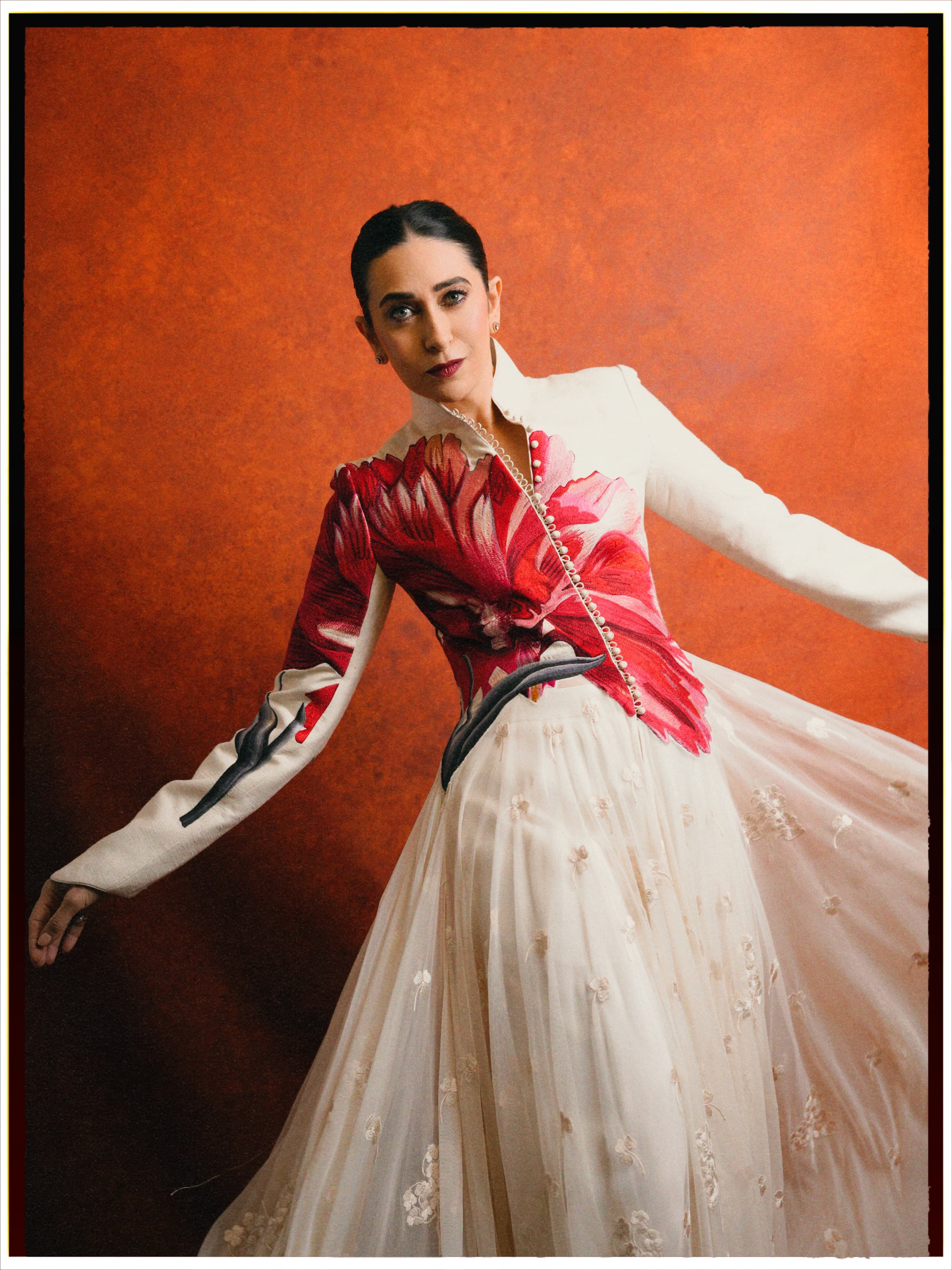
At a Tod’s show, you learn quickly where to look. Not at the logos, there are hardly any. Not at the theatrics, the house rarely needs them. The real story sits in the hand of the leather and the small rubber nubs of the Gommino, a code so familiar on the brand’s driving shoes that it becomes genuinely interesting when it migrates elsewhere. This season in Milan, that migration was the point.
Tod’s Milan Fashion Week: the Gommino, translated

The caption from creator Rahi frames the day as a “photo diary,” and that is exactly the right format for Tod’s, a label whose strongest moments often arrive in close up. At Tod’s Milan Fashion Week presentation, the house’s Gommino language surfaced beyond footwear, turning up as a tactile motif across accessories, the detail you only clock properly when you are near enough to see the grid, spacing, and placement.
Tod’s has been building that vocabulary for decades. The original Gommino driving shoe, defined by its pebble like rubber studs on the sole and heel, remains the brand’s most legible signature. In Milan, the pleasure was watching a signature that normally lives underfoot reappear at eye level, giving familiar leather goods an extra layer of recognition without resorting to loud branding.
Leather first, always
There is a reason Tod’s shows are often described in the language of making. The company traces its roots back to the early 20th century, and the modern brand is closely associated with Diego Della Valle and the Della Valle family, who grew the group that also includes Hogan and Roger Vivier. That history matters because Tod’s best work still communicates through material choices rather than slogans.
Rahi notes “relaxed tailoring and incredible leather,” and in the images you can see why that reads as the day’s through line: outerwear that holds its shape without looking rigid, bags that sit with a certain weight, and accessories styled to be handled. It is also why the Gommino makes sense as a house code. A stud is a small thing, but it is unmistakably physical.
For readers keeping score at home, Tod’s continues to anchor the Gommino story in its original product. The brand’s own overview of the Gommino is a useful refresher on why those rubber pebbles became an icon in the first place.
Why this detail matters now

Luxury has reached a moment where many houses have to decide whether their “signature” is a graphic, a monogram, a hardware shape, or something more intimate. Tod’s, at its best, chooses touch. Moving the Gommino beyond the iconic shoe and into accessories does two things at once. It keeps the brand’s most recognisable element in circulation, and it asks you to engage with the object at a closer distance.
It also reframes what a signature can be. A stud pattern does not shout the way a large monogram does, but it is harder to counterfeit in spirit. It relies on proportion, spacing, and craft, the things you notice in Milan when you are watching a collection pass in real time, then again later when you are scrolling back through someone’s diary of the day.
A Milan note from the photo diary
“Swipe to the end for the finale,” Rahi writes, and that small instruction captures the rhythm of fashion week: moments that feel like private observations, until you realise they are also the most accurate record of what mattered. In this case, what mattered was a familiar rubber stud, freed from the sole and reintroduced as a house motif you can spot across a look.
If you have been following how Milan keeps reasserting craft as its strongest argument, you may also enjoy our edit on what makes a fashion week moment stick beyond the runway.
For Tod’s latest brand news and runway world, the most direct reference point remains the label’s official channels, starting with Tod’s itself.
Photo Credits
Cover image and additional images courtesy of Rahi. Images courtesy of their respective owners.