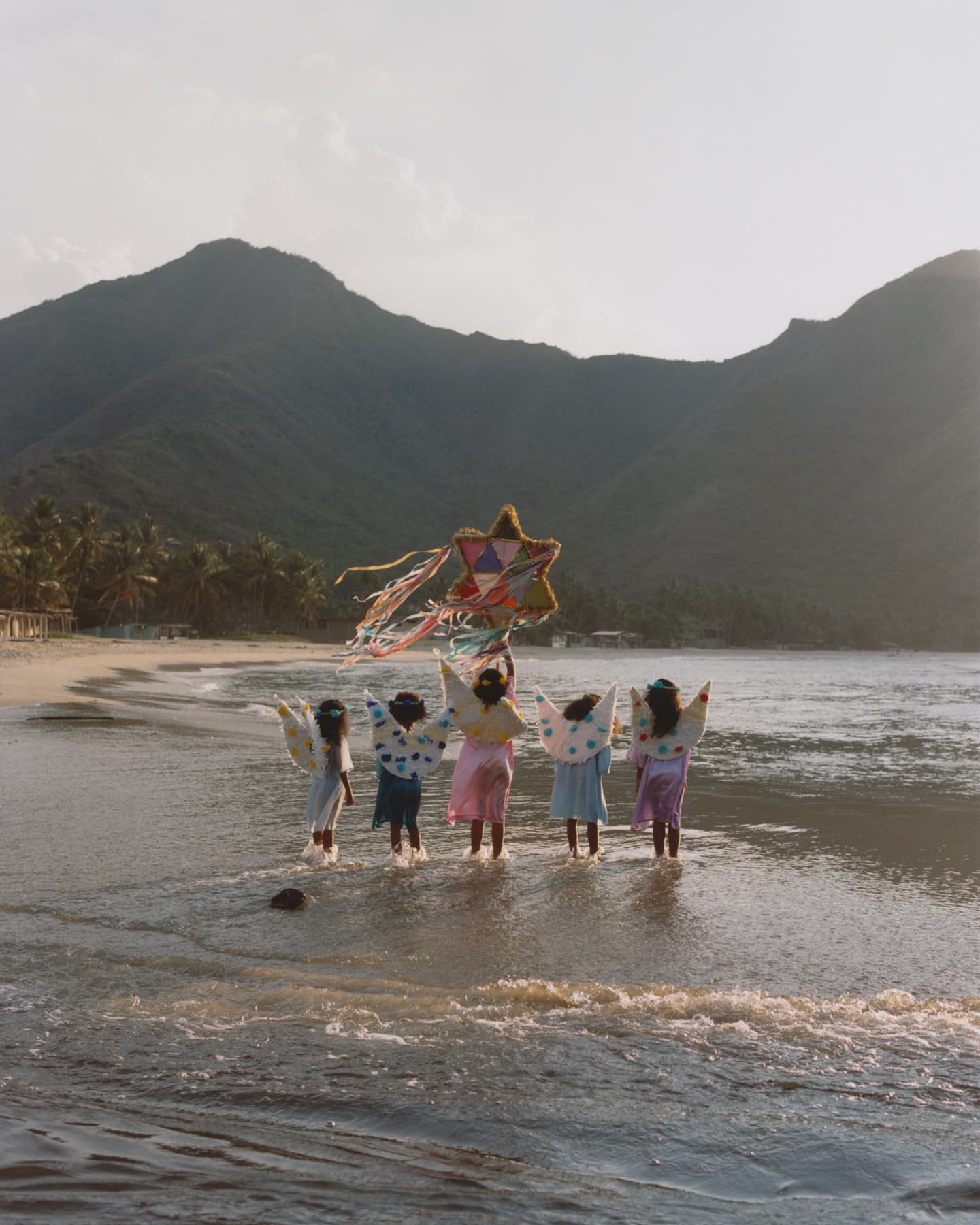
There is a particular charge in meeting a photobook in the place where it is physically handled, opened, signed, passed across a table. This Saturday, Oct 3, photographer Silvana Trevale will be in the studio for a signing of Venezuelan Youth, her new book with Guest Editions, from 2 to 4 pm, with no RSVP required. It is a simple invitation with an unusually expansive promise: a chance to encounter Venezuelan Youth as an object, and as a long-running document made between 2016 and 2025.
“Venezuelan Youth” is a decade of looking, not a headline

The framing matters because Trevale’s project explicitly steps away from the reflexive visual shorthand that often follows Venezuela in international media. According to the event announcement, Venezuelan Youth was produced between 2016 and 2025 and positions itself as “a sensitive and profound view of the complexities of Venezuelan identity as seen through the eyes of its youth.” That time span is the point. Photobooks that hold together across years tend to reveal more than a single narrative arc, they show repetition, drift, and what refuses to change.
If you have followed contemporary photobook culture at all, you know how easily “youth” becomes a styling exercise, a moodboard with borrowed grit. What makes Trevale’s premise more demanding is that it is anchored in belonging. This is presented as a contribution to her homeland, not a parachute assignment. The result is a proposition to the viewer: stay with the work long enough to notice what sits alongside pressure, what still gets dressed up, flirted with, daydreamed through.
Silvana Trevale on hope, quoted in Vogue
Trevale has spoken clearly about how she approached the project. In an interview quoted by Vogue, she described the emotional engine behind the images: “Hopefulness and the faith of a better future for themselves and for Venezuela shaped a lot of the narrative, as I approached this project through the youth and through their eyes, a mix of innocence, of hoping that everything will be better, but also their strength in continuing to remain hopeful in the reality they’re in. That is what shaped and drove the project. I wanted to bring that innocence and keep that lightness of being a kid alive.”
Read carefully, and you can hear a photographer describing methodology, not messaging. She is naming perspective as the camera’s real subject. The youth are not used as symbols. They are the authors of the gaze Trevale follows, and that distinction tends to show up in small choices, where the lens lingers, how proximity is negotiated, what is allowed to remain unresolved.
What to know about the book signing, and why it matters
The details are pleasingly direct: Saturday, Oct 3, 2 to 4 pm, no RSVP. A signing is often treated as a retail footnote, but for photobooks it can be the most human part of the distribution chain. The personal inscription, the brief exchange, the knowledge that the maker has touched the same page you are about to live with for years, it recalibrates the work from content to artifact.
If you are building a photo library, or you simply want to understand how photographers are reworking the visual language around national identity, this is exactly the sort of afternoon that can sharpen your eye. For a related look at how image-makers are shifting the frame in book form, see Best Magazine.
For more information on the publisher behind the release, visit Guest Editions. If you are encountering Trevale’s name for the first time, start with Venezuelan Youth itself. A body of work that took 2016 through 2025 to produce is asking to be given more than a quick scroll.
Photo Credits
Images courtesy of their respective owners.