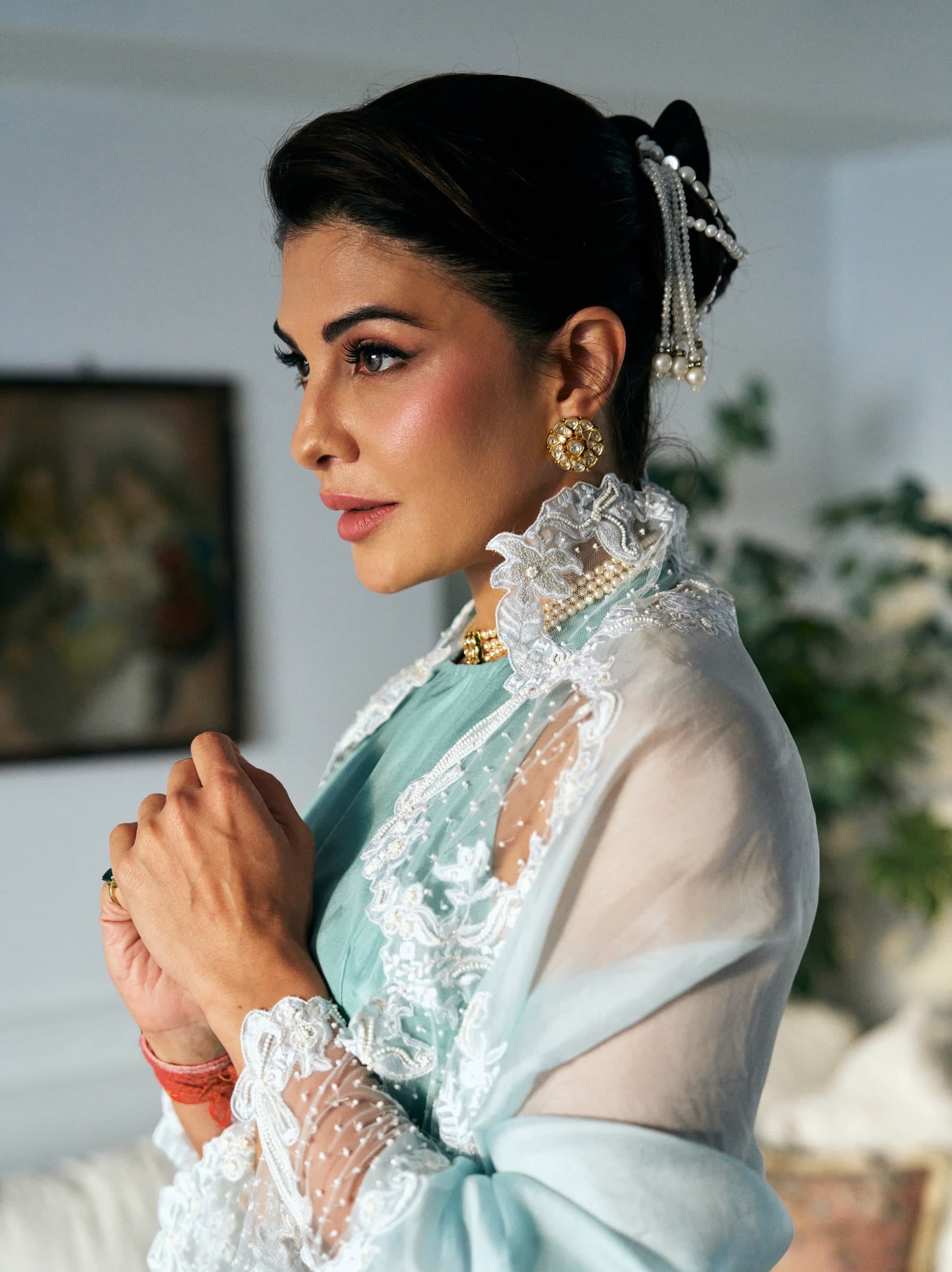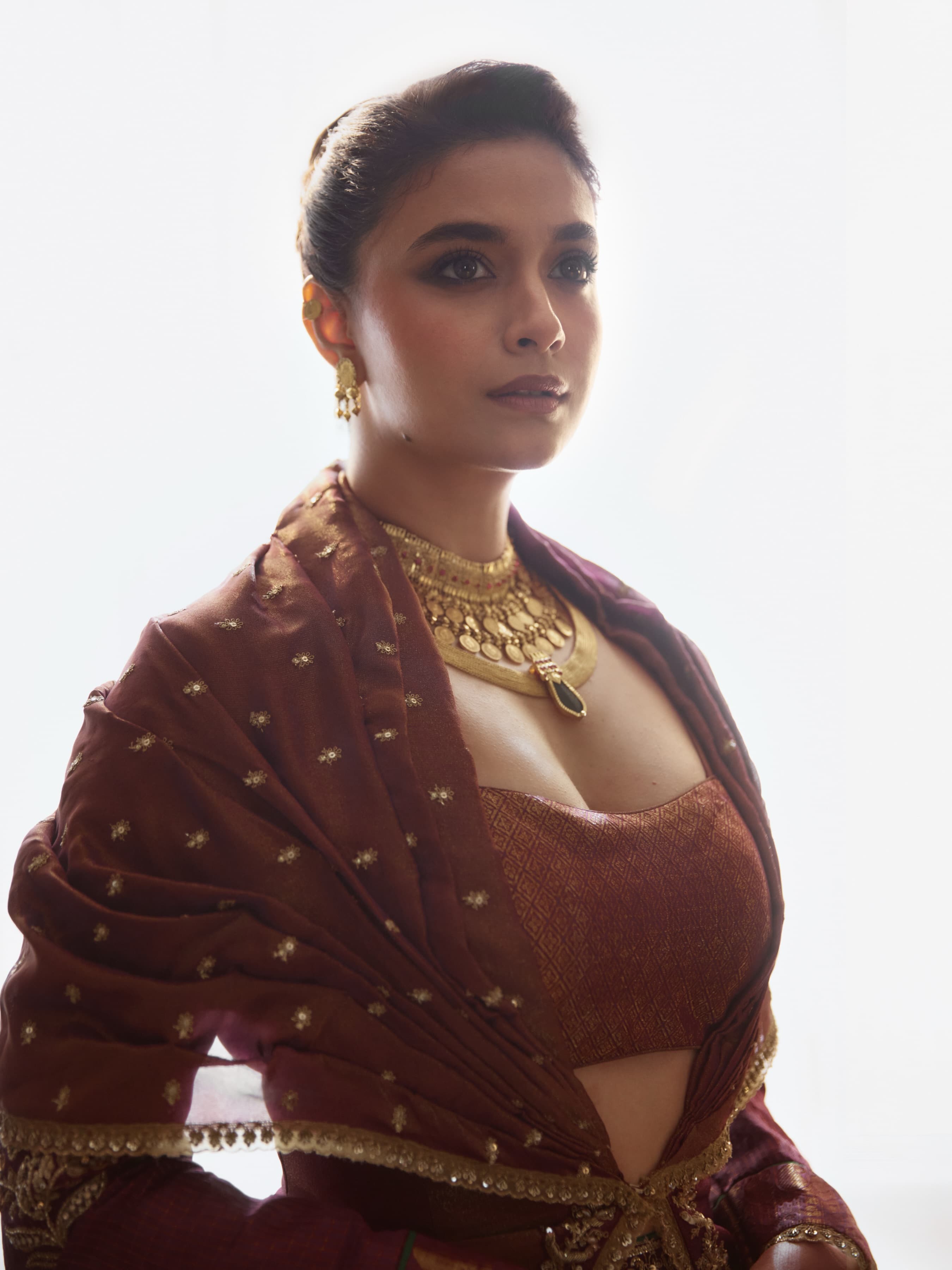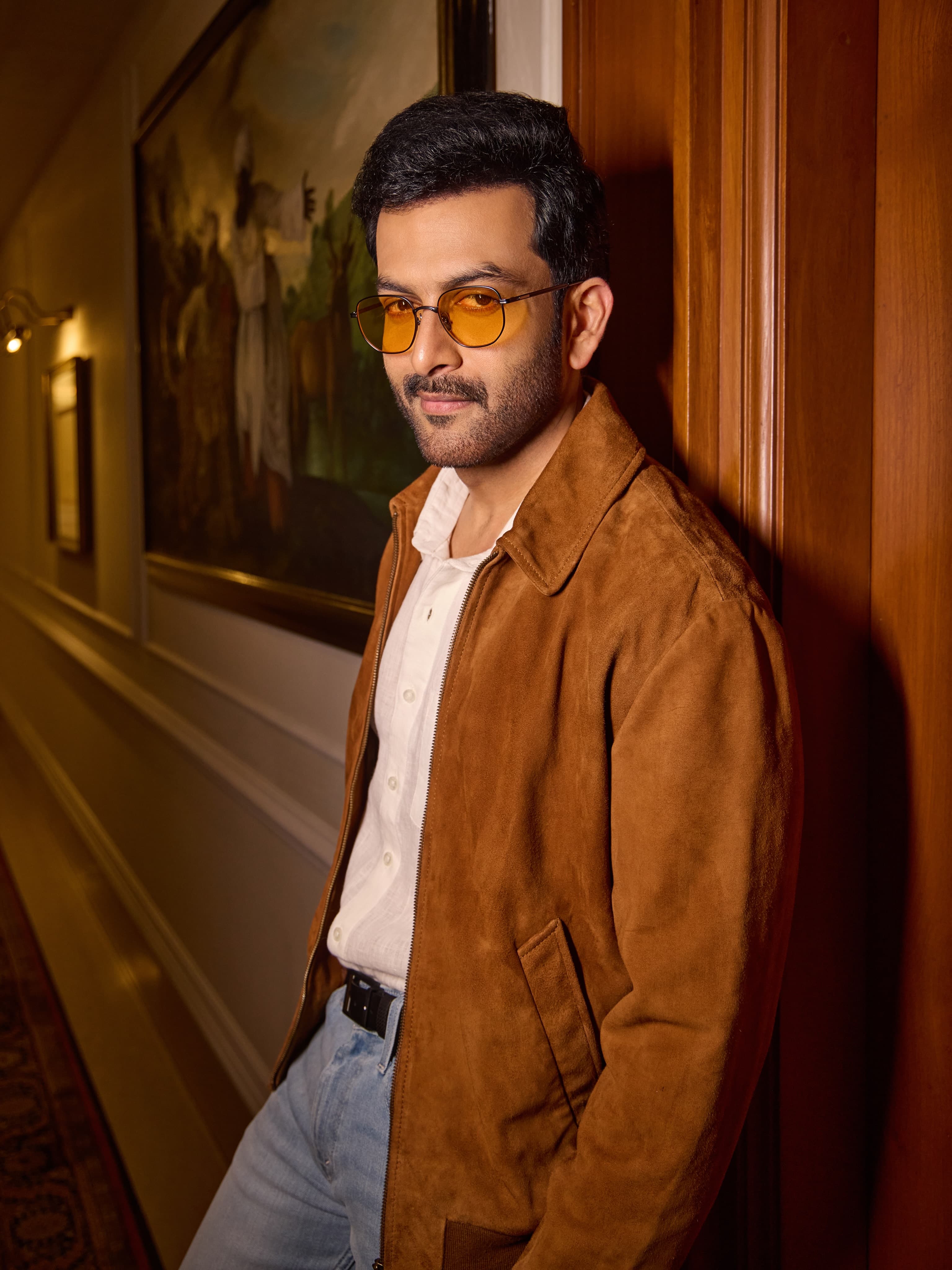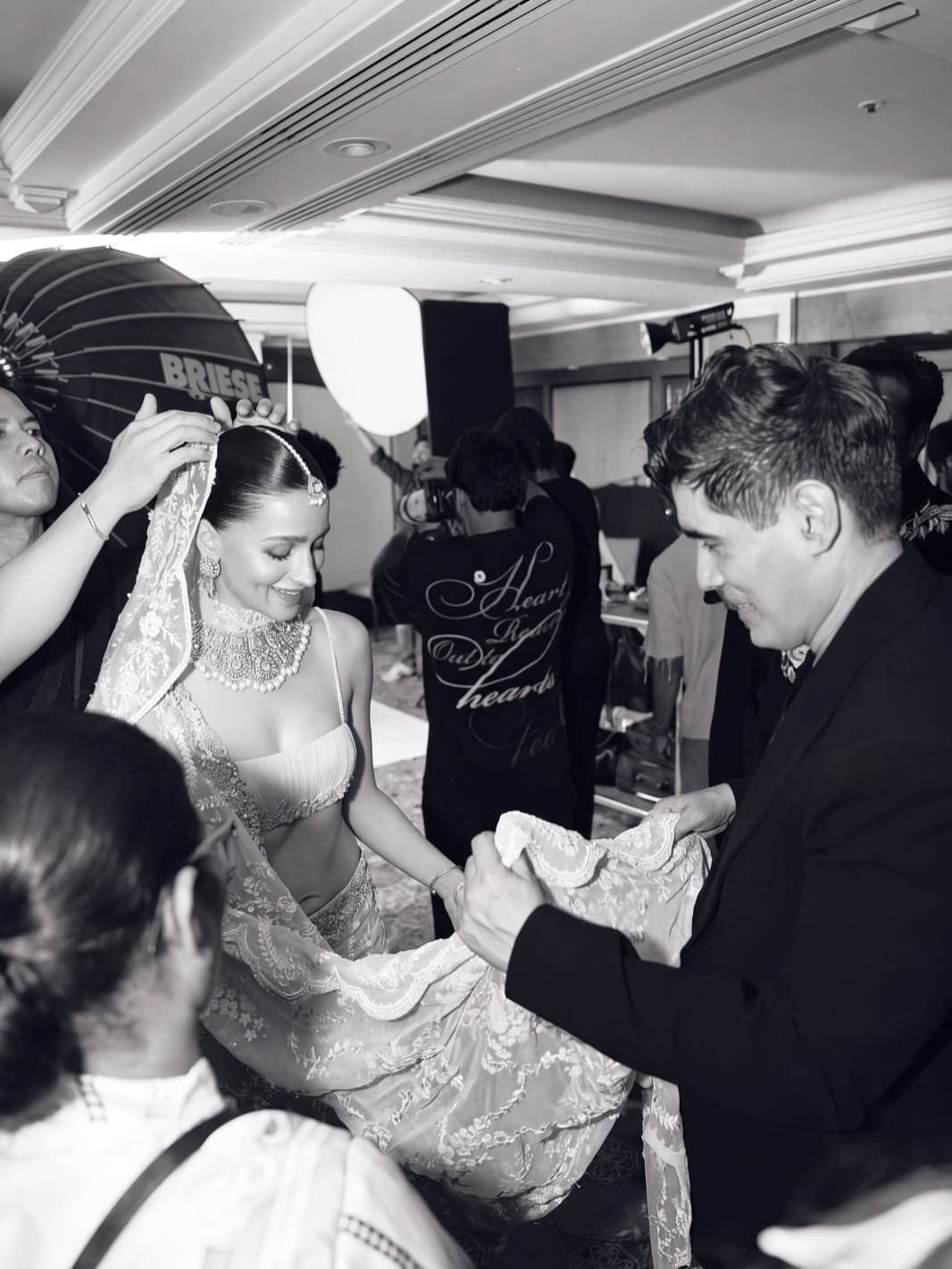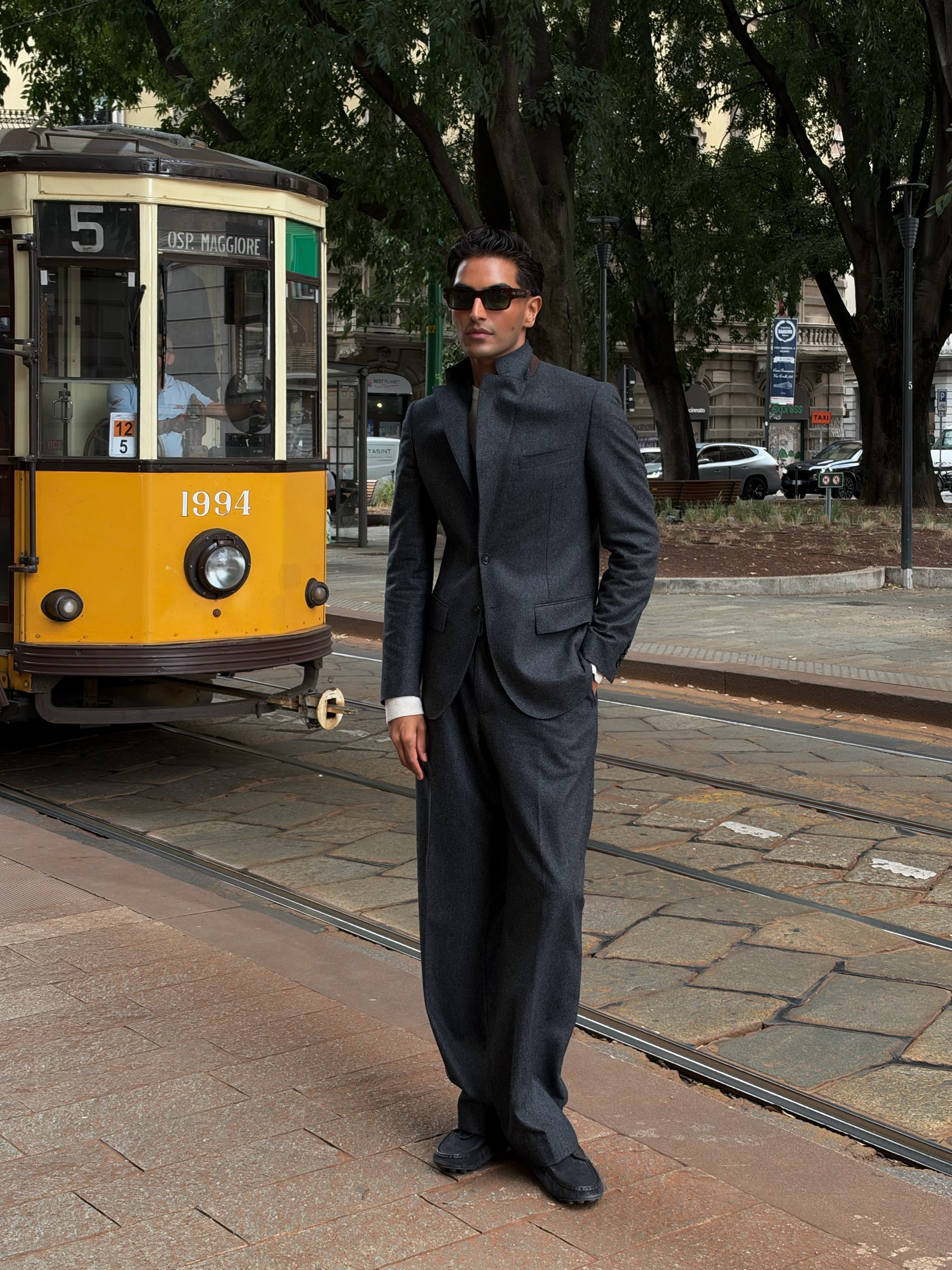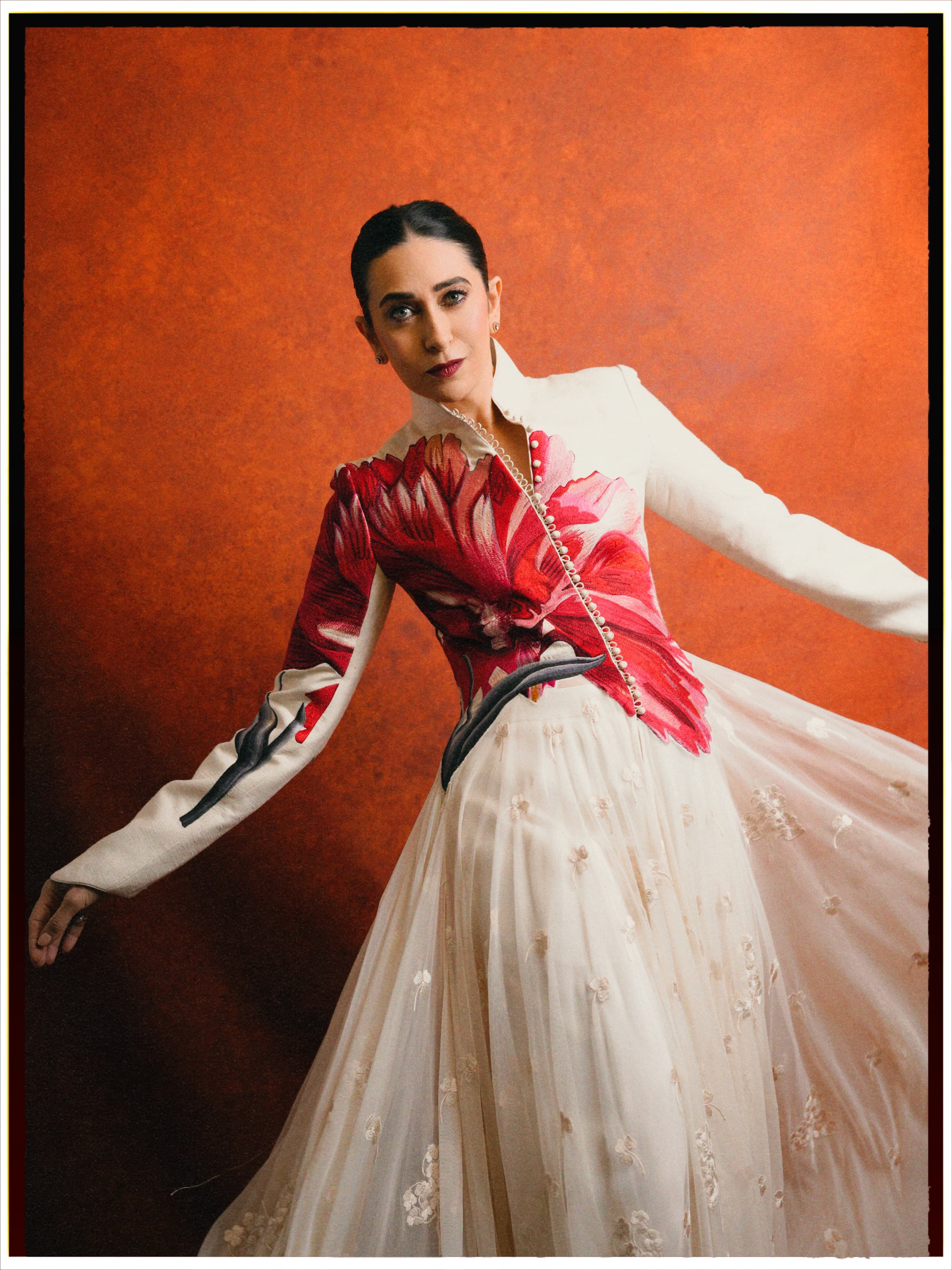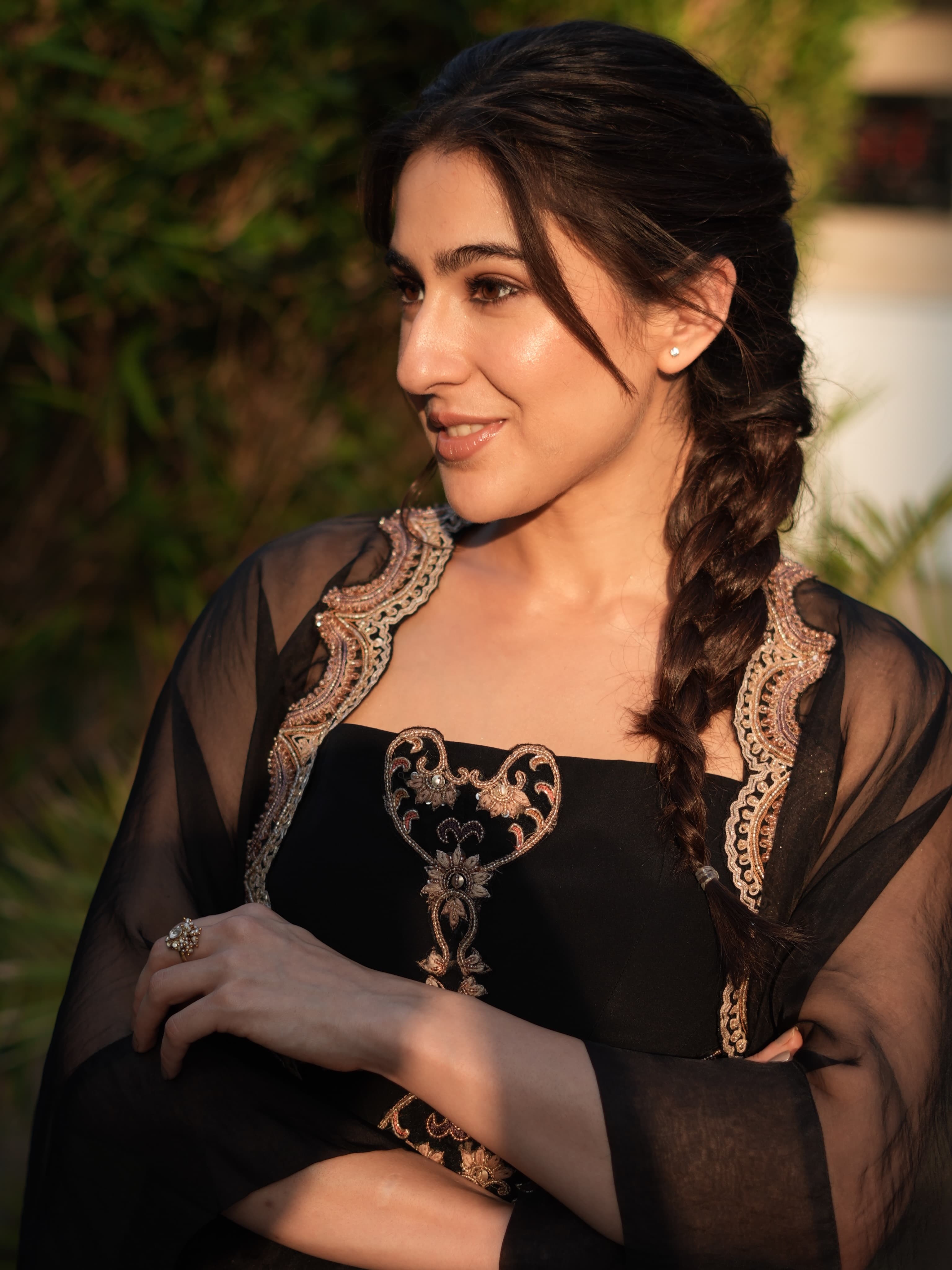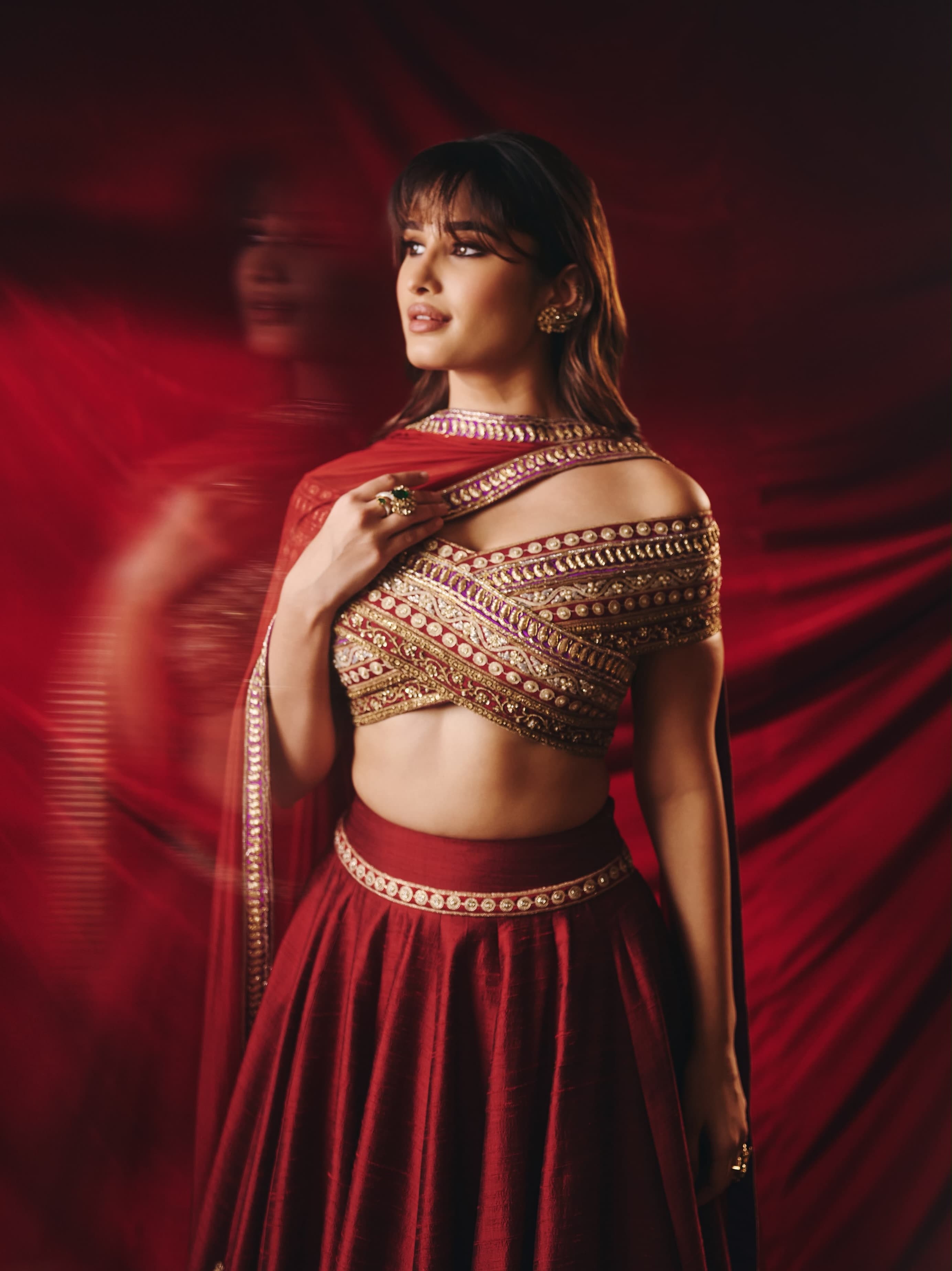
There is a particular shade of red that behaves differently under light, turning copper at the edges, then returning to wine when the camera angle shifts. In the latest images circulating of Rasha Thadani in Manish Malhotra, that burnished crimson does the heavy lifting first, before your eye catches what the caption wants you to notice next, Kashmiri zari, heritage, shape, and the long memory of craft.
Rasha Thadani in Manish Malhotra, the fabric speaks first
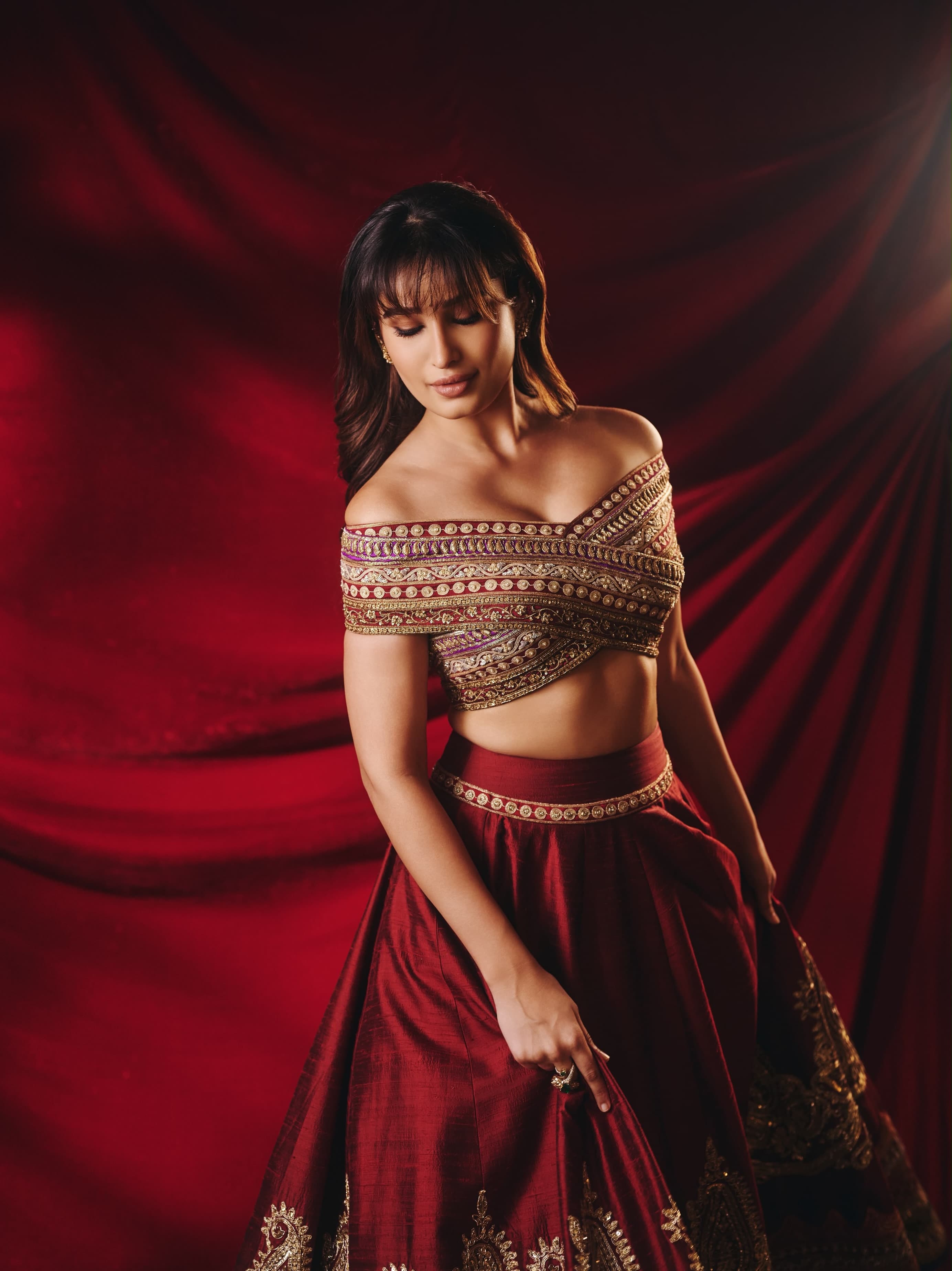
When a look is built around zari, it is never merely decoration. Metallic thread insists on being read up close, because it changes with distance, from a gleam to a grid, from shimmer to structure. Here, the effect is amplified by the choice of crimson, a colour that throws the zari into high relief rather than letting it disappear into tonal stitching.
Manish Malhotra has spent decades translating Indian formalwear codes for modern wardrobes and modern cameras. His label has become a default for high-wattage occasions, red carpets, weddings, award nights, and every event where movement and flash photography are part of the design brief. For readers looking to place the house within its own narrative, the brand’s official site remains the cleanest reference point: Manish Malhotra.
Kashmiri zari, and why it matters in 2026’s dressing conversation
In the caption, “Kashmiri zari” is the detail doing the cultural work. Zari is more than a surface flourish, it is a technique with lineage, labour, and regional variation, and the word “Kashmiri” signals a specific geographic and aesthetic inheritance rather than a generic metallic finish. If you want a plain-language primer on what zari is, including its historic use across Indian textiles, the Encyclopaedia Britannica entry is a reliable checkpoint: Britannica on zari.
What feels current is not the return of craft itself, craft never left, but the way craft is being named again in public captions and credits, not buried under the catch-all of “embellished.” In images like these, the garment becomes a kind of captioned object: colour, technique, and maker all tagged in one breath. The result is a clearer chain of authorship, even when we do not have a runway note or collection title attached.
A silhouette built to photograph, not to shout
The best celebrity fashion images do one thing very well: they give the viewer a single strong idea, then allow secondary details to reward the second look. Here, the idea is the burnished crimson. After that comes the zari work, then the clean geometry of the styling and pose that keeps the eye moving along the garment instead of away from it.
Because the post does not specify the exact collection, season, or look name, it is worth resisting the temptation to over-interpret. What can be said with confidence is simpler and more useful: this is a classic Manish Malhotra proposition, Indian craft techniques made legible for a contemporary audience, executed in a colour that photographs with depth rather than flat saturation.
If you have been tracking how younger faces are rewriting occasionwear, you might also like our latest Celebrity stories. For a wider view of how Indian couture and craft houses are shifting their signatures for the present tense, browse Fashion.
Photo Credits
Images courtesy of their respective owners.