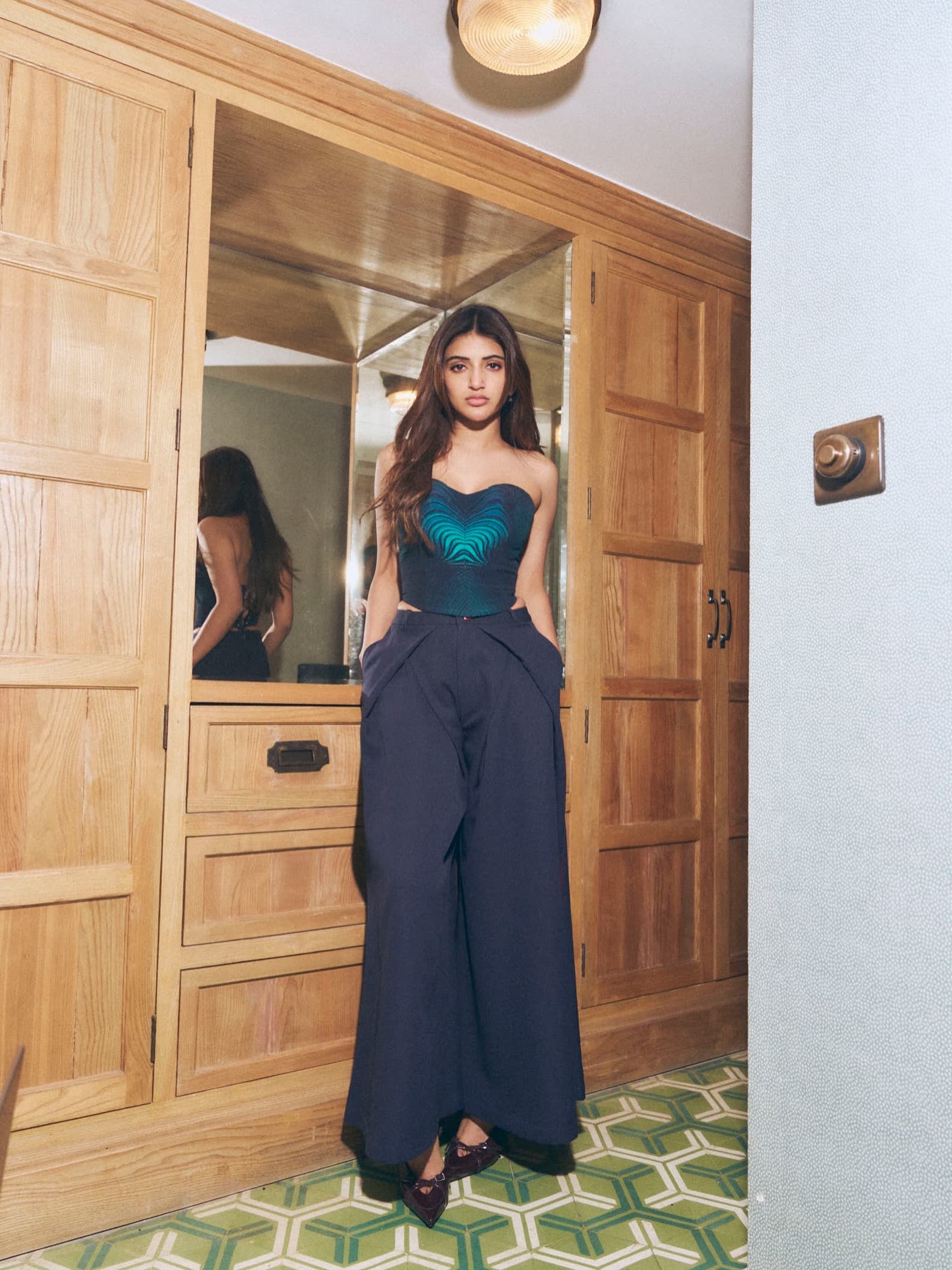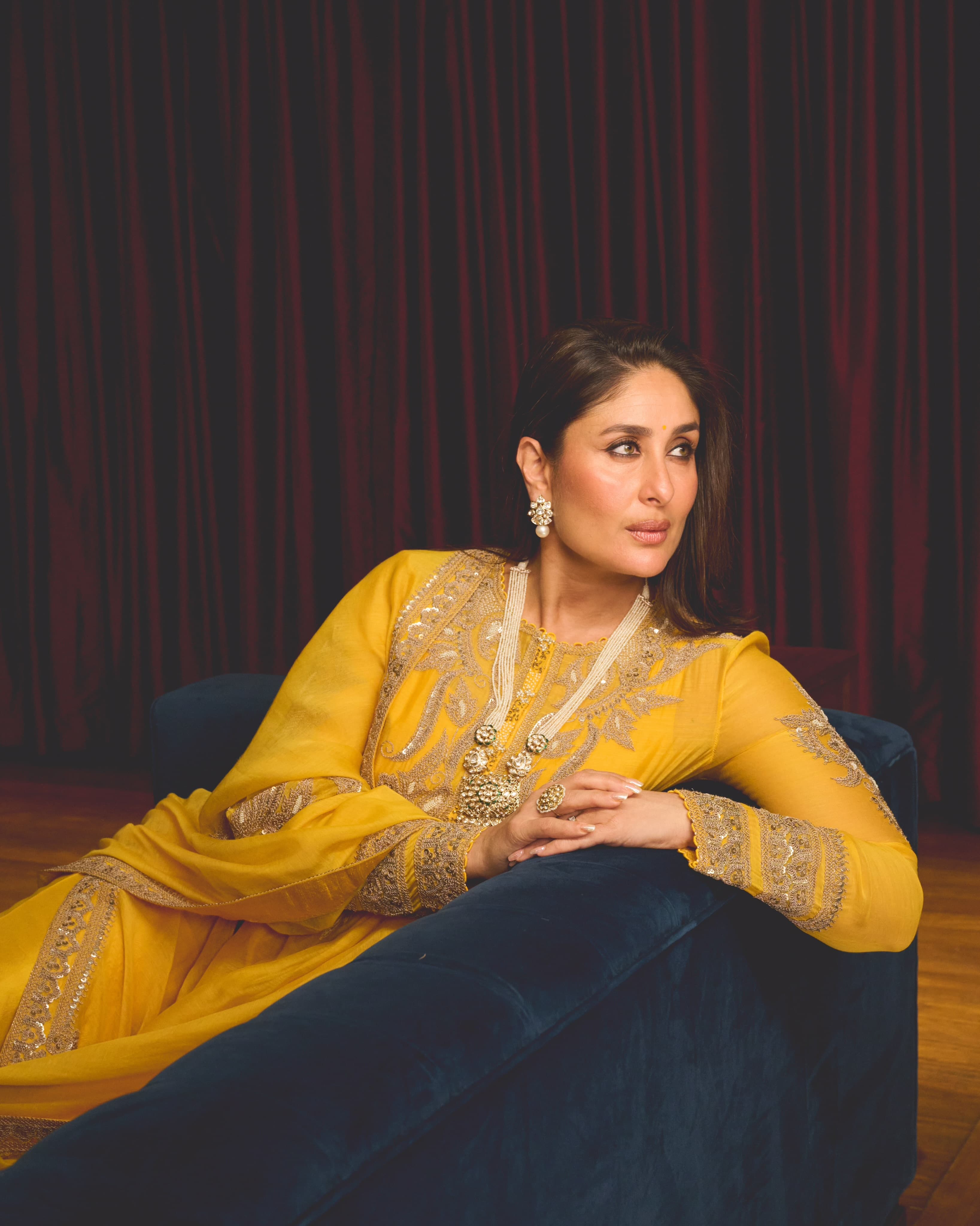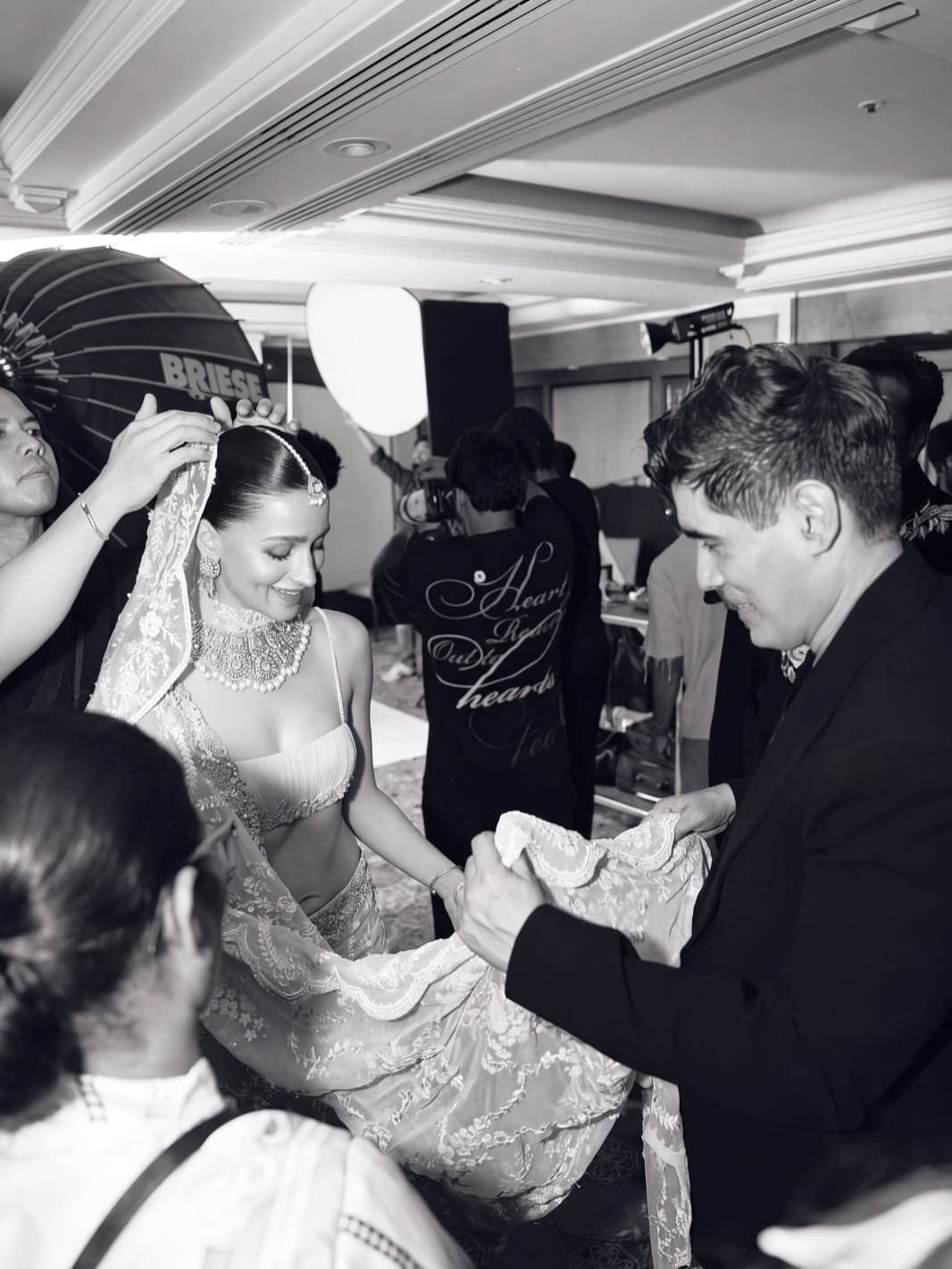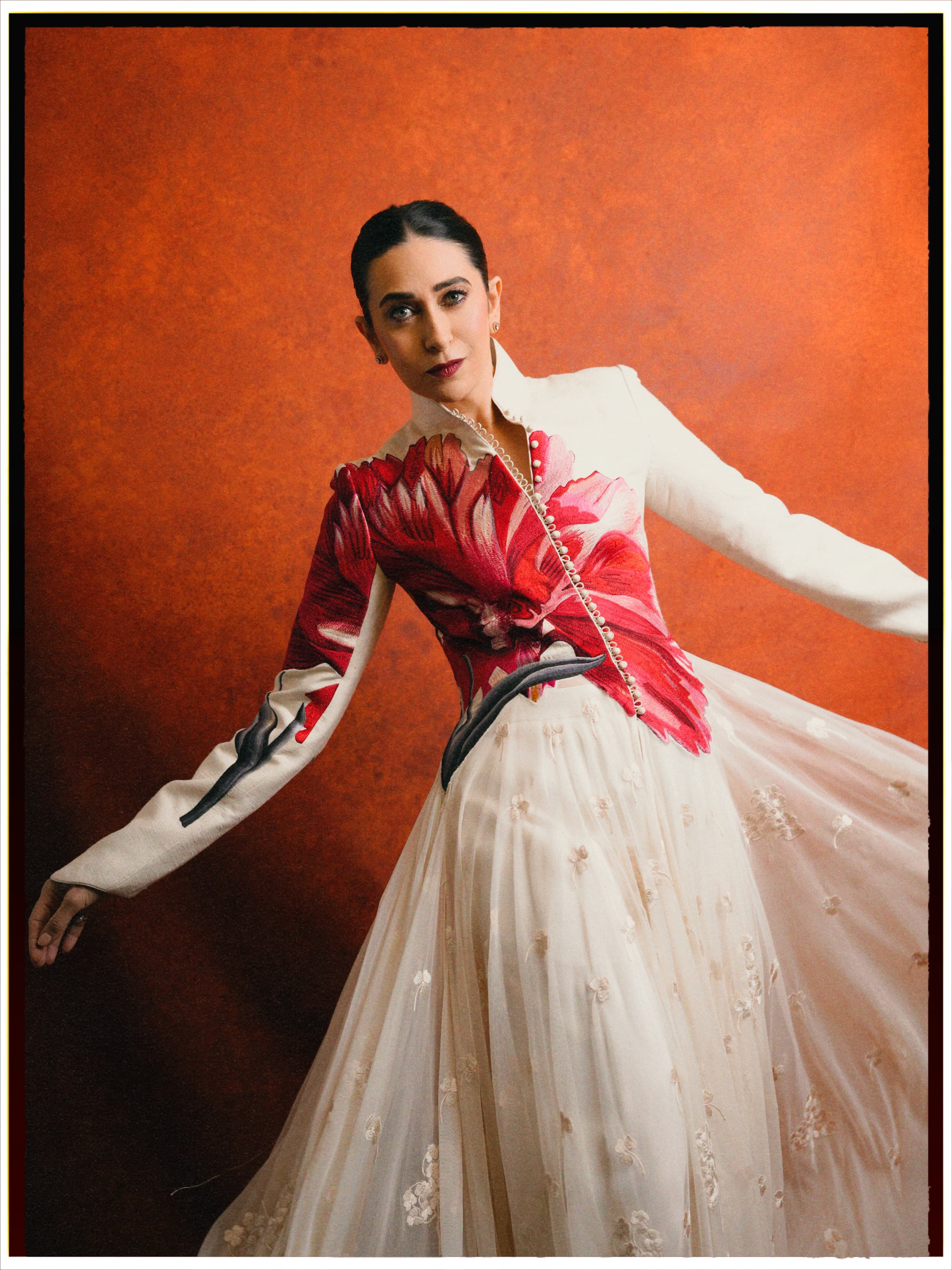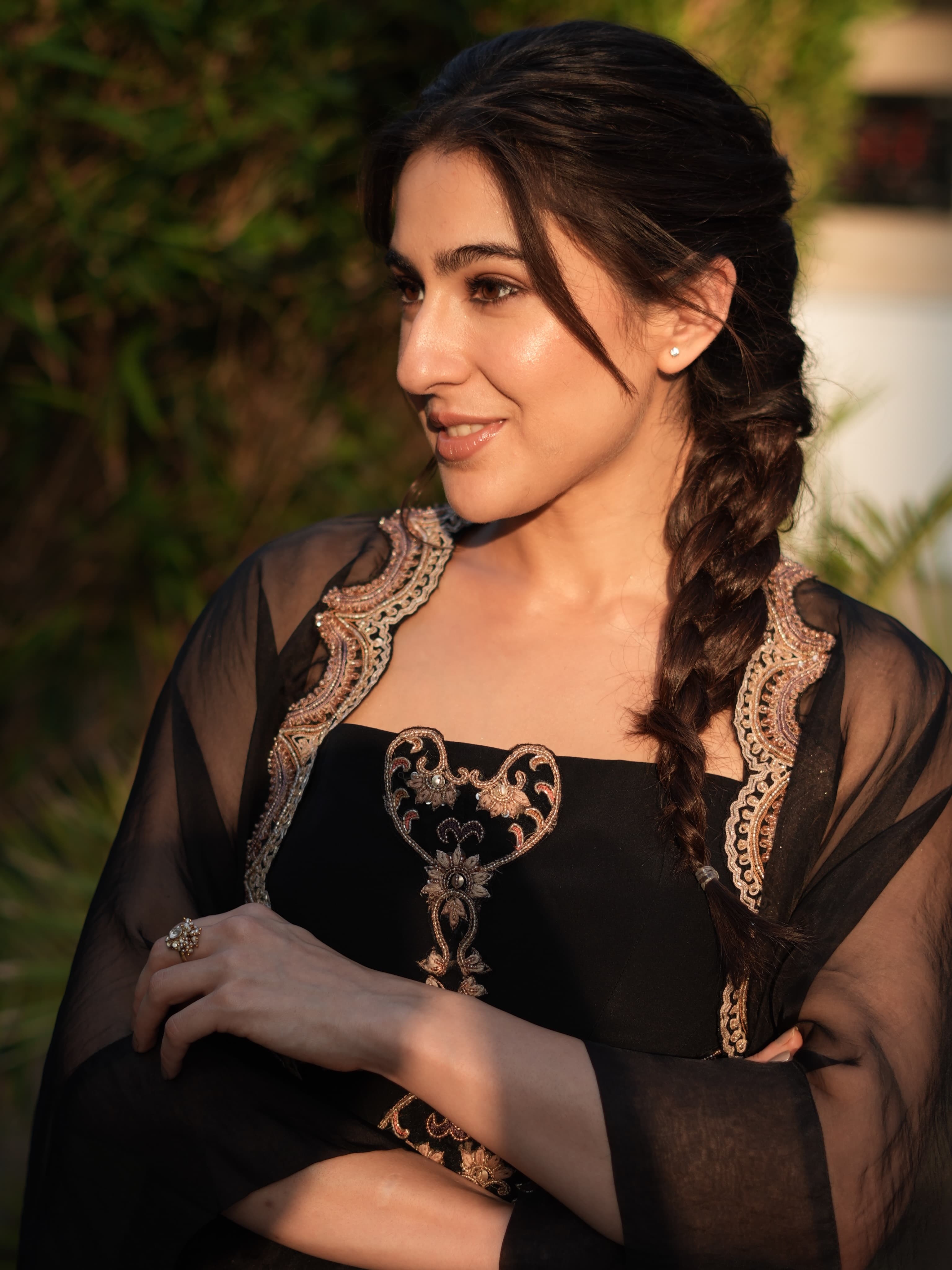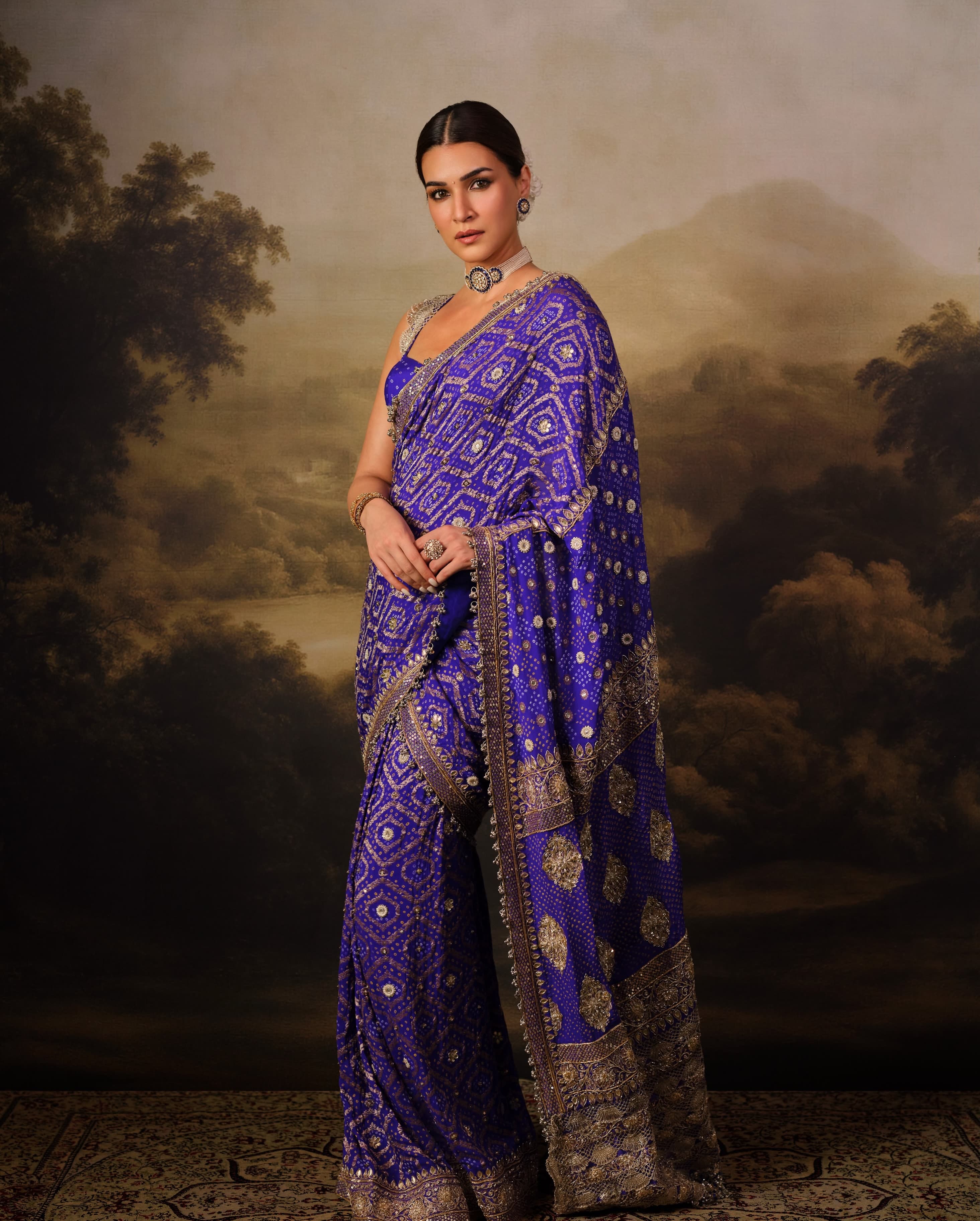
Some fashion posts are pure sparkle. This one is craft, colour, and lineage, delivered through celebrity familiarity. In a recent Manish Malhotra saree moment tagged #mymmsaree, Kriti Sanon and Nupur Sanon appear in a palette callout that is unusually specific for Instagram, “Regal Imperial indigo and Mehendi lime,” paired with “intricate vintage Bandhani” and a nod to India’s textile traditions. Styling is credited to Sukriti Grover, with the #mmteam tag folding the image into Malhotra’s larger visual universe.
Manish Malhotra saree: when colour does the talking
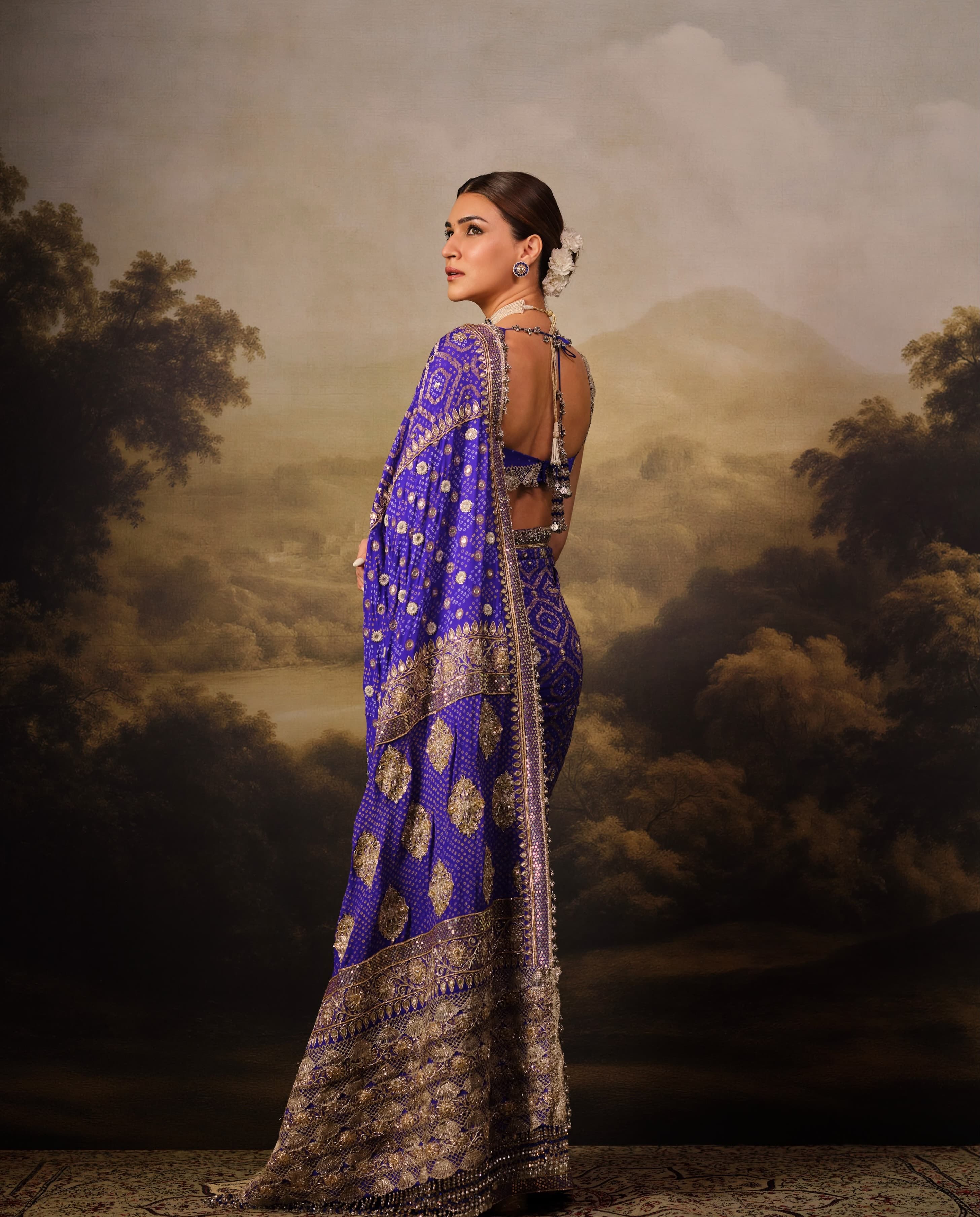
Indigo in India is never merely a shade, it is a history of dye and labor, of river water and resist. Mehendi green carries its own associations, festive, botanical, and celebratory, the colour you expect to see at the edges of weddings and rituals. Put together, the two tones behave like a conversation: deep, inky saturation meeting a sharp, leaf bright contrast.
Even without a runway show attached, the caption frames the images as an argument for craft over novelty: Bandhani, the tie dye tradition most associated with Gujarat and Rajasthan, is named outright, not buried under vague “heritage” language. That matters, because Bandhani is not a print effect. It is a method built from thousands of tiny binds, each dot a point of pressure and time.
Bandhani, credited properly, changes how you look
Bandhani is often flattened in contemporary styling into “polka dot” shorthand. But the pointillist surface is the outcome of a resist dye process, traditionally created by tying minute sections of fabric before dyeing, then untying to reveal patterns. The caption’s “vintage Bandhani” phrasing suggests a deliberate reference to archival looking layout and density rather than a loose, modern scatter.
If you want the most basic, checkable grounding on what Bandhani is and where it comes from, India’s Crafts Council pages are a useful starting point for the technique and its regional roots. Crafts Council of India.
The Kriti and Nupur Sanon effect
There is a particular charge to seeing sisters in coordinated but non identical traditional wear. It removes the performance of “twinning” and replaces it with something more persuasive: a shared code. Here, the code is colour, and the code is also familiarity with the saree as a real wardrobe object, not a costume. The #mymmsaree tag positions the images inside a larger stream of Malhotra clients and friends wearing his drape centric work, a brand world built as much through women’s social calendars as through fashion calendars.
Malhotra’s official accounts have long used celebrity portraits as a house language, and the @manishmalhotraworld tag in the caption makes the intended attribution clear. For likely future pulls from the same thread, the most direct source is Malhotra’s own channels. Manish Malhotra on Instagram.
Styling credit matters, too
When a caption names the stylist, it is rarely an accident. Sukriti Grover is credited here, and that credit is part of how the images read: sarees styled as modern portrait dressing rather than “ethnic” dressing, with colour contrast doing the heavy lifting and Bandhani functioning as the surface texture that keeps the eye moving.
What lingers, long after you scroll past the faces, is that insistence on specificity: imperial indigo, mehendi lime, Bandhani. Three nouns that resist the internet’s tendency to blur everything into aesthetic.
Photo Credits
Images courtesy of their respective owners.