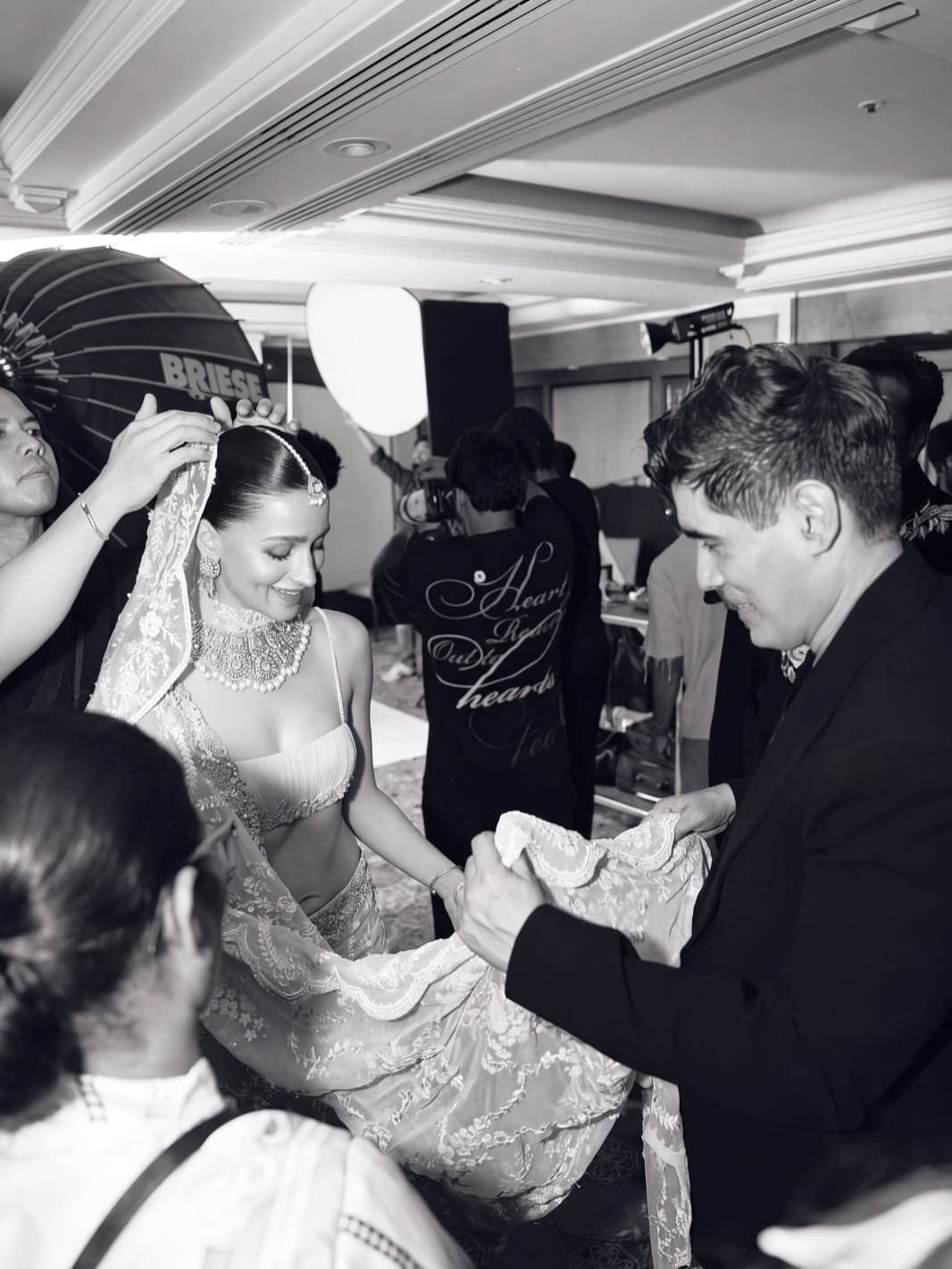
There is a particular intimacy to the way Janhvi Kapoor writes about clothes when they are not merely clothes. In a note posted to mark designer Manish Malhotra’s Paris Couture Week debut, she does not lead with front-row gossip or fashion week clichés. She leads with family. “My godfather, my mentor, my guiding light,” she writes, before naming the moment plainly: Malhotra is making his debut at Paris Couture Week, and the collection is a homage to his mother.
It is a celebrity message, yes, but it also reads as a capsule manifesto for what Indian couture has been insisting for years. Craft is never just surface, it is lineage, memory, and the patient work of hands.

Paris Couture Week, by way of Mumbai
Paris Couture Week is built on codes. The presentation calendar, the atelier mythology, the idea of a house voice that survives decades. Against that backdrop, a debut carries its own pressure, especially for a designer as publicly legible as Manish Malhotra, whose name has long functioned as shorthand for high-glamour Indian dressing across film and weddings.
Kapoor’s caption, though, points to something less photographed and more enduring: “today’s collection is not only an extraordinary display of craftsmanship but also a deeply personal homage… his mother.” The couture frame matters here. Paris has always rewarded narrative when it is stitched into technique, when an emotional point of view shows up in construction, textile choice, and hours logged behind a worktable.
What we can verify from Kapoor’s post is the intent and the timing. Malhotra’s Paris Couture Week debut is the milestone and the collection’s dedicatory axis is maternal. The rest, the actual garments on the runway, will be judged in photographs and reviews as they land.
The Kanchivaram reference that anchors Janhvi Kapoor’s look
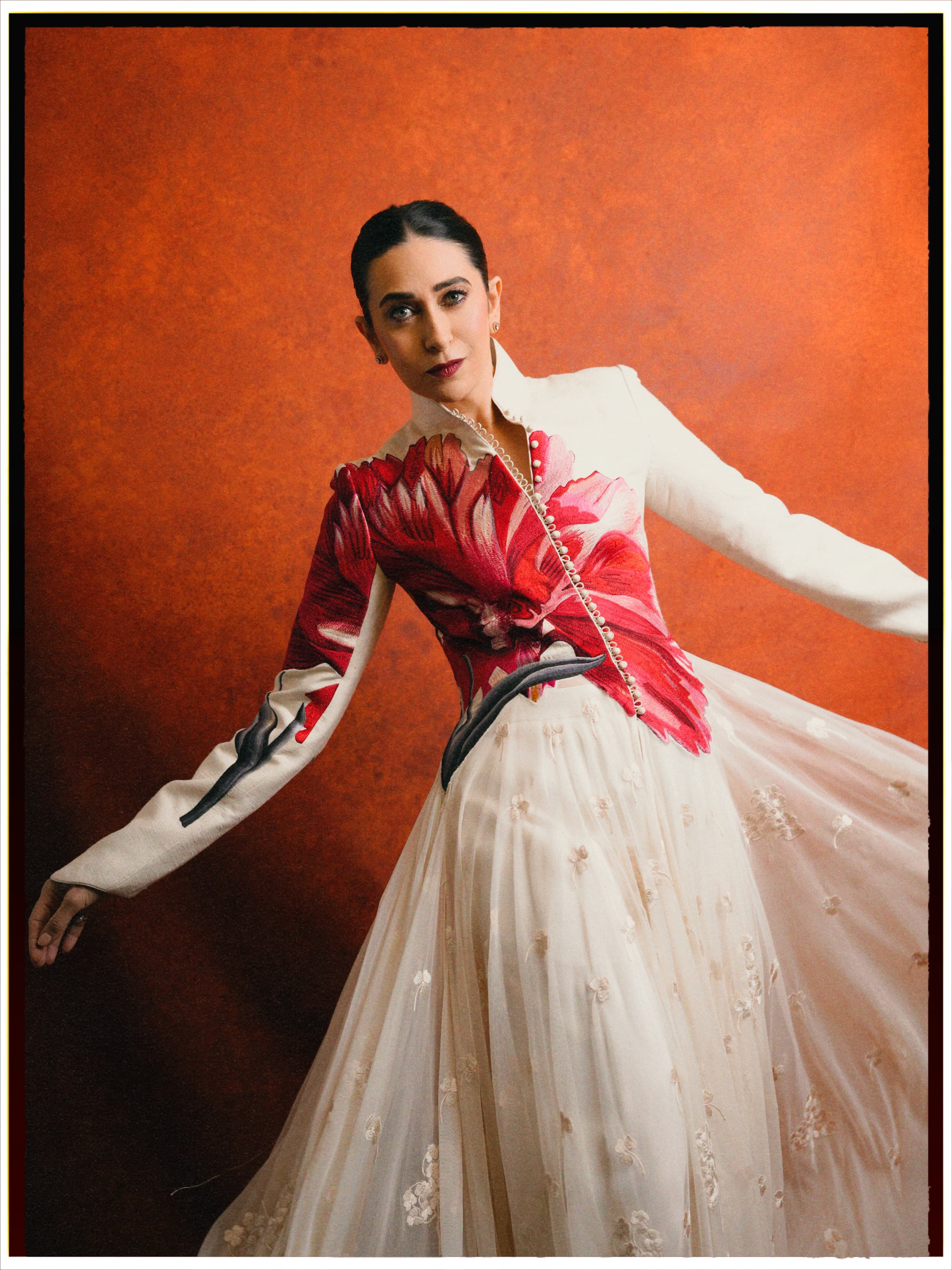
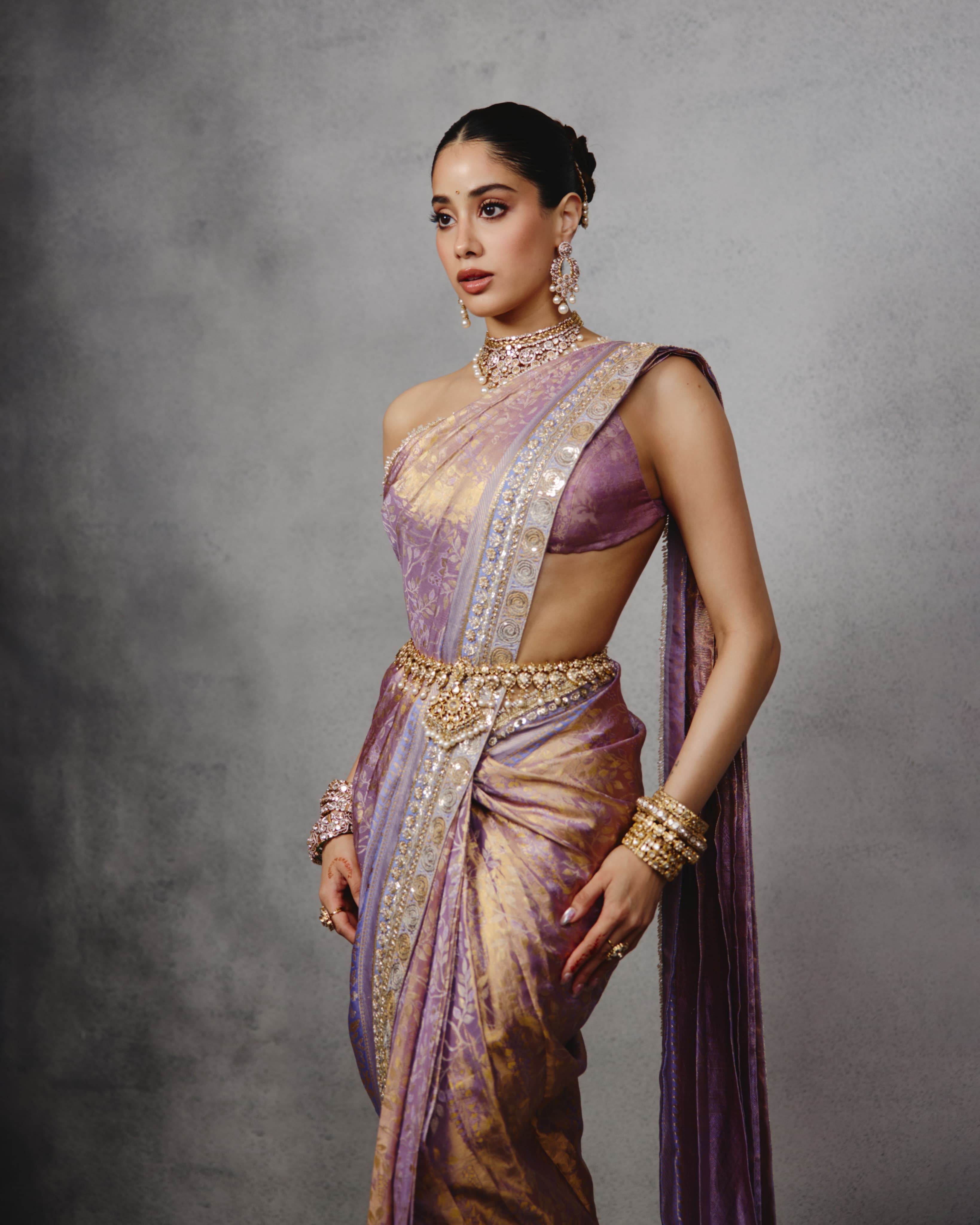
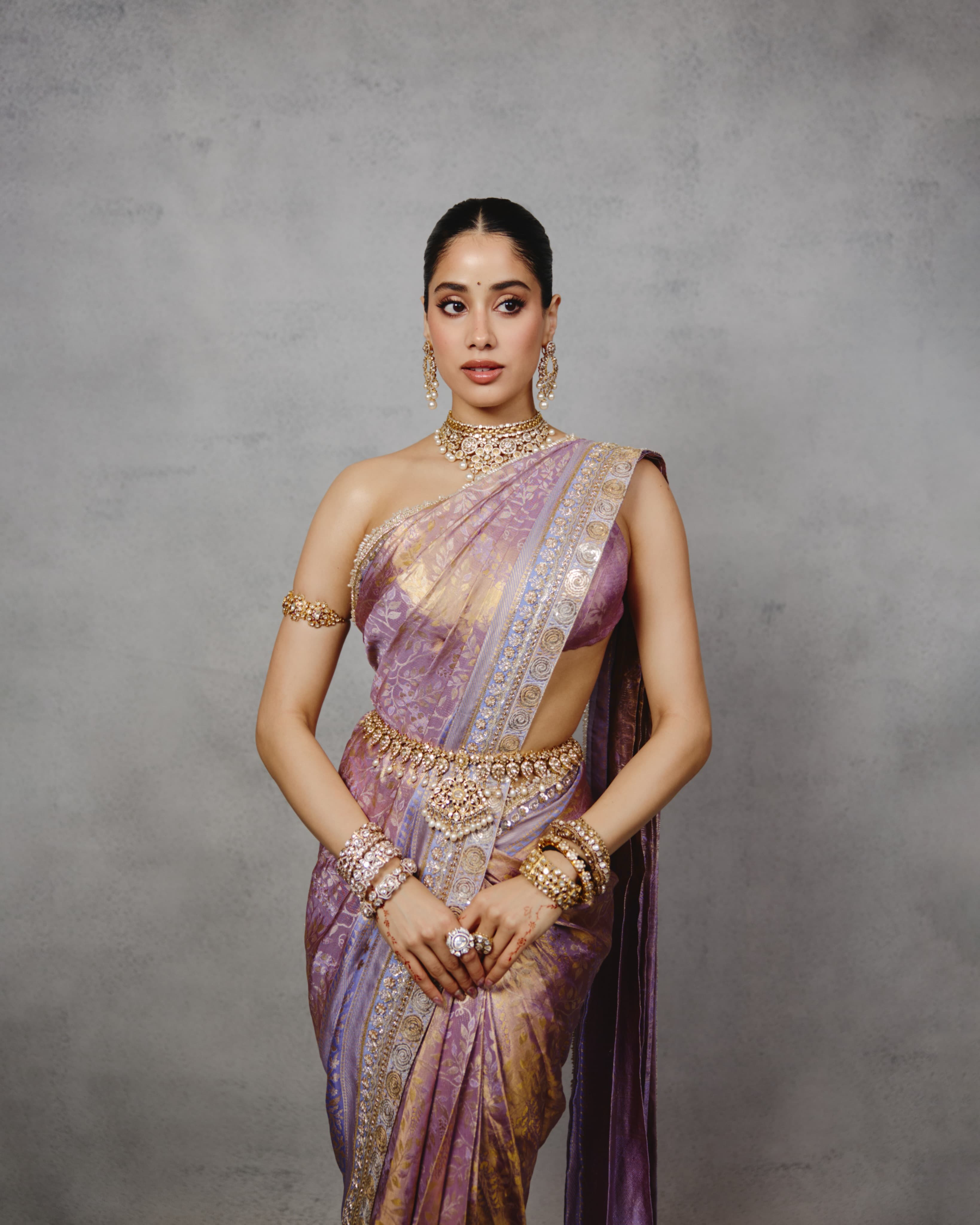
Kapoor adds a second thread, and it is the one that turns a supportive message into something more revealing about contemporary Indian fashion. She notes she is wearing one of Malhotra’s creations “as it shares the same sentiment of celebrating our mothers and our roots,” and then specifies the design idea: an interpretation of the Kanchivaram sari, “a weave native to my own maternal heritage.”
Kanchivaram, or Kanjivaram, is not a mood board word. It is a place-linked textile tradition from Kanchipuram in Tamil Nadu, known for silk saris with dense, lustrous bodies and border work that announces itself from across a room. When a designer interprets it outside the orthodox sari format, the question becomes technical rather than poetic: what happens to that weight, that sheen, that border logic, when it is translated into a different silhouette?
Kapoor does not offer workshop specifics, and we will not invent them. But her emphasis on “interpretation” is telling. In 2026, heritage cues are no longer treated as museum glass. They are treated as living tools, translated in ways that still keep the weave’s authorship visible.
Why this matters beyond one post
Celebrity dressing has trained the internet to look for the obvious, the neckline, the label, the hair. Kapoor’s caption insists on a different reading: fashion as a medium for family allegiances and cultural inheritance, with mothers as both muse and map. That framing lands differently when the setting is Paris Couture Week, a global stage that has historically decided what “counts” as couture craft.
What to watch as Manish Malhotra’s Paris Couture Week debut unfolds
A debut is a first impression, but it is also a negotiation. How does a designer known for screen-facing glamour speak in the language of couture without sanding down the parts that made him significant? How does an Indian couture vocabulary register in Paris without being reduced to exotic shorthand? Kapoor’s post suggests the most persuasive answer may be the oldest one: make it personal, then make it impeccable.
For readers tracking the broader movement of South Asian craft on the world’s most entrenched luxury stages, this moment is worth clocking. Not because Paris needs permission to notice, but because couture is, at its best, a record of where skill and story meet.
Kapoor ends where she began, with devotion rather than spectacle: “Cheering you on from home while you create magic in Paris.” Paris Couture Week will do what it always does, offer its spotlights and its verdicts. The more interesting detail is the one she flagged herself, a Kanchivaram idea carried into a new form, and a mother at the center of the room even when she is not in it.
Photo Credits
Images courtesy of their respective owners.