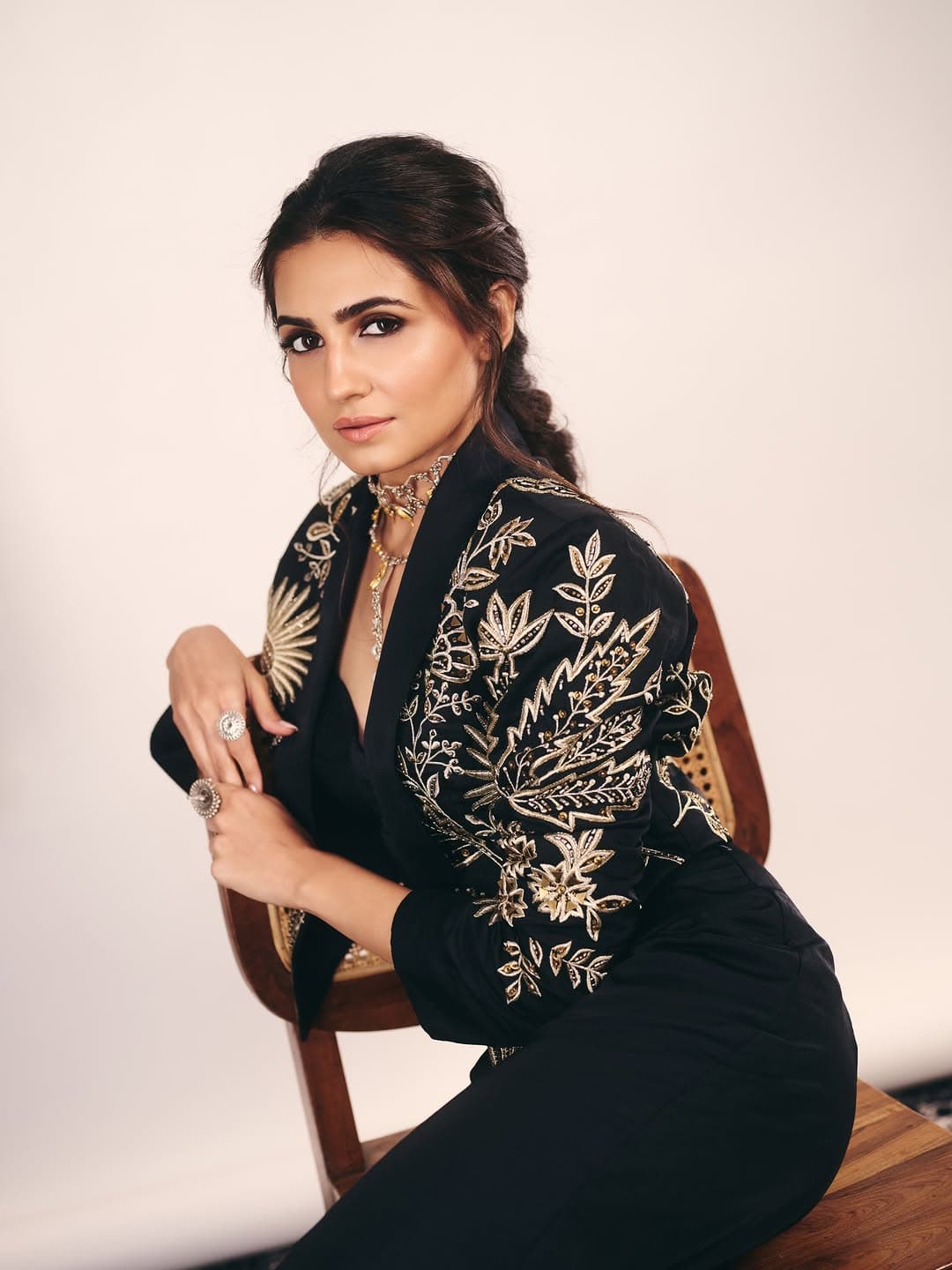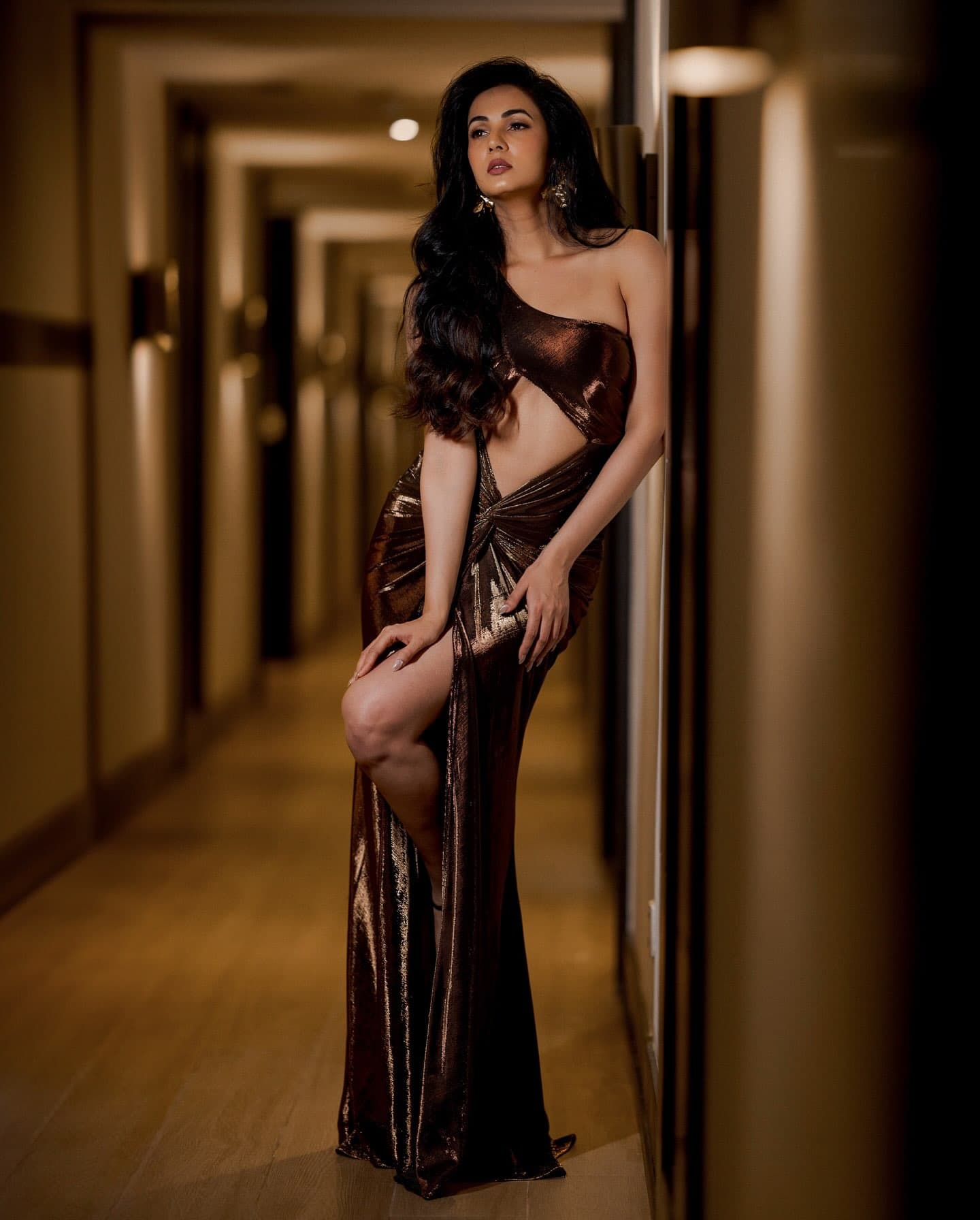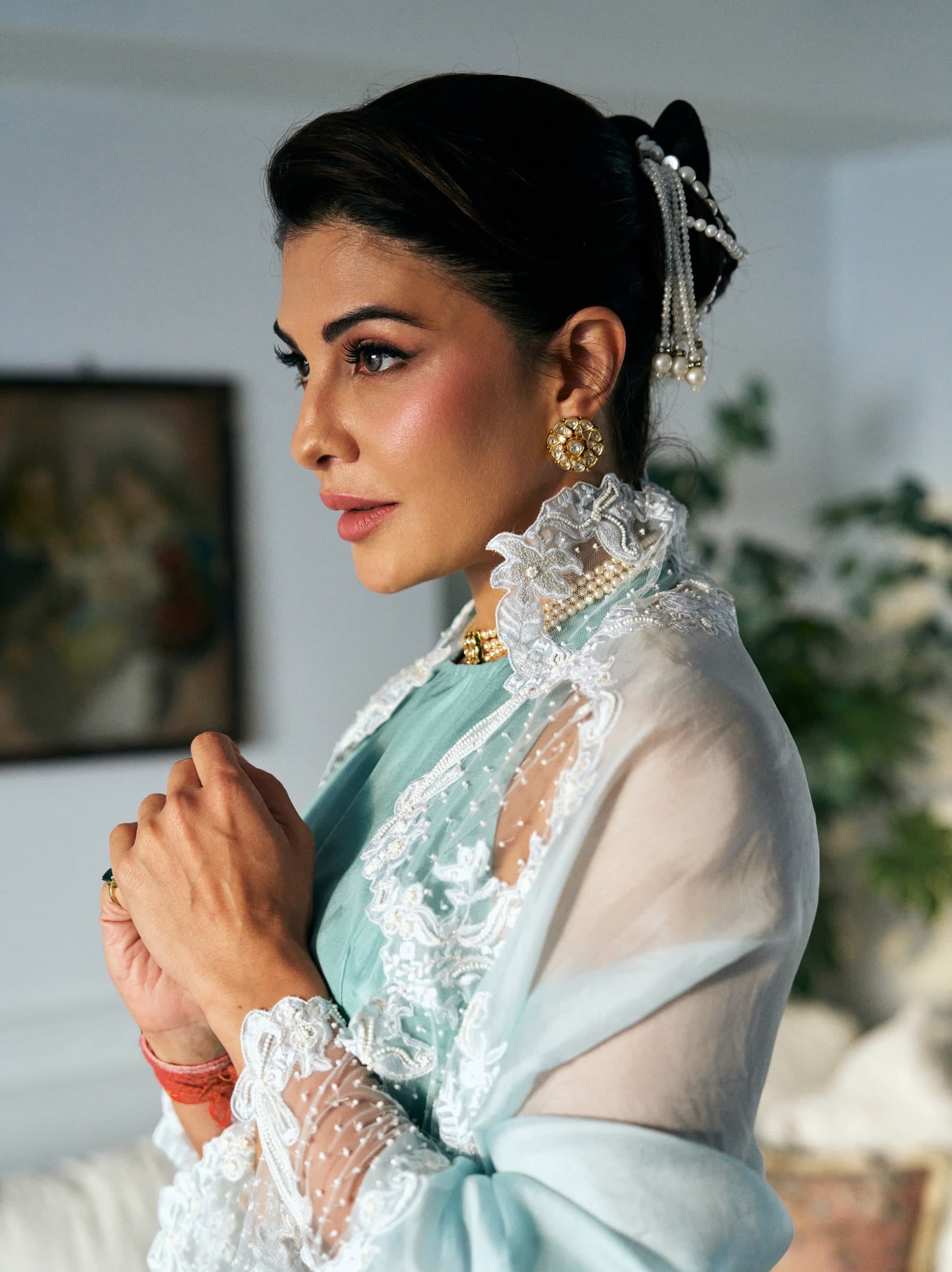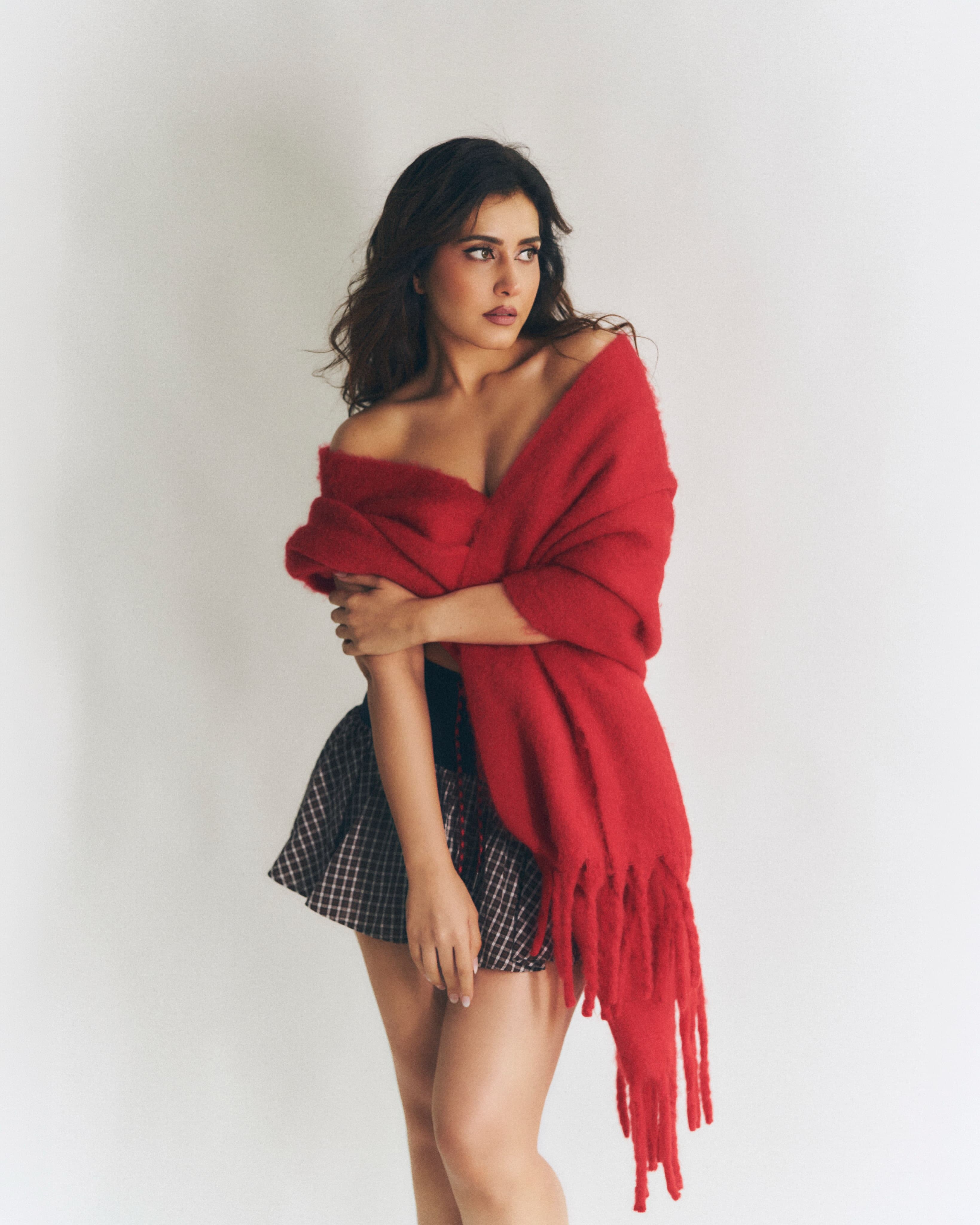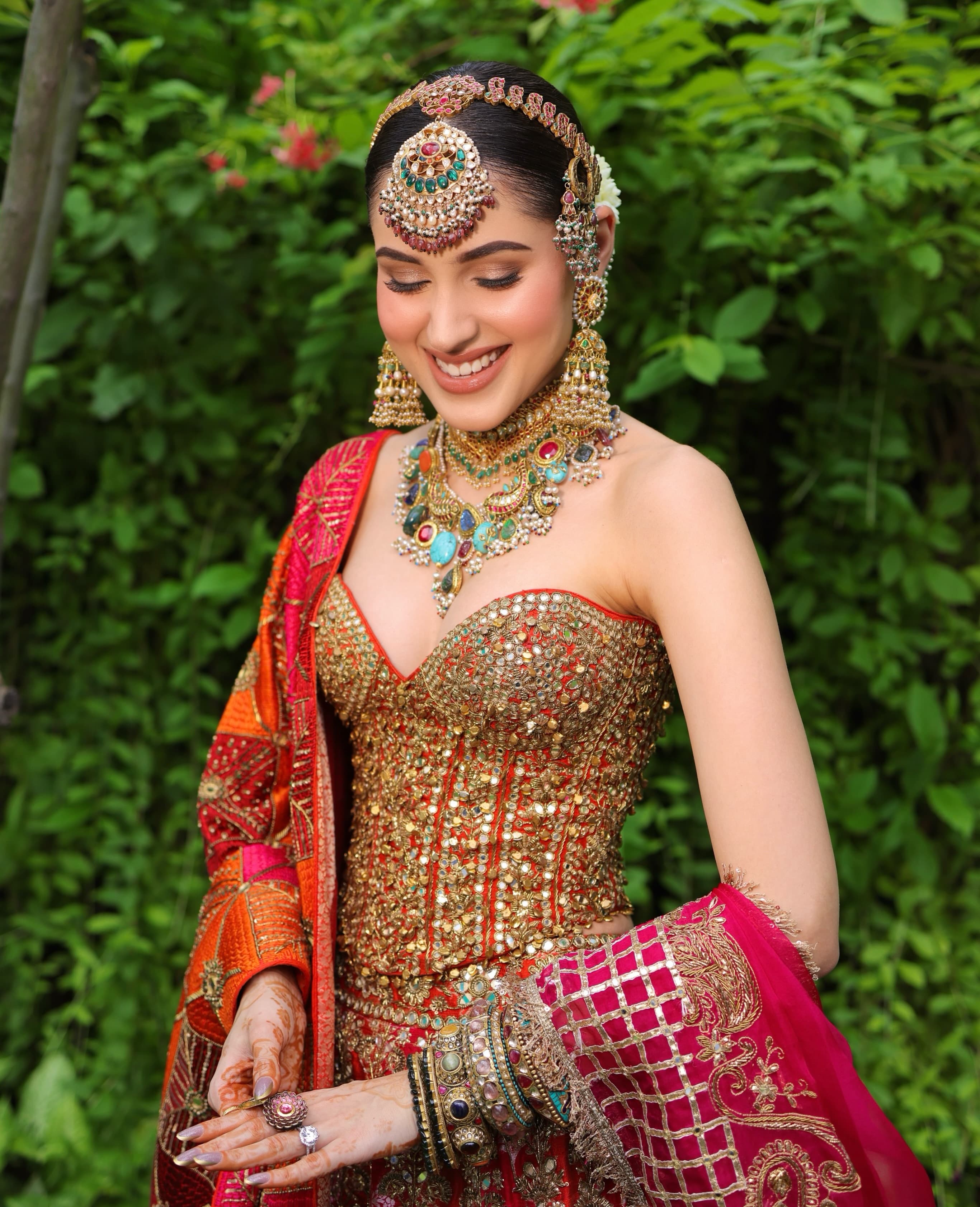
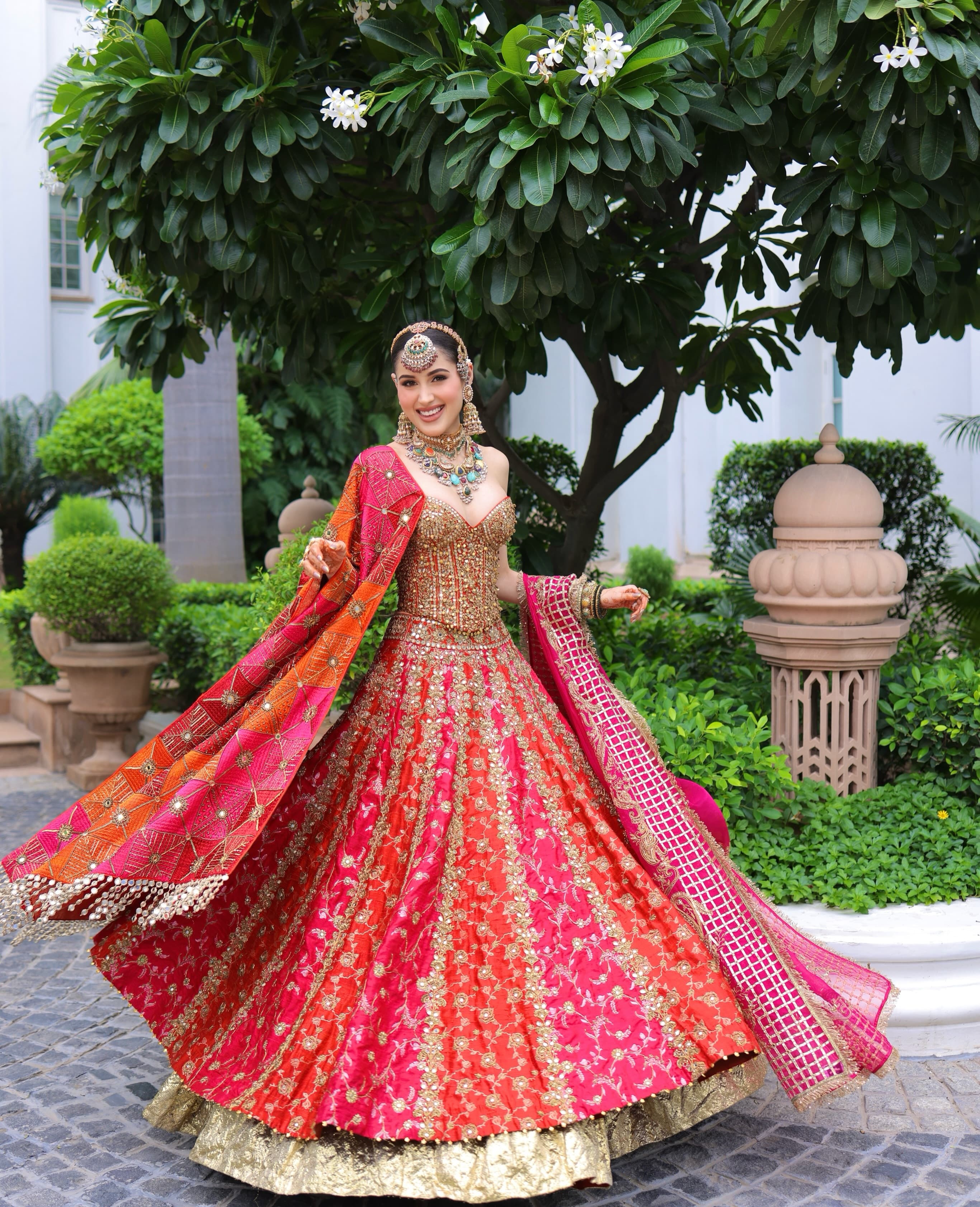
A good mehendi makeup look does not compete with the haldi stained laughter, the camera flashes, or the henna still setting on skin. It negotiates. In this bridal moment by makeup and styling artist Shradha Luthra, the negotiation is clear: vibrant colour in the clothing and drape, a garden thread of mogra in the hair, and a face kept neutral with soft definition so the whole frame stays readable from first photo to last dance.
Mehendi makeup look, anchored in skin
Start with what makes this mehendi makeup look work: the complexion is treated as the base note, not the headline. The skin finish is even, the contours are blended rather than carved, and the eyes are shaped with restraint in placement rather than intensity. That choice is strategic, because the rest of the styling arrives in layers and colour, and the face needs to hold steady through it all.
There is a modern bridal intelligence in letting pigment live elsewhere. When clothing and jewellery are doing the storytelling, makeup becomes the editor, keeping the narrative coherent in close up and at a distance.
The phulkari dupatta is the tempo setter
A phulkari dupatta carries its own lighting. The embroidery tradition from Punjab is known for densely worked floral and geometric motifs, historically stitched in floss silk on khaddar, designed to catch sun and movement. Here it functions as the visual metronome, giving the outfit its rhythm long before anyone notices a highlighter or a lash.
The outfit is credited to ITRH Official, whose occasionwear often plays with bold colour and ornate surfaces, a natural partner for a mehendi setting where photographs reward texture. The result is a look that feels festive without becoming chaotic, because the statement is concentrated in one hero element rather than scattered everywhere.
Jewellery that stacks, but still makes sense
For mehendi, jewellery can easily tip into noise. The jewels here, credited to A Jewels by Anmol, are layered with a clear hierarchy. Each piece has its job, one to frame the neckline, another to echo the hair florals, another to punctuate wrists and hands that will be photographed constantly as the henna develops.
Layering works when there is negative space somewhere, and in this case it is the face and the overall makeup palette that provides it. That balance is what keeps the styling from flattening into one dense block on camera.
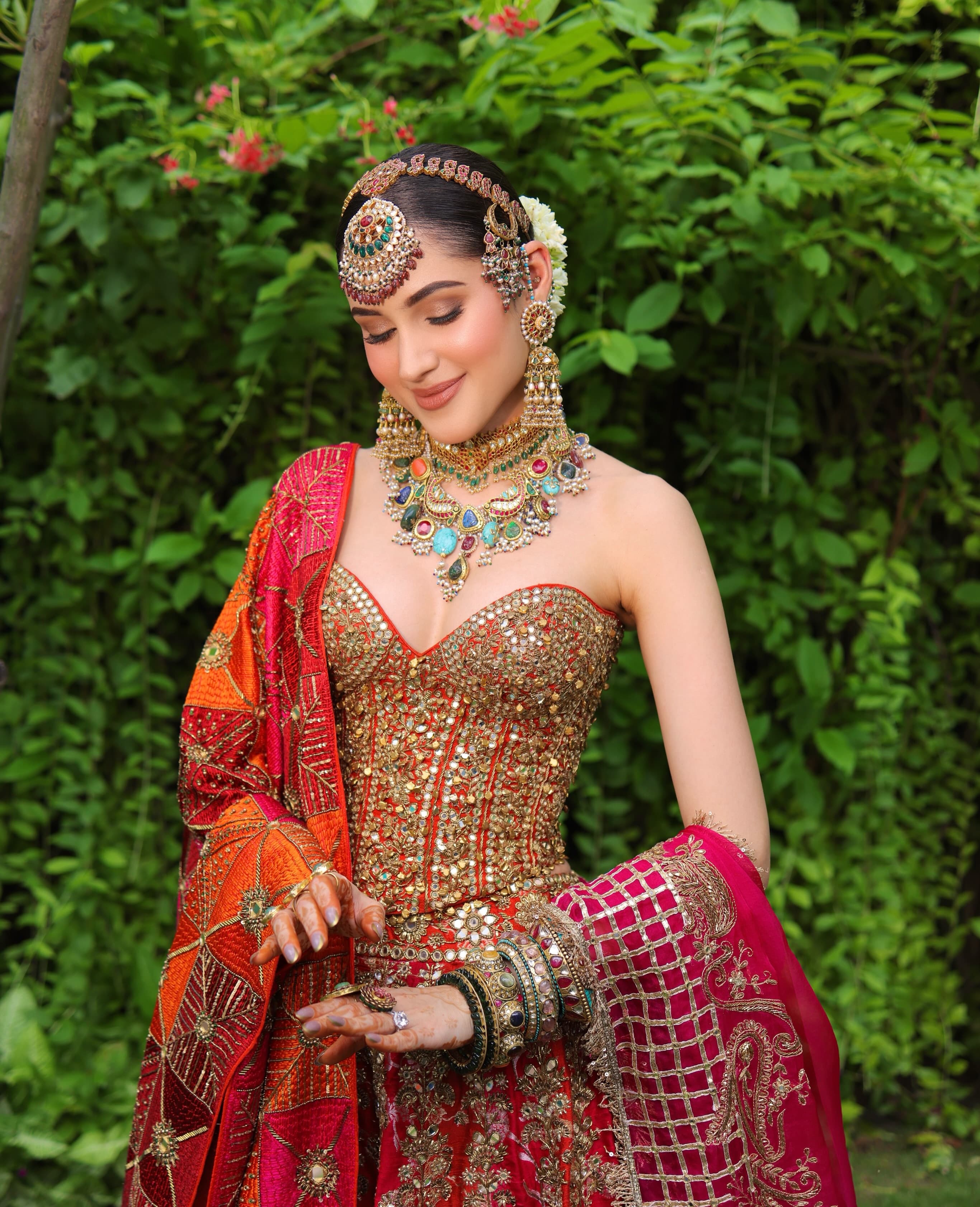
Mogra in the hair, not as an afterthought
Fresh mogra, woven into the hair by the in house team credited with hair and drape, is more than a romantic flourish. It changes the silhouette from the back and side, and it introduces a living texture that reads instantly as “wedding” even in a plain hallway portrait. The white buds also create a clean contrast against bright textiles, helping the head and shoulders stand out in group photos.
Why this joyful formula keeps returning
This is one of those mehendi formulas that brides and artists return to because it photographs honestly. Heavy drapes, embroidered textiles, and stacked jewellery are already giving the lens plenty to hold. A mehendi makeup look that stays neutral and softly defined does something very practical: it protects the wearer from looking overdone under daylight, indoor LEDs, and phone flash, sometimes all in the same hour.
If you are building your own version, take the cue from this styling team: decide where your colour lives, commit to it, then let skin, brows, and lips keep the conversation coherent.
Photo Credits
Cover image and additional images photographed by Annoushka Sharma. Makeup and styling by Shradha Luthra. Outfit by ITRH Official. Jewellery by A Jewels by Anmol. Hair and drape by the in house team.