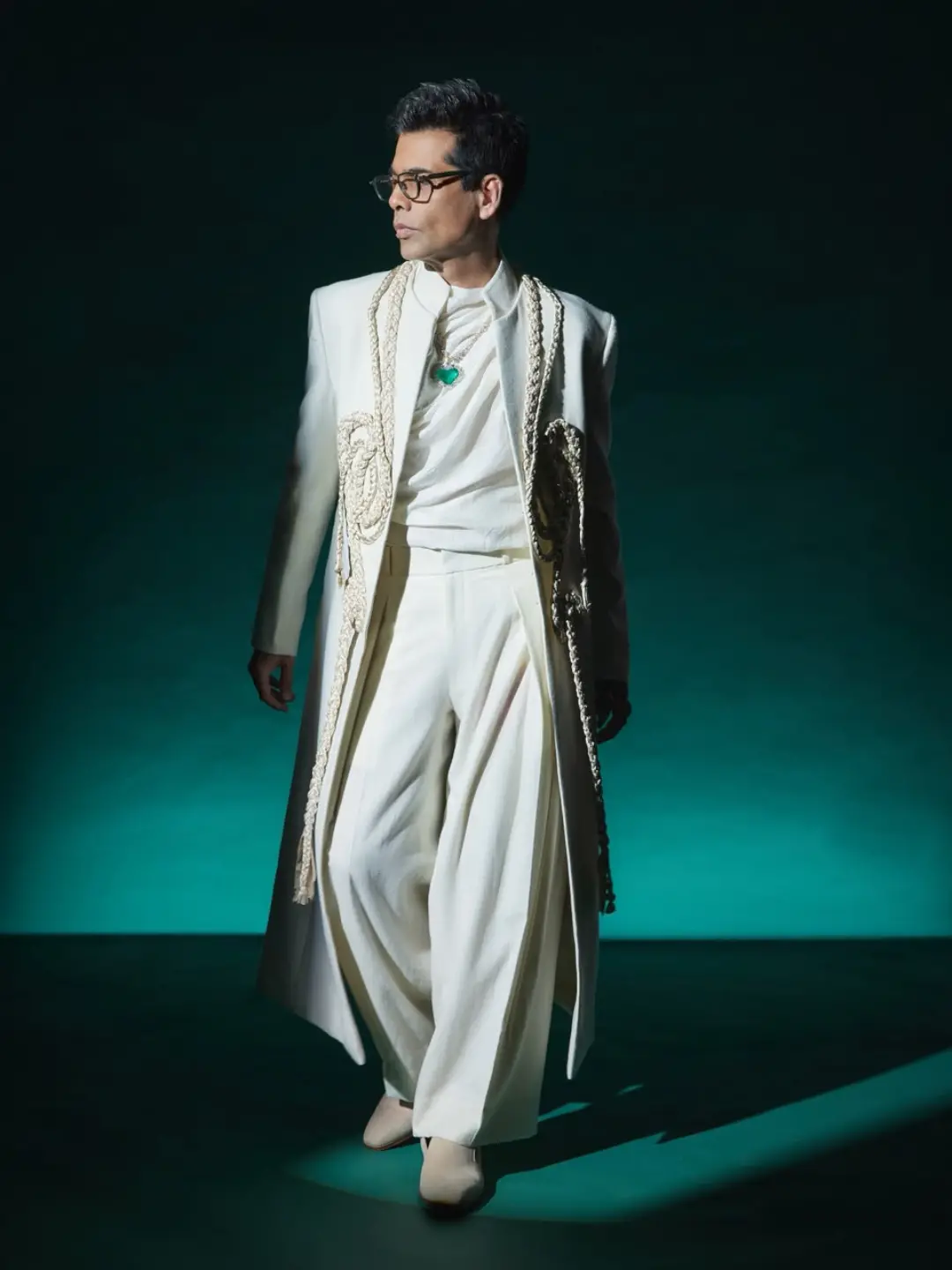
At Antilia, scale has a way of making every detail read louder. Which is why Karan Johar’s look for the Ambani family’s Ganesh Chaturthi celebrations lands so cleanly. An ivory, pure-wool suiting achkan by Anamika Khanna, sharply tailored, then interrupted only where it counts, with braided embroidery running down the front like a deliberate piece of punctuation. In a room engineered for spectacle, the garment’s discipline becomes the point.
Karan Johar’s Anamika Khanna achkan at Antilia
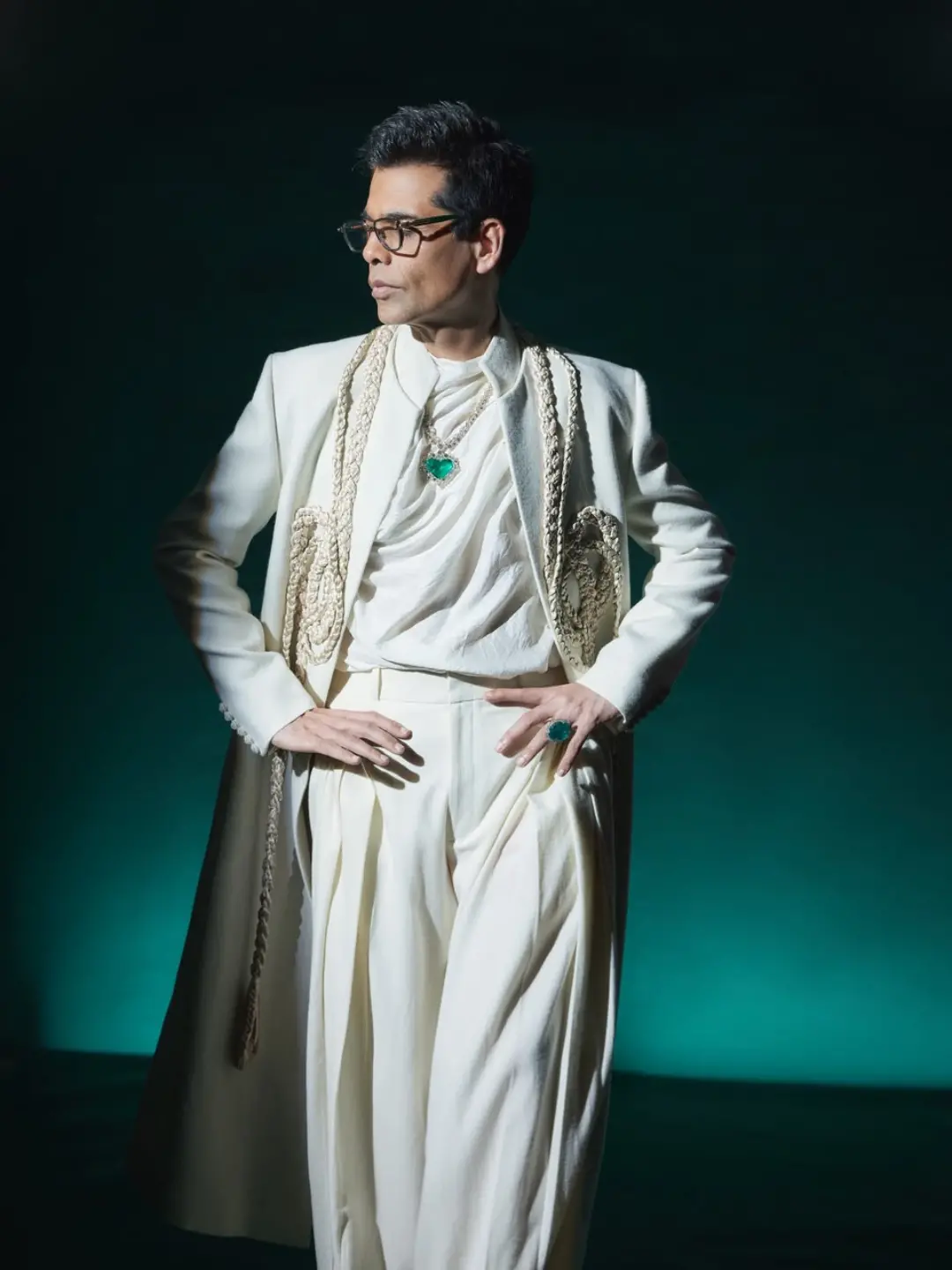
The primary keyword here is simple and specific: Karan Johar Anamika Khanna achkan. The pairing is familiar to anyone who tracks Indian red carpet and festive dressing, but the execution is worth a closer look. The achkan, constructed in pure-wool suiting and kept to an ivory register, leans on cut and surface technique rather than print, shine, or excess trimming. The braided embroidery along the placket gives the front a raised, corded rhythm, the sort of handiwork that shows best when the camera inevitably pushes in.
There is also a strategic intelligence to choosing wool suiting for a religious celebration that becomes, in Mumbai, a multi-hour social marathon. Suited wool holds a line. It keeps the shoulder from collapsing, keeps the torso crisp in photographs, and avoids the limpness that can creep into lighter fabrics as the evening progresses.
Why this silhouette works for Ganesh Chaturthi dressing
Ganesh Chaturthi style often slips into two predictable poles, either maximal ceremony or default kurta comfort. This Anamika Khanna achkan proposes a third option, festive in intent but controlled by tailoring. The length and structure frame the body more like a coat than a kurta, which changes how jewellery, footwear, and even a simple pocket square can register. On a high-profile evening like the Ambani festivities at Antilia, that framing matters. The look photographs as an outfit, not an approximation of one.
If you want to trace the designer’s larger codes, Khanna’s official site is the cleanest place to start, from couture through occasionwear, and it helps contextualise why her work consistently leans on surface technique and engineered silhouettes rather than obvious costume cues. See: Anamika Khanna.
The small detail that carries the whole look
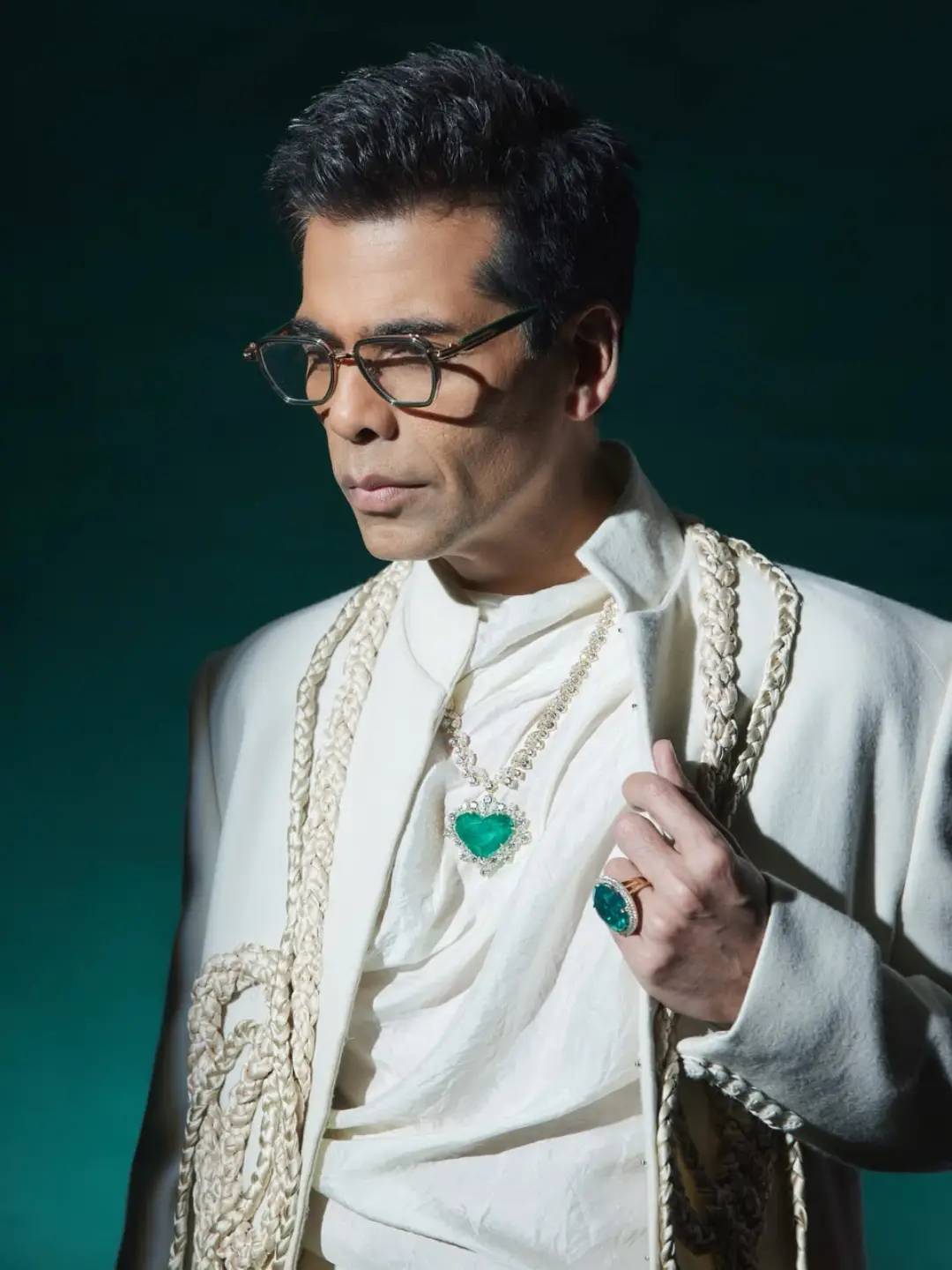
Focus on the front. A plain achkan can flatten fast, especially in a pale colour. Here, braided embroidery introduces shadow and relief without changing the garment’s tempo. It is decorative, yes, but it also functions like structure, drawing the eye vertically and sharpening the centre line. The result is a piece that can hold its own in Antilia’s visual noise while still reading like personal style rather than costume.
What it signals about men’s Indian occasionwear right now
The clearest shift in men’s Indian occasionwear is not louder embellishment, but better decision-making. Fabric choices are becoming more intentional. Tailoring is becoming more exact. And designers are being asked to deliver craft in a format that can stand up to harsh lighting and close-range photography. The Karan Johar Anamika Khanna achkan sits right on that curve, traditional in silhouette, modern in finish, and engineered for the way events are consumed now, through images that travel faster than the guest list.
Johar’s role in this ecosystem is also specific. He has long treated Indian formalwear as a styling playground, not a uniform, and his appearances reliably put the spotlight on designers who treat menswear as more than an afterthought. If you have been following how celebrity wardrobes are nudging Indian couture into sharper mens lines, our Celebrity section has been tracking the most telling moments. For more on the craft conversation around contemporary Indian formal dressing, browse the latest in Fashion.
For the visual reference that sparked the conversation, Johar shared the look on Instagram, where the achkan’s braided front reads even more clearly in close-up. Visit: Karan Johar on Instagram.
Photo Credits
Images courtesy of their respective owners.