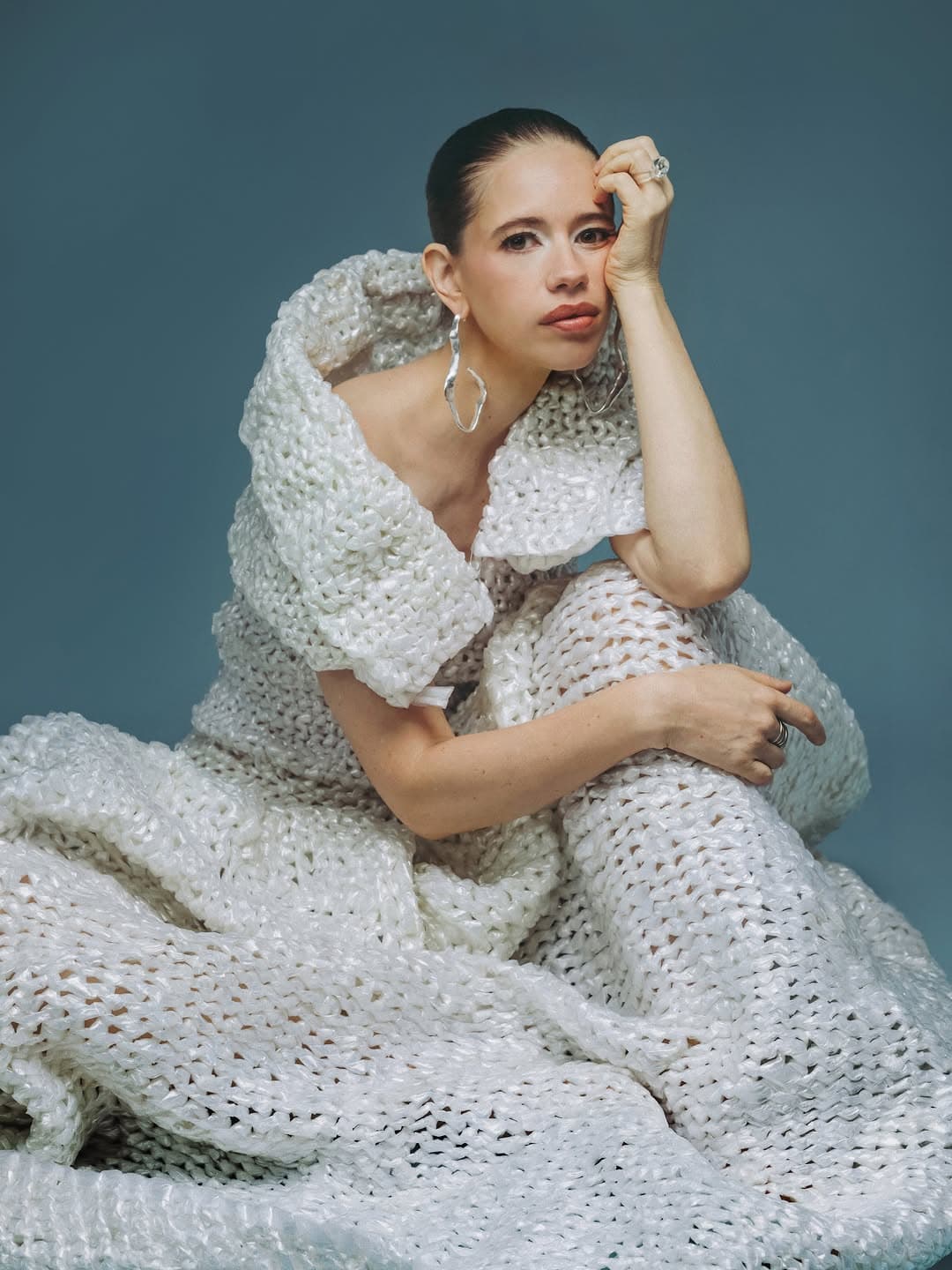
There is a new kind of provocation in fashion right now, and it is arriving without sequins or spectacle. Call it the handwoven polythene dress, a phrase that sounds like a contradiction until you see it on a body. In a new shoot, actor Kalki Koechlin appears in a handwoven polythene look by designer Naseeb, turning a material most of us meet as packaging into something engineered, styled, and photographed with the seriousness of couture.
The handwoven polythene dress, staged as fashion not stunt
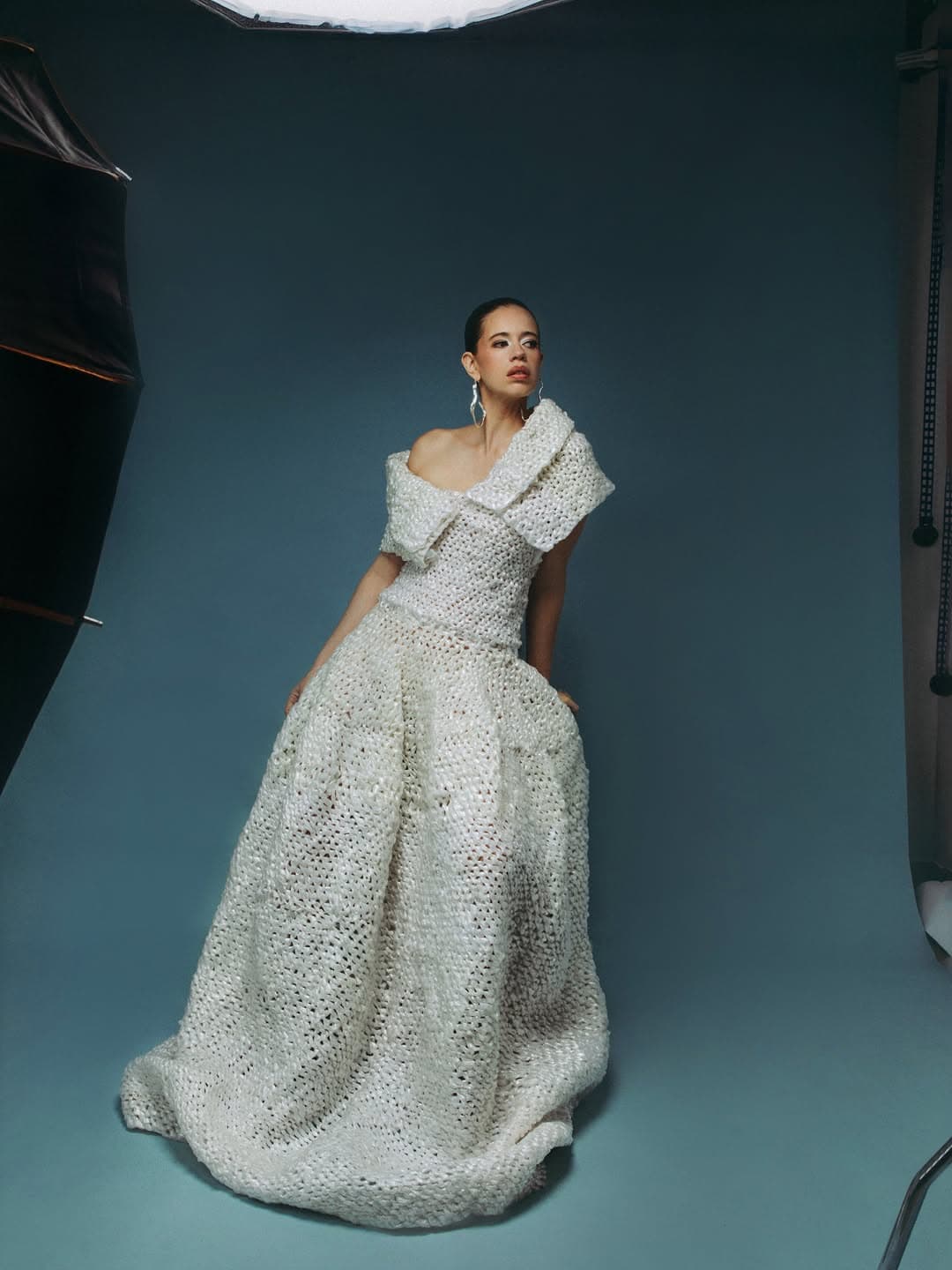
The images credit a tight team: photography by Rebecca D’costa, styling by Saanya Khatwani with Yellow House Parra, makeup by Simone Lalwani, hair by Spud Salon, and studio support at Studio Parkour, Goa. Those details matter because they place the garment inside a professional image making ecosystem, not a one off art school experiment.
And that is the point. A handwoven polythene dress only lands when it is treated like a real piece of fashion: lit, framed, styled, and worn with intent. The silhouette becomes the argument. The surface becomes the story.
Why polythene, why weave, why now
Polythene carries a loaded biography. It is the everyday plastic of carriers and wrapping, the stuff that creases into sharp white stress lines, that holds a sheen under hard light, that makes sound when it moves. Weaving it is a decision to slow the material down. A weave takes what is usually disposable and forces repetition, labor, and structure into it.
If you have watched designers circle back to craft as an answer to overproduction, this is a sharper version of that impulse. Here, the craft is the headline. “Handwoven” does not soften polythene into something it is not. It makes the viewer confront the distance between the material’s usual life and the one it is being offered on set.
Kalki as the perfect casting for an abrasive idea
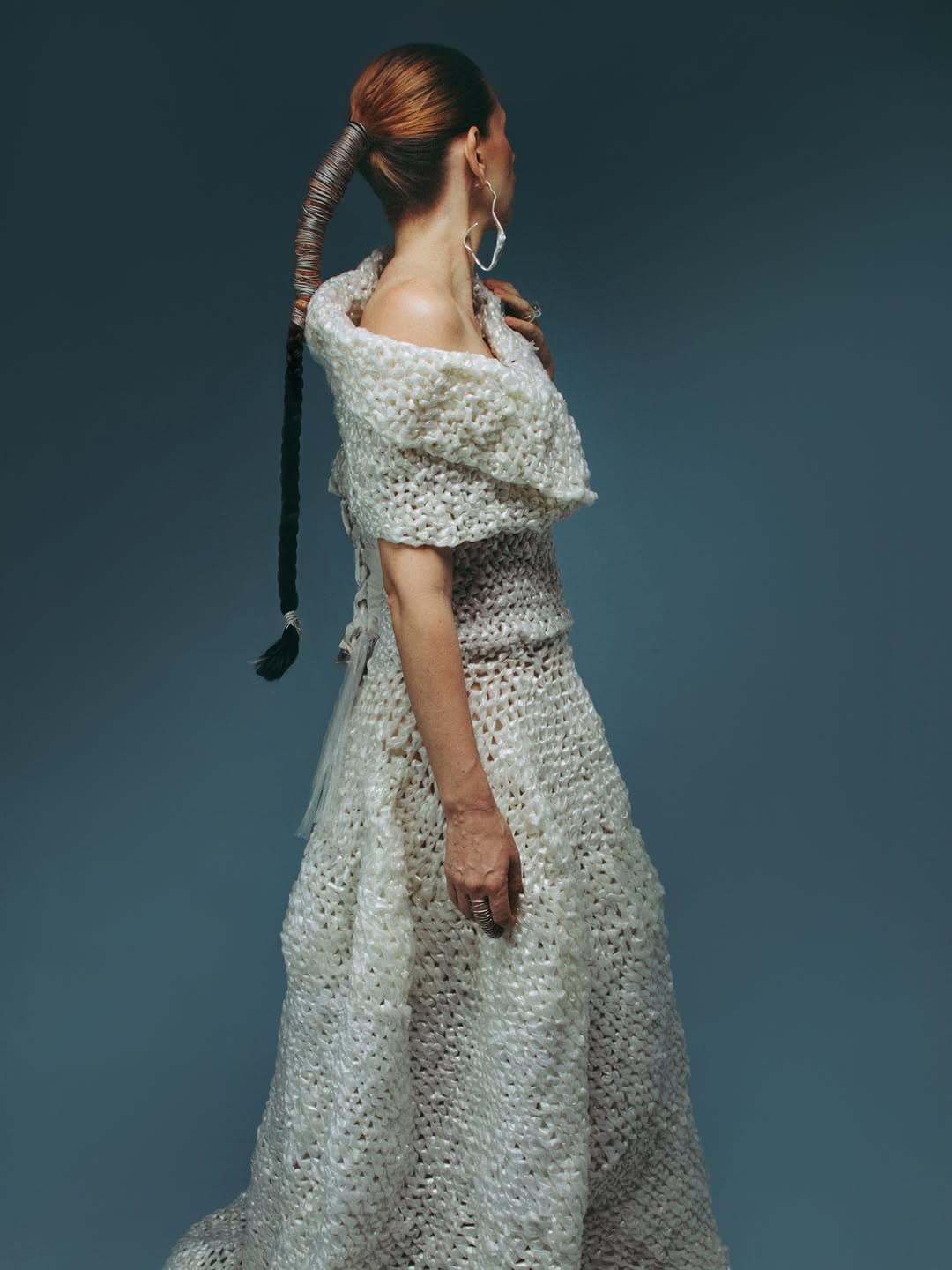
Some garments need a wearer who can hold a concept without overacting it. Kalki has long been comfortable in roles that lean into friction, emotional and cultural, and the casting feels aligned with what the garment is doing materially. The look does not rely on nostalgia or familiar codes. It relies on presence.
In editorial terms, this is also smart image strategy. A handwoven polythene dress can easily slide into novelty if the casting is incidental. Here, the team makes it feel like a proposition: if fashion can elevate embroidery, leatherwork, and handloom into heritage, why not interrogate the most common modern material of all?
What the shoot credits reveal about the fashion ecosystem
The caption reads almost like a call sheet, and that generosity is worth noting. Alongside the primary credits, the shoot acknowledges assistance by @jyotsna.f and @garreth17, with special thanks to @rahulnair.23. In a moment when “craft” is frequently used as a marketing gloss, naming the people around the work gives the project a spine. It also signals that experimental materials still require traditional infrastructure: a studio, a team, and the unglamorous labor between concept and frame.
Photo Credits
Cover image from the referenced shoot featuring Kalki Koechlin in a handwoven polythene dress by Naseeb. Photography credited to Rebecca D’costa, with styling by Saanya Khatwani and Yellow House Parra. Studio credited as Studio Parkour, Goa. Additional images courtesy of their respective owners. Credits as listed in the original post: Model @kalkikanmani, Designer @naseeb_lll, Photography @rebeccadcosta, Styling @saanyakhatwani @yellowhouseparra, Make up @simonelalwanimakeup, Hair @spudsalon, Assisted by @jyotsna.f @garreth17, special thanks @rahulnair.23.